


This engineering analysis explains why gate valve is not suitable for throttling flow and how improper use impacts pipeline longevity. Gate valves are designed for full isolation, meaning they should remain either completely open or strictly closed. When an operator uses a wedge gate\ valve to regulate flow, it triggers severe seat erosion and structural vibration.
Fluid Dynamics And The Mechanical Risks Of Partial Opening
A wedge gate valve functions by moving a gate perpendicular to the path of the fluid. In a fully open position, the fluid passes through the bore with minimal resistance and zero pressure drop. However, the mechanical design is not intended to withstand the high-velocity turbulence created when the gate is partially lowered.
When you throttle a gate valve, the fluid velocity increases significantly at the narrow opening beneath the wedge. This concentrated flow creates a “wire-drawing” effect, where the fluid acts like a high-speed abrasive. This process quickly scours the metal seating surfaces, preventing the valve from ever achieving a tight seal again.

Engineering standards emphasize that isolation valves lack the specialized trim required for energy dissipation during throttling. Continuous exposure to these turbulent forces leads to premature component failure and increased maintenance costs.
Material Erosion In Solid Wedge Gate Valve Applications
The solid wedge valve is a common choice for high-pressure industrial isolation. Its single-piece construction provides excellent mechanical strength for blocking flow. Yet, this simplicity is a disadvantage during throttling operations because the wedge lacks a way to stabilize against high-velocity side-loading.
In a partially open state, the high-pressure fluid pushes the wedge against the downstream seat guide. This creates metal-on-metal friction and intense vibration, often referred to as “chatter.” Over time, this vibration can fatigue the stem-to-wedge connection, potentially leading to a detached gate inside the pipeline.
Manufacturers design these seats for static contact, not for the dynamic stresses of regulating flow. Once the seat is scored by erosion, the valve will leak even when fully closed. This compromises the safety of the entire isolation system in your facility.
Limitations Of The Resilient Wedge Valve In Flow Control
A resilient gate valve utilizes a rubber-encapsulated wedge to provide bubble-tight shut-off at lower pressures. While effective for water distribution, these valves are particularly vulnerable to damage if used for flow regulation. The high-speed fluid creates a “fluttering” effect on the flexible rubber coating.
This fluttering causes the rubber to peel or tear away from the cast iron core. Once the resilient material is damaged, the valve loses its ability to seal against the valve body. Furthermore, the debris from the torn rubber can travel downstream, clogging filters or damaging sensitive equipment like flow meters.
For applications requiring frequent adjustments, a resilient design is a poor substitute for a dedicated globe or needle valve. Engineering teams should prioritize the structural integrity of the seal by using the valve only for its intended isolation purpose.
High-Pressure Challenges For The Pressure Seal Gate Valve
In power generation and steam service, the pressure seal gate valve is used to handle extreme temperatures and pressures. These valves use the internal system pressure to tighten the seal between the bonnet and the body. Despite their robust construction, they remain susceptible to the same erosion risks when throttled.
Throttling steam is particularly dangerous because steam is a compressible fluid that reaches sonic velocities through small openings. This leads to cavitation and rapid impingement of the internal valve trim. A pressure seal gate valve subjected to throttling will experience “seat washout,” rendering the valve useless for emergency isolation.
GOWIN recommends that high-pressure systems incorporate dedicated bypass lines with globe valves for startup or regulation. This protects the large gate valves from the destructive forces of initial flow balancing.
Engineering Alternatives: Selecting GOWIN Regulating Valves
To ensure a long-life operation, GOWIN Industrial Valve provides specialized control valves designed for throttling. Unlike a wedge gate valve, our control valves feature parabolic plugs or caged trims that manage pressure drops safely. These designs move the point of highest velocity away from the seating surfaces.
If your process requires both isolation and occasional regulation, we recommend a “stop-check” or globe-style valve. These models are engineered to dissipate the energy of the fluid without damaging the primary seals. Using the correct tool for the job reduces downtime and protects your capital investment in pipeline infrastructure.
Our engineering team can help you analyze your flow coefficients (Cv) to determine the best model. By selecting a GOWIN regulating valve, you ensure that your isolation gate valves remain in peak condition for critical shut-off scenarios.
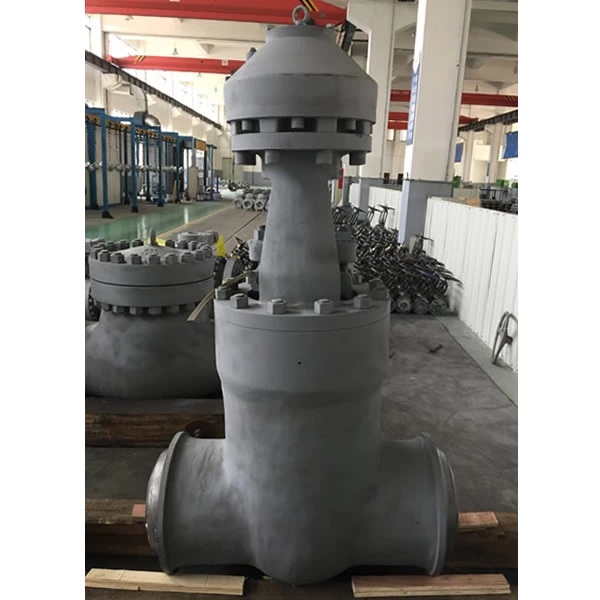
The valve self-sealing type bonnet.
The disc wedging phenomenon is not liable to be caused when temperature rises.
Flexible wedge.
Conclusion
Understanding why gate valve is not suitable for throttling flow is vital for maintaining pipeline safety. Using an isolation valve for regulation leads to seat erosion, wedge vibration, and eventual leakage. For reliable flow control, always opt for a dedicated GOWIN regulating or control valve.
Contact GOWIN Industrial Valve today for a technical consultation. Let us help you select the right gate valve or control valve for your specific industrial application.
Frequently Asked Questions (FAQ)
Why does a gate valve vibrate when used for throttling?
The vibration, or “chatter,” occurs because the high-velocity fluid creates a pressure differential across the wedge. This forces the gate to hit the guides repeatedly. Continuous vibration can eventually lead to stem failure or damage to the valve bonnet.
Can I use a gate valve for very minor flow adjustments?
Even minor adjustments are discouraged because the “wire-drawing” effect begins as soon as the gate leaves the seat. Small openings create the highest velocity flow, which is the most abrasive. For any regulation, use a globe valve instead.
What is the best alternative to a gate valve for throttling?
A globe valve or a specialized control valve is the best alternative. These valves are designed with specific trim shapes to handle the turbulence of partially open states. They provide precise flow control without risking damage to the seating surfaces.
Is the pressure seal gate valve better for throttling than other types?
No, the pressure seal design only improves the bonnet-to-body seal at high pressures. The internal wedge and seats are still vulnerable to the same erosion and impingement as standard valves. It remains an isolation-only device in high-pressure steam services.


 CHINA
CHINA LIBERIA
 FRANCE
 BARBADOS
 KIRIBATI

