


Quick Answer
Mesh to micron conversion is a reference, not a rating. Mesh counts openings per linear inch in a standard sieve series. At ASTM E11 reference points, 40 mesh is about 400 micrometres, 100 mesh about 149, and 325 mesh about 44. Because wire diameter varies, two screens with the same mesh can have different openings. Specify the micron opening, wire diameter and allowable pressure drop instead of a mesh number alone.
What Does Mesh Mean in a Strainer Screen?
A mesh to micron conversion starts with the same fact: mesh is a count of openings per linear inch. A 100 mesh screen has 100 openings in one inch of screen length, measured in the direction of the weave. The number comes from a standard sieve series, where each mesh size has a nominal opening. It is a useful shorthand because the industry has used it for a long time.
The problem is that mesh describes the weave, not the exact hole. Two screens can both be called 100 mesh and still have different openings if the wire diameter differs. A thicker wire takes up more space, so the opening between wires becomes smaller. A thinner wire leaves a larger opening at the same mesh count. That difference matters when the screen is meant to protect a pump, a meter or a control valve.
Mesh also says nothing about the screen’s material, weave pattern, surface finish or support. A fine mesh in a light wire may deflect under flow, while a coarser mesh in a heavy wire may last longer in a dirty line. The buyer needs the opening and the construction, not only the count.
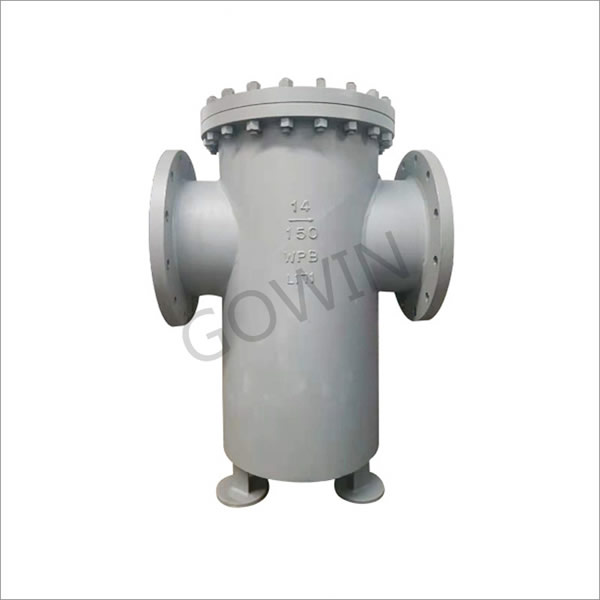
GOWIN’s Y strainer product page presents the strainer family and its screen options. Use the page to start the conversation, then confirm the screen specification on the quotation and drawing. The guide to industrial strainer types helps separate a Y pattern from a basket pattern before the screen is chosen.
How Do You Convert Mesh to Microns?

Use a published sieve table as a reference, then confirm the actual opening with the supplier. The table below uses common ASTM E11 reference points. It is not a stock list, and it does not promise that every supplier’s screen will match the nominal value.
| Mesh (ASTM E11) | Nominal opening |
|---|---|
| 40 | 400 micrometres |
| 80 | 177 micrometres |
| 100 | 149 micrometres |
| 200 | 74 micrometres |
| 325 | 44 micrometres |
The relationship is not linear. Moving from 40 to 80 mesh roughly halves the opening, but the wire diameter also changes. That is why a simple formula cannot replace the table. The mesh-to-micron figure is a nominal opening for a standard sieve, not a guarantee for a strainer screen made from a different wire or weave.
When a project specifies a micron size, ask the supplier to state the mesh equivalent and the wire diameter. When a project specifies mesh, ask for the nominal micron opening. Either way, the quotation should show both numbers so the buyer can compare offers on the same basis. If a supplier cannot state the opening, the mesh number is not enough to evaluate the offer.
The conversion also depends on the standard. ASTM E11 is common in North American practice, while other sieve standards use different nominal openings at the same mesh count. State the standard in the RFQ when the screen is critical. If the project uses a metric sieve designation, give the micron opening directly and avoid a mesh conversion argument.
Why Is Mesh Alone Not a Filtration Rating?
A filtration rating describes what a filter or screen is expected to capture under stated conditions, which is why a mesh to micron figure should be read as a reference. Mesh only describes the weave count. It does not state the particle size that will be retained, the flow rate at which the rating applies, or the allowable pressure drop. Two 100 mesh screens can behave differently if one has a larger open area or a different wire profile.
The term “micron rating” is also used loosely in the market. A nominal rating, an absolute rating and a beta ratio are not the same thing. A nominal rating describes an approximate capture level. An absolute rating describes a stated particle size above which a defined percentage is retained. A beta ratio compares the number of particles upstream and downstream at a given size. A strainer screen is usually specified by opening and open area, not by a filter beta ratio.
That distinction matters in procurement. If the process specification calls for a 100 micron filter, a 100 mesh screen is not automatically equivalent. If the screen protects a pump or a check valve, size the opening for that equipment’s tolerance and check the check valve category when the line also needs backflow protection. The screen may have a nominal opening near 149 micrometres, and its capture performance depends on the particle shape, flow and screen construction. Ask what the requirement actually protects, then choose the opening that meets it. The swing check valve standards guide outlines the evidence to request for that valve.
The filter versus strainer comparison explains why the two product families are specified differently. A filter is often chosen for fine capture and a defined efficiency, while a strainer is often chosen for coarse protection and cleanability. Using a mesh number as if it were a filter rating can lead to a screen that is too fine, too coarse or simply unverifiable.
How Does Open Area Change at Finer Mesh?
Open area is the percentage of the screen surface that is open to flow. As mesh becomes finer, the number of wires increases and the open area usually falls. A screen with less open area creates more resistance at the same flow, so the pressure drop across the strainer rises faster as debris builds up.
That does not mean fine mesh is always wrong. It means the buyer has to check the whole duty: the particle size to retain, the flow rate, the fluid viscosity, the allowable pressure drop and the cleaning interval. A fine screen on a clean liquid line may be reasonable. A fine screen on a dirty line may blind quickly and force frequent shutdowns.
The screen’s wire diameter and weave also affect open area. A plain weave with thicker wires has less open area than a twilled weave with thinner wires at the same mesh count. The supplier should state the weave and wire diameter if the screen is being selected for a critical duty. If the quotation only lists mesh, the buyer cannot tell how the screen will perform.
Pressure drop is measured across the strainer, not inferred from the mesh number. Ask for a pressure-drop curve or a calculated value at the design flow, with the fluid and screen stated. If the supplier cannot provide one, request the screen area and opening so the buyer can compare offers. A basket strainer may provide more screen area in a larger body, which can extend the cleaning interval when the debris load is high.
What Should You Specify Instead of a Mesh Number?
Specify the outcome, then let the supplier propose the screen. The outcome includes the particle size to retain, the allowable pressure drop when clean and when loaded, the fluid, the flow rate, the temperature and the cleaning method. Add the screen material and any compatibility requirement with the line material.
| Requirement | What to state | Why it matters |
|---|---|---|
| Capture | Particle size or micron opening to retain | Sets the screen opening |
| Flow | Design flow and turndown | Sets the velocity and pressure drop |
| Fluid | Liquid, gas, steam, viscosity and debris type | Affects screen choice and cleaning |
| Pressure drop | Allowable clean and dirty values | Prevents pump or process problems |
| Cleaning | Manual, blowdown or backwash | Sets access and screen support |
| Material | Screen and body material | Maintains corrosion resistance |
| Standard | Sieve standard or test method | Makes the opening comparable |
A micron opening is usually a better purchase specification than a mesh count because it states the dimension the buyer cares about. Add the wire diameter and weave if the screen is custom. Add the screen area if the pressure drop is critical. Add the acceptable cleaning interval if the line cannot be shut down often.
GOWIN’s Y strainer and basket strainer pages show the two common body styles. The valve material guide helps keep the screen and body materials aligned with the fluid. For isolation during cleaning, the gate valve category and API 600 gate valve page are useful references.
How Should You Compare Supplier Quotations?

Compare the screen data before comparing the price, and treat every mesh to micron claim as something to verify. A lower-priced strainer with a thinner screen or a smaller open area may cost more over the maintenance interval. A higher-priced strainer with a larger screen area may reduce shutdowns. The comparison only works when both offers use the same flow, fluid, opening and pressure-drop basis.
Ask each supplier for the nominal opening, wire diameter, weave, screen material, screen area and pressure-drop basis. Ask whether the pressure drop is calculated or tested, and at what flow and viscosity. Ask how the screen is retained in the body and whether it can be removed without damaging the gasket. These details decide whether the screen can be maintained in the installed location.
A quotation that lists only “100 mesh” is incomplete for a critical duty. A quotation that lists “100 mesh, 149 micron nominal, 0.1 mm wire, 316 stainless, 0.05 m2 screen area, pressure drop calculated at design flow” gives the buyer something to check. The second offer may still be wrong for the duty, but at least the assumptions are visible.
For isolation during screen cleaning, compare the manual butterfly valve or a wafer butterfly valve with a gate valve. The ball valve category and floating ball valve page are relevant when the strainer is part of a larger isolation package. Keep the screen decision separate from the valve decision, then confirm that the package fits the same pressure class and envelope.
Standard: ASME, API, JIS, BS, DIN, GB, JB, HG
Conclusion
Mesh to micron conversion is useful for orientation, but it is not a purchase specification. Mesh counts openings per inch, while the micron value describes a nominal opening that changes with wire diameter and standard. For a reliable strainer screen, state the particle size to retain, the flow, the fluid, the allowable pressure drop and the cleaning method.
Ask the supplier to quote the opening, wire diameter, weave, material, screen area and pressure-drop basis. Then compare offers on those numbers rather than on the mesh label. A short, specific RFQ will produce a screen that can be checked, maintained and replaced without guesswork.
Send the medium, size, operating pressure and temperature, and the relevant drawing for a duty-specific quotation.


 CHINA
 LIBERIA
 FRANCE
 BARBADOS
 KIRIBATI


