


What are the different types of gate valves used in modern global energy infrastructure? Most oil and gas projects rely on API 6D Slab Gate Valve models and expanding gate valves for reliable isolation. GOWIN provides certified valves that ensure zero-leakage performance in the harshest pipeline environments. This technical guide explains the specific valve models required for long-distance transport and upstream production.
The Role Of The API 6D Slab Gate Valve In Midstream Pipelines
The slab gate valve is the primary workhorse for the midstream oil and gas sector. It features a through-conduit design that allows for a smooth flow path with zero pressure drop. This makes the gate valve oil and gas projects use ideal for long-distance transmission lines. Because the bore is unobstructed, operators can easily perform “pigging” operations to clean the pipeline.
GOWIN specializes in the PFF Slab Gate Valve and the FC Type Slab Gate Valve. These models provide bidirectional sealing, meaning they block fluid from both the upstream and downstream directions. The API 6D Slab Gate Valve standard ensures the body is thick enough to handle high surge pressures. This level of durability is essential for preventing environmental disasters in remote areas.
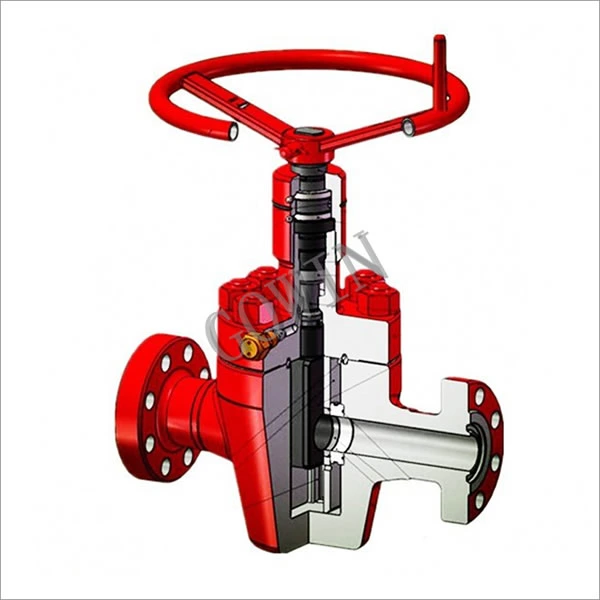
- Nominal diameter: 1/2″-60″ DN15-DN2000
- Pressure: 150LB-2500LB 0.6Mpa-42.0Mpa
- End Connection: RF, RTJ, BW, THR, SW
- Temperature: -196℃-650℃
Understanding The Expanding Gate Valve For Mechanical Sealing
An expanding gate valve offers a unique mechanical seal that does not rely on fluid pressure. The gate consists of two separate segments that expand against the valve seats during the closing stroke. This creates a tight, positive seal even in low-pressure conditions where other valves might leak. It is a preferred choice for high-pressure wellhead applications.
In the context of gate valve types, the expanding design is valued for its safety. It prevents internal leaks during significant temperature fluctuations that could cause thermal binding in other models. Engineers often specify these for upstream production manifolds where media can be abrasive. This mechanical sealing helps protect the internal trim from premature erosion.
Parallel Slide Gate Valve Mechanics In High-Temperature Service
The parallel slide gate valve uses two independent discs held together by a spring mechanism. As the valve closes, the spring forces the discs against the seats to create a seal. Unlike a wedge valve, this design does not require high mechanical force to achieve shut-off. This makes it highly resistant to thermal binding in high-temperature gas lines.
For refineries and power generation, the parallel slide design ensures reliable operation during thermal cycling. These oil and gas gate valves allow for the natural expansion of the stem without damaging the seats. This reduces the torque required to operate the valve after it has been closed for long periods.
GOWIN’s parallel slide models are engineered to maintain integrity in steam and hot gas services.
Technical Advantages Of GOWIN Oil And Gas Gate Valves
Choosing the right gate valve in oil and gas operations involves looking at maintenance features. GOWIN’s valves include emergency lubrication fittings on both the stem and the seat areas. If a minor leak occurs, operators can inject sealant to restore the seal temporarily. This capability prevents the need for immediate and expensive pipeline shutdowns.
Our FC Type Slab Gate Valve is specifically designed for high-pressure service up to 15,000 PSI. We use high-grade forged steel for the body to ensure maximum structural integrity. Every API 6D Slab Gate Valve we produce undergoes rigorous hydrostatic and pneumatic testing. This commitment to quality makes our products a trusted choice for international distributors and contractors.
Comparison Of Gate Valve Types For Energy Projects
| Valve Type | Primary Application | Sealing Method |
| Slab Gate Valve | Long-distance pipelines | Fluid Pressure/Bidirectional |
| Expanding Gate Valve | Wellhead/Manifolds | Mechanical Expansion |
| Parallel Slide Valve | Refineries/Steam | Spring-loaded Discs |
| Wedge Gate Valve | General Industrial | Mechanical Wedging |
Frequently Asked Questions (FAQ)
What is the advantage of a slab gate valve?
A slab gate valve offers a “through-conduit” design, which means the flow path is completely clear. This results in zero pressure drop and allows for pipeline pigging. Its bidirectional sealing capability makes it ideal for long-distance oil and gas transport.
Why is API 6D certification important for gate valves?
API 6D is the international standard for pipeline valves. It specifies strict requirements for design, manufacturing, and testing to ensure safety. Using an API 6D Slab Gate Valve guarantees the product can handle the high pressures typical of energy projects.
Can an expanding gate valve be used for bidirectional flow?
Yes, expanding gate valves provide a positive mechanical seal in both directions. This makes them highly reliable for isolation in wellhead systems. They are particularly effective in preventing leaks during the pressure fluctuations common in upstream production.
What are the different types of gate valves for high-pressure gas?
The most common types are slab gate valves and parallel slide gate valves. Slab gate valves are used for transport, while parallel slide valves are used in refineries. Both types are designed to handle high-velocity gas without vibrating or losing their seal.

Conclusion
Understanding what are the different types of gate valves is the first step in building a safe pipeline. GOWIN Industrial Valve provides the expertise and API 6D certified products needed for critical energy projects. Whether you need a slab gate valve for a pipeline or an expanding gate valve for a wellhead, we have the solution. Contact GOWIN today to discuss your project specifications. Our engineering team is ready to help you select the most reliable oil and gas gate valves for your distribution network.


 CHINA
CHINA LIBERIA
 FRANCE
 BARBADOS
 KIRIBATI

