


Quick Answer
A high pressure ball valve can use forged or cast steel: forging suits compact pressure-boundary geometries and can provide favorable material continuity, while casting offers greater flexibility for larger or more complex shapes. Neither is automatically better; the choice depends on pressure, size, materials, inspection, testing, and service requirements.
In terms of selecting a valve, do not make a comparison based on only the assumption that one manufacturing process is better. The material used in the body of the valve, heat treatment, examination, testing, trim, seats, geometry, and services are important considerations. GOWIN offers both the forged and cast body ball valves for use in various industries.
Forged vs Cast Ball Valves: What Is the Manufacturing Difference?
Forging is the compression of hot metal into shape, whereas casting involves the pouring of melted metal into a mold to get the body of the valve. Forging may be useful in making compact pressure boundary geometry, whereas casting gives flexibility in making bodies with large or complex designs.

The differences will come in handy when reviewing drawings and manufacturing for contractors. Either process requires machining, heat treatment, examination, and pressure test.
How Forging and Casting Affect Valve Strength and Integrity
The forged vs cast steel decision should be based on the complete pressure-boundary specification, not the manufacturing process alone. Forging can provide favorable material continuity and grain flow, while cast valve integrity depends on melt control, mold design, solidification, heat treatment, examination, and control of casting discontinuities.
ASME B16.34 applies to new construction and covers pressure-temperature ratings, dimensions, tolerances, materials, nondestructive examination requirements, testing, and marking for cast, forged, and fabricated valves.
Which Is Better for High-Pressure Service?
There is no universal “better” construction. A high pressure ball valve with forged construction may suit applications where compact pressure-boundary construction and the specified material route are important, while casting can be practical when valve size, geometry, manufacturing flexibility, and project requirements favor it.
A common field mistake is approving a valve because its pressure class appears correct without checking material certificates, heat-treatment records, examination requirements, and pressure-test results. If unexpected leakage, dimensional mismatch, or commissioning problems occur, trace the valve back to the approved drawing, material records, inspection documents, and test results rather than assuming the manufacturing route is the cause.
| Selection point | Forged construction | Cast construction |
|---|---|---|
| Typical manufacturing advantage | Suitable for compact pressure-boundary geometries | Greater flexibility for complex or larger shapes |
| Primary manufacturing concern | Forming, heat treatment, and machining control | Casting integrity, solidification, heat treatment, and examination |
| Inspection focus | Material, heat treatment, machining, NDE where specified, and testing | Casting integrity, material, heat treatment, NDE where specified, and testing |
| Buyer priority | Verify specified forging route and material traceability | Verify casting quality controls and required examination |
Forged vs Cast Ball Valves: Cost, Size and Manufacturing Flexibility
Cost depends on valve size, geometry, material grade, machining requirements, production volume, inspection scope, and delivery requirements. A compact body may be practical to forge, while larger or more complex geometries may favor casting, but actual economics should be compared using equivalent specifications.
For procurement teams, compare the complete quotation rather than judging price from the manufacturing process alone. A forged ball valve may carry different costs because of material grade, heat treatment, inspection, certification, machining, or documentation requirements.
When Should You Choose a Forged High-Pressure Ball Valve?
Consider forged construction when the project specification, pressure-boundary design, size range, material requirements, and manufacturing route support it. A forged steel ball valve may be appropriate where the purchaser specifically requires forged body construction with defined material controls and traceability.
Before installation, verify the valve against the approved drawing, including tag data, body material, pressure class, bore, end dimensions, flow orientation where applicable, actuator clearance, and documentation. Discovering a configuration mismatch after installation can create unnecessary removal, replacement, retesting, and commissioning delays.
When Is a Cast Ball Valve the More Practical Choice?
Casting can be practical when body geometry, valve size, manufacturing flexibility, or project economics favor the process. A cast steel ball valve should not be rejected simply because it is cast; the specified material, casting controls, heat treatment, examination, pressure testing, and finished valve must meet the applicable requirements.
One hidden failure point is assuming that visual inspection alone confirms casting integrity. Where required by the purchase specification, review material certificates and examination records before acceptance, then confirm that pressure and leakage tests have been completed to the specified requirements.
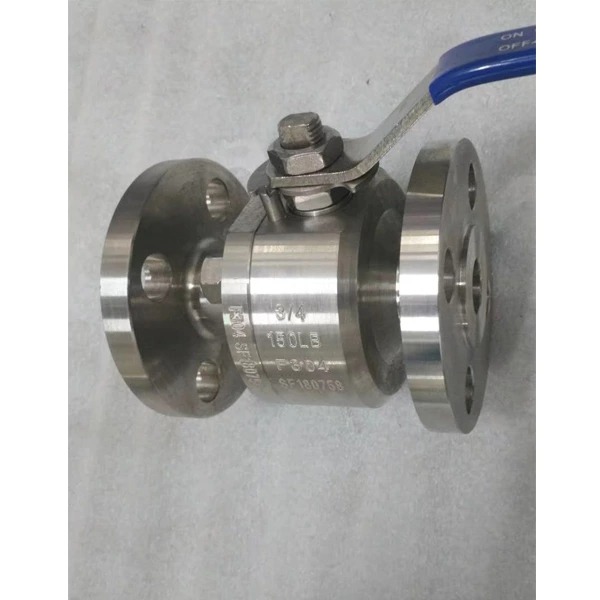
Standard: ASME, API, JIS, BS, DIN, GB, JB, HG
Material: WCB, A105, LCB, LC3, CF8, CF8M, CF3, CF3M, CF8C, CF10M, CG8M, WC1, WC6, WC9, F11 and etc.
What Should Buyers Verify Beyond “Forged vs Cast”?
Use a procurement checklist that covers:
- Pressure class, design pressure, temperature, valve size, and bore.
- Body and trim materials, heat treatment, and traceability.
- Applicable valve, dimensional, and project standards.
- Required examination and pressure-testing procedures.
- Seat and seal materials for the actual service.
- End connections, dimensions, and actuator interface.
- Approved drawings and valve identification.
- Material certificates, inspection reports, and test records.
- Third-party inspection requirements where specified.
- Documentation required for commissioning and final handover.

Conclusion
Choosing a high pressure ball valve is a pressure-boundary, specification, and risk-control decision rather than a simple preference for forged or cast construction. When body materials, manufacturing controls, inspection, testing, dimensions, and service conditions are properly aligned, either construction can be appropriate for its intended application.
For practical product comparison, buyers can review GOWIN’s ball valve range, including its forged steel floating ball valve and cast steel floating ball valve. The final selection should remain based on the approved datasheet, inspection requirements, and service conditions rather than the body-manufacturing label alone.
FAQ
1. What are the differences between cast and forged valves?
Forged valves are formed from solid metal through controlled compressive deformation, while cast valves are produced by pouring molten metal into a mold. The manufacturing route affects body geometry, processing, inspection, and production flexibility.
2. Is cast better than forged?
Neither is automatically better. Selection should follow valve size, pressure-temperature service, body geometry, material requirements, inspection scope, project specifications, and the required manufacturing route.
3. What are the disadvantages of forged steel?
Potential disadvantages include greater forming and machining requirements for some geometries, limitations when producing very large or complex shapes, and potentially higher manufacturing cost depending on material, size, production volume, and processing requirements.


 CHINA
CHINA LIBERIA
 FRANCE
 BARBADOS
 KIRIBATI

