


Quick Answer
Choosing the proper high-pressure ball valve material is contingent upon pressure levels, temperature, chemical composition, corrosive environment, and expected service life. Carbon steel is an excellent choice for many controlled environments, but stainless steel and duplex materials are chosen for increased corrosion resistance and enhanced mechanical properties.
When selecting a material, it is important to consider all wetted surfaces: the body, ball, stem, seats, seals, etc., since just one wrong component will lead to failures. GOWIN helps with material selection, custom design, inspections, and production of high-pressure valves.
Why Material Selection Matters More in High-Pressure Ball Valves
The choice of materials impacts pressure resistance, corrosion resistance, temperature capability, wear, and maintenance needs. Excessive thermal cycling, aggressive media, wrong trim composition, or wrong seal materials will cause premature wear or leakages even if the valve body itself meets the pressure rating.
Before installation, confirm the material specification against the actual line media and design conditions. This prevents material mismatches that can cause leakage during commissioning or create maintenance problems later in operation.

Carbon Steel Ball Valves: When Are They the Practical Choice?
If you are looking for a reliable valve that will handle many non-corrosive and/or controlled fluid services, then the carbon steel ball valve would be a good choice for you. The WCB grade carbon steel casting is one of the most common materials used in valves; however, this depends on the design.
Carbon steel should not be selected from pressure requirements alone. If moisture, chlorides, aggressive chemicals, or external corrosion are present, the specification should address corrosion protection and compatible wetted materials.
Stainless Steel Ball Valves: When Is Corrosion Resistance Worth the Cost?
A stainless steel ball valve is generally considered when the process fluid or surrounding environment creates a meaningful corrosion risk. The appropriate stainless grade depends on the specific medium, chloride exposure, concentration, temperature, and required service life rather than the word “stainless” alone.
A 316 stainless steel ball valve may be specified where its molybdenum-containing stainless construction provides useful resistance to certain corrosive environments. The grade should still be checked against the actual process chemistry and operating temperature.
When Do You Need Duplex or Higher-Alloy Materials?
A duplex stainless steel ball valve can be considered when the application requires corrosion resistance together with higher strength than many conventional austenitic stainless grades provide. Selection should account for the process medium, chloride exposure, temperature, pressure, and required mechanical properties.
Higher-alloy materials may be appropriate for more demanding corrosion conditions, but material selection also increases the importance of certification, fabrication control, machining, welding where applicable, and inspection. The material grade must therefore be matched to the actual service rather than selected simply because it is a higher alloy.
Body Material Is Only Half the Decision: Seats and Seals Matter Too
The ball valve material should be reviewed as a complete pressure-boundary and wetted-material package. Ball and stem materials, seat construction, elastomer compatibility, and seal performance all influence whether the valve remains tight after repeated operation.
Before installation, compare the approved material list with the valve datasheet, material certificates, and purchase specification. If a seat or seal is changed without checking temperature and chemical compatibility, a valve that passed factory testing can still experience leakage after commissioning.
How to Match Ball Valve Material to Your Service Conditions
Start with the complete operating envelope rather than selecting material from pressure rating alone. Check these conditions together:
| Service factor | What to verify | Why it matters |
|---|---|---|
| Pressure | Design and operating pressure | Confirms pressure-boundary suitability |
| Temperature | Minimum and maximum temperature | Affects material strength and sealing |
| Media | Fluid composition and concentration | Determines corrosion and compatibility |
| Environment | Chlorides, moisture, external exposure | Can drive external corrosion |
| Cycling | Frequency and operating method | Influences seat and stem wear |

Use actual process data from the piping specification before ordering. Applicable valve standards should also be checked against the selected construction, pressure-temperature conditions, materials, testing, and marking requirements; ASME B16.34 specifically addresses these areas for covered valve constructions.
What Material Information Should Buyers Put in an RFQ?
An RFQ should identify body and bonnet materials where applicable, ball and stem materials, seat and seal materials, pressure class, size, end connection, temperature range, process media, and material certification requirements. It should also state testing, inspection, traceability, and third-party inspection requirements when these are required by the project.
This level of detail reduces the risk of substitutions that appear equivalent on paper but are unsuitable for actual service conditions. For critical applications, the RFQ should also identify the governing valve standards and required documentation so procurement, inspection, and installation teams are working from the same specification.
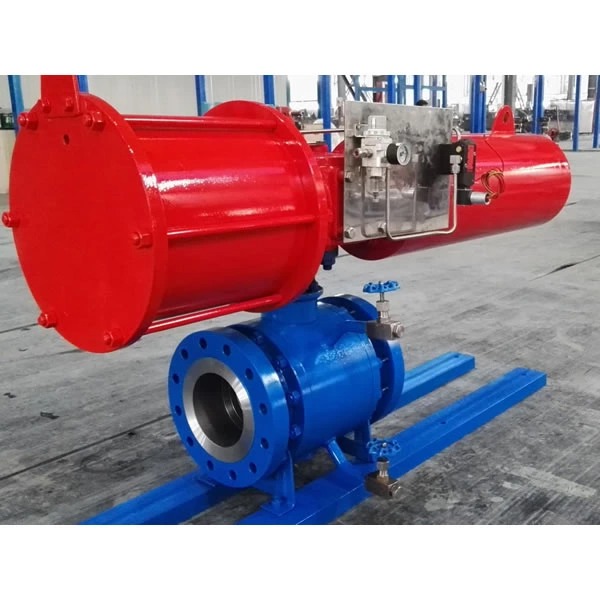
Standard: ASME, API, JIS, BS, DIN, GB, JB, HG
Material: WCB, A105, LCB, LC3, CF8, CF8M, CF3, CF3M, CF8C, CF10M, CG8M, WC1, WC6, WC9, F11 and etc.
Conclusion
The correct high pressure ball valve material must satisfy the complete service envelope, not simply the highest pressure rating. Matching the body, trim, seats, and seals to pressure, temperature, media, corrosion exposure, and cycling reduces leakage risk and supports reliable commissioning.
For buyers comparing configurations, GOWIN’s ball valves can be reviewed alongside the project material specification, inspection requirements, and application data to keep procurement aligned with installation and operating needs.
FAQ
1. What are the main materials used in ball valves?
Common choices include carbon steel, stainless steel, duplex stainless steel, and other alloy materials. The appropriate selection depends on pressure, temperature, process media, corrosion exposure, mechanical requirements, and expected service life.
2. What is WCB body material?
WCB is an ASTM A216 carbon steel casting grade commonly used for pressure-containing components such as valve bodies. Its suitability depends on the valve design and actual service conditions, including pressure and temperature.
3. Which valve is used for high pressure?
A valve for high-pressure service must be selected according to its pressure-temperature rating, construction, materials, size, end connections, sealing arrangement, and applicable standards. The complete valve design must suit the operating envelope rather than relying on material grade alone.
4. What is a high pressure ball valve?
A high pressure ball valve is a ball-type shutoff valve designed and rated for demanding pressure conditions. Selection should consider pressure, temperature, materials, sealing, end connections, testing, and the process medium.


 CHINA
CHINA LIBERIA
 FRANCE
 BARBADOS
 KIRIBATI

