


A needle valve is designed to give you very precise control over small flow rates in high-pressure or sensitive systems.
Unlike ball or gate valves that focus on quick shutoff, a needle valve helps you adjust flow gradually and accurately. This makes it essential in the following:
- Instrumentation
- Sampling, and
- Calibration systems.
Many articles define the valve but fail to explain how it achieves such fine control. This guide focuses on structure, working principle, and real industrial use.
What Is a Needle Valve and Where Is It Used?
A needle valve is a small valve with a slender, tapered stem that fits into a matching seat.
It is commonly used in:
- Instrumentation lines
- Laboratory systems
- Petrochemical sampling units
- Power plant analysis panels
So, what is a needle valve used for?
The answer is simple. It allows you to regulate low flow rates with high accuracy.
It is especially useful when small adjustments make a big difference.
Needle Valve Working Principle Explained Simply
Understanding the needle valve working principle helps you see why it performs differently from other valves.
When you turn the handle, the threaded stem moves the tapered needle up or down.
As the needle moves closer to the seat, the flow opening becomes smaller. As it moves away, the opening increases gradually.
Because the tip is long and tapered, flow changes happen in small increments. This allows smooth and stable regulation.
Instead of switching fully open or fully closed, you can fine-tune the flow step by step.
How the Tapered Stem Enables Precision Control
The key to needle valve flow control is the shape of the stem.
The needle is not flat. It has a carefully machined tapered tip that narrows gradually.
In Gowin needle valves, this taper is engineered for high precision contact with the seat. The geometry allows micron-level adjustment in small flow passages.
This means even a slight rotation of the handle results in a controlled and predictable flow change.
In sampling systems, such precision helps maintain stable readings and accurate analysis.
Without this tapered design, flow would change too quickly and become unstable.
Main Function of Needle Valve in Industrial Systems
The main function of a needle valve is to regulate flow with high accuracy while also providing shutoff capability.
It performs three important roles:
- Fine adjustment of flow rate
- Stable pressure drop control
- Secure isolation when fully closed
In high-pressure systems, this combination is valuable.
You can gradually reduce pressure before maintenance. You can also adjust the flow to protect sensitive instruments.
Precision Needle Valve in Petrochemical and Power Plants
In petrochemical plants, process sampling lines require careful flow adjustment.
Remember this:
- Flow is too high = sampling results may become inaccurate.
- Fow is too low = the analysis may be delayed.
Gowin precision needle valve products are often used in these sampling panels. Their tapered stem design ensures consistent sealing and controlled flow.
In power plants, similar valves are installed in steam and water sampling systems.
Stable regulation helps protect measurement devices and maintain safe operating conditions.
Precision control is not just about accuracy. It also protects downstream instruments.
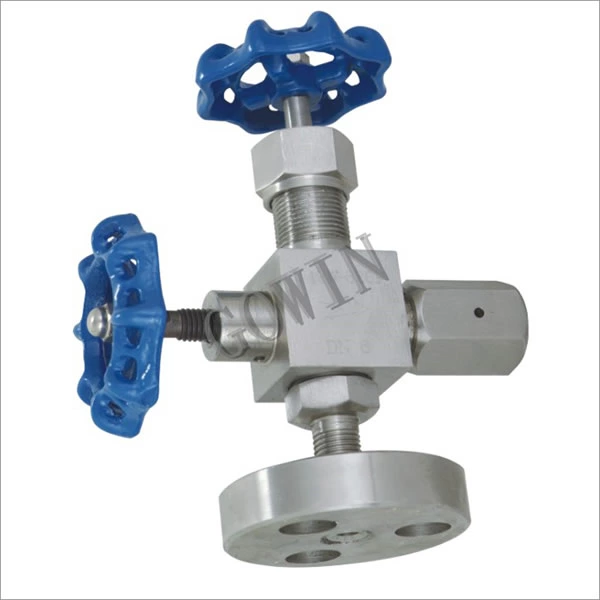
- Nominal diameter: 1/8″-1″ DN6-DN25
- Pressure: 150LB-2500LB 0.6Mpa-42.0Mpa
- End Connection: RF, RTJ, BW, THR, SW
- Temperature: -196℃-650℃
Fine Control vs Standard Shutoff Valves
It helps to compare a fine control needle valve with common shutoff valves.
| Feature | Needle Valve | Ball Valve |
| Flow Adjustment | Gradual and precise | Quick open or close |
| Best For | Low flow regulation | On-off isolation |
| Control Sensitivity | Very high | Low |
| Pressure Handling | Suitable for high pressure | Also high, but less precise control |
If you need an accurate adjustment, a needle valve is more suitable than a ball valve.
If you only need quick isolation, a ball valve may be enough.
Choosing the wrong valve can make regulation difficult.
Materials and Pressure Considerations
Needle valves are available in stainless steel, carbon steel, and other alloys.
Material choice depends on:
- Temperature
- Pressure, and
- Media type.
High-pressure applications require a strong body design and functional sealing.
In sampling systems handling corrosive fluids, stainless steel construction is common.
You should always match material grade with operating conditions.
Common Design Variations
Although the basic principle remains the same, needle valves come in several designs.
These may include:
- Angle body configuration
- Straight body configuration
- Panel mount design
- Integral bonnet construction
Each variation supports specific installation layouts.
However, the tapered needle remains the core feature that enables precision.
Installation and Adjustment Tips
To maintain accurate needle valve flow control, installation matters.
Aside from that, pay attention to the following tips:
- Over-tightening during installation = may damage threads or seat surfaces.
- Turning the handle gradually when adjusting flow = small turns create noticeable changes.
- Regular inspection = ensure sealing surfaces remain clean and undamaged.
- In high-pressure systems, periodic maintenance is a must for long-term functionality.
Common Misunderstandings About Needle Valves
Some people assume needle valves are only for low-pressure systems. In reality, many designs handle high-pressure environments effectively.
Others believe they are only used in laboratories. Industrial plants rely on them for sampling and instrumentation control.
Many online articles describe the general structure but ignore the importance of stem taper design.
Precision machining quality often determines performance more than external appearance.
Understanding these details helps you select the right product.
How to Choose the Right Needle Valve
When selecting a needle valve, consider the following:
Required Flow Accuracy
If your system requires stable low flow rates, choose a precision needle valve with a well-engineered tapered stem.
Pressure Rating
Confirm the valve body and seat can handle your system pressure.
Media Compatibility
Select material based on fluid type and temperature.
Installation Space
Panel mount designs may save space in control cabinets.
Choosing correctly improves both safety and performance.
Final Thoughts
If you are asking: “What is a needle valve?”, remember that it is designed for controlled and accurate flow adjustment.
Its tapered stem allows gradual and predictable regulation that other valves cannot match.
From petrochemical sampling panels to power plant analysis systems, precision needle valve designs support stable and safe operations.
When you need a good fine flow control under pressure, a well-designed needle valve becomes an essential part of your system.


 CHINA
CHINA LIBERIA
 FRANCE
 BARBADOS
 KIRIBATI

