


The types of needle valves differ mainly by body structure, port configuration, and pressure capability, and each design fits a specific application.
If you select the wrong structure, you may face:
- Flow instability
- Difficult installation, or
- Premature wear.
Many online guides list valve names without explaining the structural impact. This article builds a clear classification system and explains how each type performs in real installations.
How Needle Valves Are Professionally Classified
In practice, needle valves can be grouped into three main categories:
- By body structure
- By port configuration
- By pressure rating and size
This structured approach helps you match valve design with system requirements.
Below, we break down each category clearly.
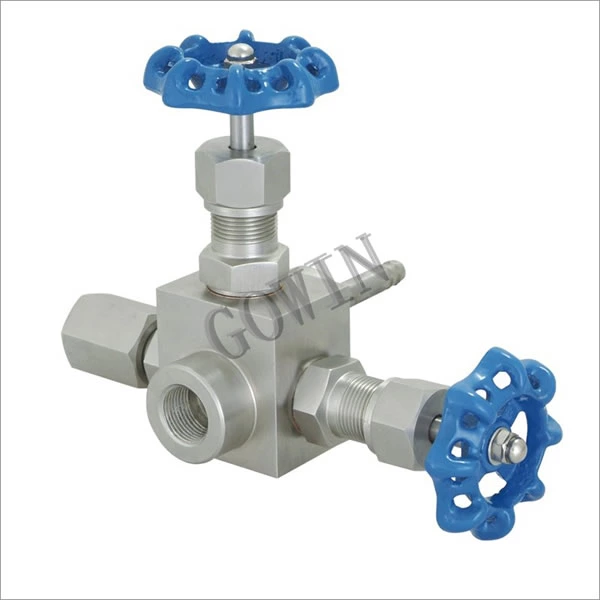
- Nominal diameter: 1/8″-1″ DN6-DN25
- Pressure: 32.0Mpa
- End Connection: RF, RTJ, BW, THR, SW
- Temperature: -196℃-650℃
Straight vs Angle Body Design
The most fundamental classification within the types of needle valves is straight versus angled body structure.
Straight Needle Valve
A straight needle valve has inlet and outlet ports aligned on the same axis.
Fluid flows in a linear path through the valve body. This design is simple and compact.
It is commonly used in panel installations and inline tubing systems.
Because the flow path is straight, the pressure drop is predictable. Maintenance is also straightforward due to the simple internal geometry.
Angle Needle Valve
An angle needle valve changes the flow direction by ninety degrees inside the body.
This design reduces the need for an external elbow fitting. It simplifies piping layout in tight spaces.
In confined control cabinets, angle designs often reduce connection points.
Fewer fittings mean fewer potential leak paths.
Straight vs Angle Comparison
| Feature | Straight Needle Valve | Angle Needle Valve |
| Flow Path | Linear | 90-degree turn |
| Space Use | Best for inline runs | Saves space in corner layouts |
| Pressure Drop | Slightly lower | Slightly higher due to the turn |
| Installation | Requires an elbow if a direction change is needed | Eliminates extra elbow fitting |
| Leak Points | Depends on external fittings | Often fewer fittings are required |
Understanding this difference helps reduce unnecessary fittings and installation complexity.
Multiport Needle Valve for Compact Systems
A multiport needle valve integrates multiple inlets or outlets into one body.
This design is especially useful in sampling panels and test benches.
Instead of installing several single valves with tees and connectors, one multiport unit manages multiple flow paths.
Gowin offers non-standard customization for multi-port configurations. This allows engineers to simplify piping layouts in confined spaces.
By reducing external fittings, multiport designs lower leakage risk and improve system cleanliness.
They also reduce assembly time and panel weight.
Miniature Needle Valve for Limited Space
A miniature needle valve is designed for low flow and compact installation.
These valves are common in laboratory equipment and analytical instruments.
Their small footprint allows installation in densely packed panels.
Despite their size, they still provide accurate flow adjustment.
Miniature designs are not intended for high-flow industrial pipelines. They focus on precise low-volume control.
High-Pressure Needle Valve for Demanding Systems
A high-pressure needle valve is built with thicker walls and a reinforced stem design.
It is used in hydraulic systems, gas cylinders, and industrial sampling lines.
These valves must withstand significant internal pressure without deformation.
Material selection becomes critical in these environments.
Stainless steel bodies are often used for corrosion resistance and strength.
When selecting for high pressure, always verify the maximum allowable working pressure.
Stem Design: Rising vs Non Rising
Beyond body structure, stem design also influences performance and lifespan.
This topic is often overlooked in competitor articles.
Rising Stem Design
In a rising stem design, the stem moves upward visibly as the valve opens.
You can visually confirm the open position.
However, the exposed stem threads may collect dust or contaminants.
In harsh environments, this may increase wear over time.
Non-Rising Stem Design
In a non-rising stem design, the stem rotates internally without moving upward.
The external profile remains compact.
This design protects threads from exposure and is better suited for confined installations.
In terms of lifespan, non-rising stems often perform better in dirty or corrosive environments.
Choosing the right stem design affects maintenance intervals and durability.
Application-Based Selection
To simplify selection, match valve type with application.
Instrumentation Panels
Straight needle valves or angle needle valves are common.
Angle versions reduce elbow fittings.
Sampling Systems
Multiport needle valve designs simplify complex routing.
High-pressure versions are used when sampling pressurized fluids.
Laboratory Equipment
Miniature needle valve options provide compact installation and precise adjustment.
Hydraulic or Gas Systems
High-pressure needle valve models are required for safety.
Selecting based on application ensures long-term performance.
Customization and Non-Standard Solutions
Standard catalogs do not always fit real installation constraints.
Gowin provides non-standard customization options for special port layouts and connection types.
For example, custom multiport designs can integrate multiple flow channels in one block.
This reduces piping complexity in compact manifolds.
Custom stem lengths and body configurations can also improve access in tight enclosures.
These customization capabilities help engineers optimize layout rather than adapt to standard shapes.
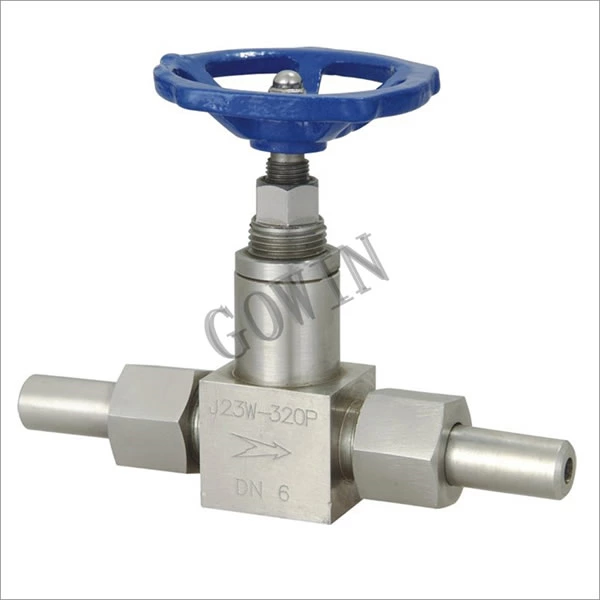
- Nominal diameter: 1/8″-1″ DN6-DN25
- Pressure: 150LB-2500LB 0.6Mpa-42.0Mpa
- End Connection: RF, RTJ, BW, THR, SW
- Temperature: -196℃-650℃
Final Thoughts
The types of needle valves vary by structure, port design, and pressure capability.
Straight and angled body designs influence piping layout and leak points.
Multiport and miniature options support compact installations, while high-pressure needle valve models serve demanding systems.
Stem design also affects lifespan and maintenance needs.
When you match structure with application and consider customization options, you improve safety, efficiency, and long-term functionality.


 CHINA
CHINA LIBERIA
 FRANCE
 BARBADOS
 KIRIBATI

