


Table of Contents
ToggleThe five most common check valve problems are: unusual noises (chattering or banging), leakage past the seat, reduced flow rate, reverse flow (backflow), and excessive pressure drop. Each symptom points to a specific failure mechanism — and most can be resolved without full valve replacement if caught early.
Check valves are critical components in industrial systems, ensuring unidirectional fluid flow and preventing backflow that can damage upstream equipment. Understanding failure symptoms early prevents unplanned downtime and avoids cascading system damage.
How to Tell If a Check Valve Is Bad — 5 Warning Signs
A check valve is failing if you observe any of the following:
- Vibration or chattering — disc oscillates rapidly, creating noise and accelerating wear
- Loud banging (water hammer) — valve closes too slowly, causing reverse flow surge
- Unusual pressure fluctuations — system pressure erratic even without demand changes
- Disc sticking — valve fails to open fully at normal operating pressure
- Visible external leakage — fluid escaping from body or seat area
Water Hammer Risk: When a check valve closes too slowly, reverse-flow momentum creates a pressure spike (water hammer) that can reach 5-10× the normal operating pressure. In systems above 150 PSI, this can rupture pipe joints, damage pump seals, and crack valve bodies. Installing a spring-assisted check valve or a surge anticipator valve reduces closing time and mitigates water hammer.
If you observe more than two symptoms simultaneously, schedule immediate inspection — the valve is likely in advanced failure with risk of complete backflow protection loss.
Figure 1: Water hammer risk levels based on system operating pressure.
Symptoms of a Faulty Check Valve
Recognizing check valve failure symptoms early can prevent costly downtime and damage to other components. Here are common signs of a faulty check valve:
- Unusual Noises: Rattling, banging, or chattering sounds often indicate improper seating or reverse flow.
- Leakage: Fluid leaking past the valve suggests wear, debris, or damage to the sealing components.
- Reduced Flow Rate: A clogged or partially open valve can restrict flow, leading to reduced efficiency.
- Reverse Flow: This occurs when the check valve fails to prevent backflow, potentially damaging upstream equipment.
- High Pressure Drop: Excessive pressure loss across the valve may indicate internal blockages or a poorly functioning valve.
Causes of Check Valve Problems
Understanding the root causes of check valve issues can help in troubleshooting and prevention. Common causes include:
- Debris and Contamination: Particles in the fluid can lodge in the valve, preventing proper sealing.
- Wear and Tear: Over time, components like seals, springs, and discs can degrade, affecting performance.
- Improper Installation: Installing the valve in the wrong orientation or position can lead to malfunction.
- Pressure and Temperature Extremes: Operating conditions outside the valve’s design limits can cause damage or warping.
- Material Incompatibility: Using a valve made of materials incompatible with the fluid can result in corrosion or erosion.
Troubleshooting and Solutions
Addressing check valve problems promptly can restore system functionality and prevent further issues. Here’s a guide to troubleshooting and resolving common problems:
| Symptom | Root Cause | Immediate Solution |
|---|---|---|
| Unusual Noises | Reverse flow or loose internal components | Inspect the valve for debris and ensure it’s properly seated. Tighten or replace worn components as needed. |
| Leakage | Worn seals or debris preventing a tight seal | Clean the valve and check for damage to seals or seats. Replace damaged parts. |
| Reduced Flow Rate | Clogged or partially open valve | Remove the valve and clean out debris. Verify that the valve is fully operational before reinstallation. |
| Reverse Flow | Failed sealing mechanism or spring | Replace the spring or disc and ensure the valve is correctly installed to prevent backflow. |
| High Pressure Drop | Blockages or improper valve selection | Clear any obstructions and verify that the valve’s specifications match the system’s requirements. |
How to Unclog a Stuck Check Valve
- Isolate and depressurize: Close upstream/downstream isolation valves. Verify zero pressure with a gauge.
- Remove the valve: Follow manufacturer torque specs for flange bolts or threaded connections.
- Inspect disc and seat: Look for debris, mineral deposits, or scale buildup.
- Clean with appropriate solvent: For general debris, flush with clean water and a soft brush. For mineral scale, use citric acid or descaling solution (avoid chlorinated solvents on stainless steel).
- Check for disc and spring damage: If disc is bent or spring fatigued, replace internals rather than reinstalling.
- Reinstall and test: Verify disc moves freely before reinstallation. Pressurize slowly and monitor for leaks.
Check Valve Material Selection for Industrial Applications
- Carbon Steel (WCB): Standard oil, gas, and steam service. Not suitable for corrosive or acidic media.
- Stainless Steel (CF8M/316): Chemical processing, seawater, acidic fluids. Longer service life in corrosive environments.
- Duplex Stainless: Offshore and high-chloride environments. Excellent pitting corrosion resistance.
- Bronze/Brass: Low-pressure water and HVAC. Not suitable for H₂S-containing streams.
All materials should comply with ASTM A216, A351, or equivalent standards, with material test reports (MTR) available for critical service applications.
NACE MR0175 for Sour Service: For oil and gas applications handling H₂S-containing fluids, check valve materials must comply with NACE MR0175 / ISO 15156. This standard specifies hardness limits, heat treatment requirements, and acceptable material grades for sour service to prevent sulfide stress cracking (SSC). Typical compliant materials include low-alloy steel (A105, LF2) with controlled hardness below 22 HRC. For an overview of API 6D certification requirements for industrial valves…
Preventative Measures
Preventing check valve issues is always better than troubleshooting after a failure. Implement these best practices to keep your valves in optimal condition:
- Regular Maintenance: Schedule inspections to identify wear or damage early.
- Proper Installation: Follow manufacturer guidelines for orientation and positioning.
- Clean System Fluids: Use filtration systems to minimize debris in the fluid.
- Choose the Right Valve: Ensure the valve’s materials and specifications are suitable for your application.
- Monitor Operating Conditions: Keep the system within the valve’s pressure and temperature limits.
Recommended Inspection Schedule:
- Monthly: Visual inspection for external leakage, listen for unusual noises
- Quarterly: Check pressure gauge readings for abnormal pressure drop
- Semi-annually: Internal inspection of disc and seat for wear (if isolation permits)
- Annually: Full disassembly, cleaning, seal replacement, and flow test
- Every 5-7 years: Consider full valve replacement for critical service
Bad Check Valve: Key Takeaways
Identifying and addressing bad check valve symptoms early is essential for maintaining system efficiency and preventing costly damage. Proper maintenance and timely troubleshooting ensure your system operates at peak performance.
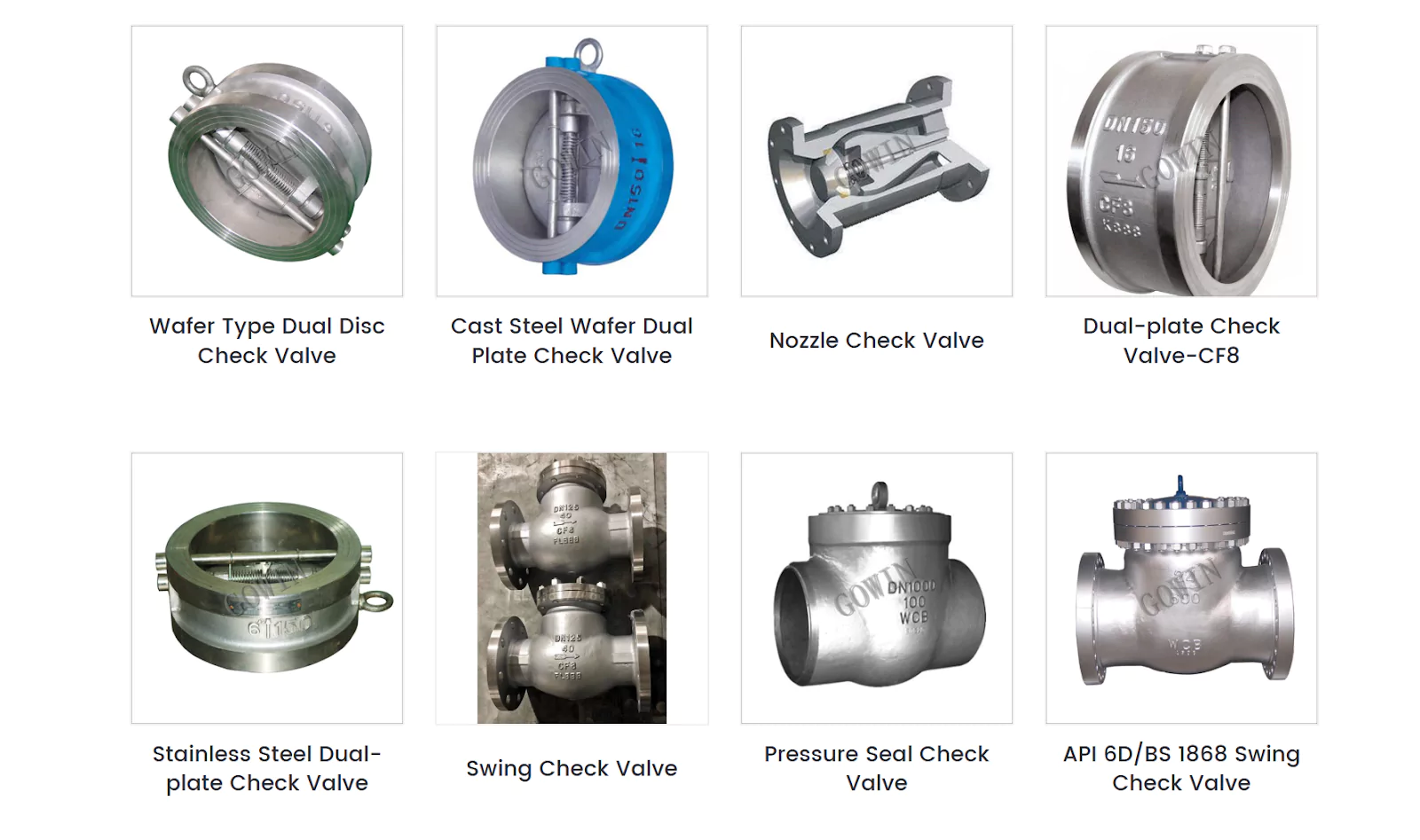
For procurement teams and maintenance engineers sourcing replacement check valves for industrial service, GOWIN Industrial Valve manufactures swing, lift, wafer, and dual-plate check valves meeting API 6D, API 594, and ISO 9001 standards. Full material certifications (MTR), third-party inspection reports, and datasheet downloads available on request.
Bad Check Valve Symptoms: FAQ
What happens without a check valve?
Without a check valve, backflow can occur, leading to contamination, equipment damage, and inefficient system operation.
What is the correct position of a check valve?
A check valve must be installed in the proper flow direction, indicated by an arrow on the valve body, to function correctly.
What happens if a check valve fails?
A failed check valve can cause reverse flow, pressure loss, and potential damage to upstream components.
Can a faulty check valve cause reverse flow?
Yes, reverse flow is a key symptom of a faulty check valve, often caused by a failed sealing mechanism or improper installation.
What is the lifespan of a check valve?
The lifespan depends on usage, materials, and operating conditions, but most industrial check valves last 5–10 years with proper maintenance.


 CHINA
CHINA LIBERIA
 FRANCE
 BARBADOS
 KIRIBATI

