


A gas over oil actuator provides the critical fail-safe muscle needed to operate heavy-duty pipeline valves in remote environments where external power grids do not exist. In many transmission projects, a gas hydraulic actuator is selected when dependable high torque is required without external utilities. These units utilize the pipeline’s own pressure to move massive valve stems, ensuring a total shutdown even during a complete site power failure.
In the field, a failure to close during an emergency can lead to significant environmental cleanup costs and infrastructure damage. Selecting a self-contained power source like this eliminates the need for complex electrical runs or air compressors at isolated river crossings. This autonomy is why these systems remain a widely preferred choice for high-stakes isolation duties in inhospitable regions.
Why It Matters: Reliability at the Asset Lifeline
In the B2B industrial world, “downtime” is an expensive word, but “containment failure” is worse. For a field engineer, the primary reason we specify this technology is its ability to perform high-torque operations without a plug or a battery. If your remote station loses communication or power, the actuator must still respond to a local pressure drop signal to protect the asset.
One often overlooked failure point is internal seal leakage caused by contaminated pipeline gas. Professionals avoid this by ensuring the control manifold is equipped with high-efficiency filters to keep debris out of the hydraulic circuit. Without these protections, fine particles can foul the manifold block, causing the valve to “hang” or drift during operation.
Working Principle — How It Converts Pipeline Gas Pressure into Actuation Force
The gas over oil actuator working principle combines the energy density of gas with the stability of hydraulic fluid. High-pressure gas is tapped from the upstream side of the pipeline and stored in an accumulator or directed into gas-liquid tanks. The gas presses down on a volume of hydraulic oil, which then flows into the actuator cylinder to move the piston.
This “gas-liquid transmission” is superior because oil is incompressible, providing a smooth, rigid movement that purely pneumatic systems often lack. During commissioning, we verify the multi-function manifold block to ensure the stroke speed is tuned perfectly—fast for emergencies but slow enough to avoid water hammer during routine tests. Proper calibration of the speed control valves is the difference between a successful isolation and a ruptured pipe.
Why Long-Distance Fluid Pipelines Rely on This Design

A long distance fluid pipeline frequently spans long distances through remote terrain where maintenance visits are infrequent. In these scenarios, the gas-over-oil design is one of the most reliable choices because it handles the extreme torque requirements of large-diameter valves without needing a massive motor or external energy. It effectively turns the pipeline itself into the power source for its own protection.
From a maintenance perspective, these units are ruggedized for extreme temperature swings; however, specific temperature capability depends on actuator design, seal materials, and hydraulic fluid selection for the project environment. These units act as “self-contained power plants” for valves, converting line pressure into mechanical work. This is critical when the nearest technician is a six-hour drive away and the site has zero electrical infrastructure.
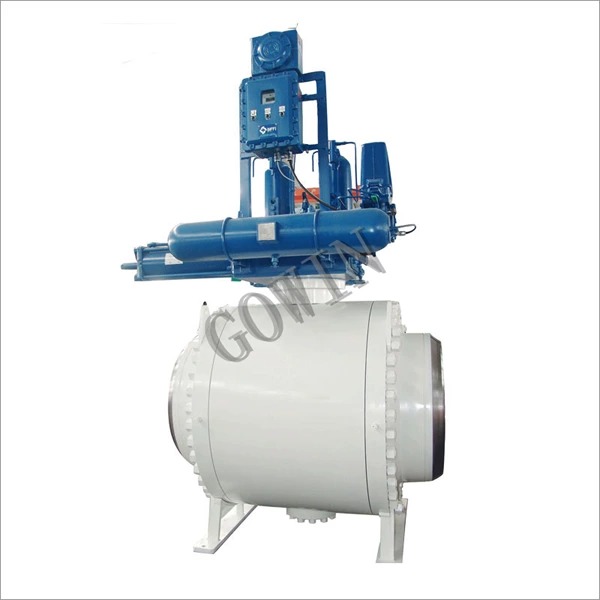
- Nominal diameter: 1/2″-60″ DN15-DN2000
- Pressure: 150LB-2500LB 0.6Mpa-42.0Mpa
- End Connection: RF, RTJ, BW, THR, SW
- Temperature: -196℃-650℃
Gas-Over-Oil vs Pneumatic vs Electric Actuators

Choosing a gas over oil actuator usually depends on whether the site has existing infrastructure or if it is a “greenfield” remote project. Use this table to evaluate method efficiency:
| Feature | Gas-Over-Oil | Electric | Pneumatic |
|---|---|---|---|
| Primary Power | Pipeline Gas Pressure | Electrical Grid | Compressed Air Plant |
| Autonomy | Full (Self-Contained) | Low (Needs Power) | Low (Needs Compressor) |
| Torque Level | Extremely High | Moderate to High | Moderate |
| Response Speed | Fast (ESD Capable) | Typically Slower | Fast |
| Fail-Safe | Internal Accumulator | Battery/Spring | Spring Return |
| Best Application | Remote transmission pipelines | Powered valve stations | Plant and process facilities |
Troubleshooting and Common Maintenance Mistakes
When an actuator begins to drift or respond slowly, technicians often make the mistake of adjusting the pressure settings first. In reality, the hidden failure point is usually moisture or “pipeline scale” that has bypassed the filtration system and fouled the internal check valves. This contamination causes internal bypass, where pressurized oil leaks past seals rather than driving the piston.
Professional workflow dictates a “fluid first” inspection. We check for hydraulic oil aeration or contamination, which indicates a seal breach between the gas and liquid chambers. If the oil level is correct, we then inspect the mechanical stops to ensure they haven’t loosened. Regular pressure testing in accordance with API 598 where applicable ensures that the entire assembly, including the valve and actuator, retains its integrity under operational loads.
Gowin’s Gas-Over-Oil Actuated Ball Valve — Built for Remote Pipeline Sections
For critical infrastructure, we recommend the Gas Over Oil Actuated Ball Valve because it is designed around API 6D pipeline valve requirements. These units are designed for buried service and can provide decades of service with proper inspection and maintenance. Gowin ensures that the integration between the high-pressure forged body and the actuator manifold is seamless.
Gowin specializes in manufacturing these for Class 150 to Class 2500 pressure ratings, using advanced materials that withstand the surge pressures common in slurry transport and high-pressure water lines. Our team provides full material traceability through EN 10204 3.1 material certification and pre-shipment verification to ensure every unit is ready for immediate field deployment. By utilizing our Gowin Ball Valves, operators reduce the risk of accidental stem shearing or seal failure.
Conclusion
The gas over oil actuator remains the gold standard for pipeline safety because it operates entirely on its own terms. By bridging the gap between sophisticated remote control and raw mechanical power, it protects billion-dollar energy assets when every other system fails. For your next remote project, choosing a widely preferred and field-tested actuation solution is the most effective way to ensure long-term operational continuity and safety.
FAQ
How does a gas-over-oil actuator handle emergency shutdowns?
The system utilizes high-pressure gas stored in an accumulator or from the pipeline itself to drive hydraulic oil into the cylinder, ensuring the valve closes instantly if a line break is detected.
What is a Torque Limiting Device (TLD)?
A Torque Limiting Device (TLD) protects the actuator and valve by limiting the maximum torque transmitted during operation. It helps prevent damage if the valve encounters excessive resistance or becomes obstructed during a high-speed stroke.
What maintenance is required for these actuators?
They require regular inspection of hydraulic fluid levels and seal integrity, along with verification of seat leakage performance according to API 598 testing requirements to ensure the isolation remains reliable over time.




 CHINA
CHINA LIBERIA
 FRANCE
 BARBADOS
 KIRIBATI

