


A fire safe ball valve is a critical safety barrier designed to maintain mechanical sealing integrity even after its primary soft seats are destroyed by high-intensity heat. In refinery or chemical plant operations, a valve that fails during fire exposure acts as a fuel source, turning a manageable flame into a catastrophic site-wide disaster. From a contractor’s perspective, choosing certified hardware is a fundamental risk mitigation strategy required to pass site safety audits and meet global insurance standards.
During a hydrotest or site commissioning, technicians must verify stem grounding continuity and inspect graphite packing compression. Skipping these checks often produces false leakage results that are mistaken for seat failure during the initial facility startup phase. Correct installation ensures the secondary metal seat engages effectively when components are stressed during the required fire exposure test.
What Is a Fire Safe Ball Valve
Understanding what is a fire safe valve starts with understanding seal redundancy rather than material toughness alone. While standard Ball Valves rely on soft seats like PTFE for “bubble-tight” shut-off during normal service, the ball valve fire safe design includes a mechanical metal-to-metal backup. This design prevents the “blow-torch” effect that occurs when pressurized gases escape a compromised pipeline and fuel an active blaze.
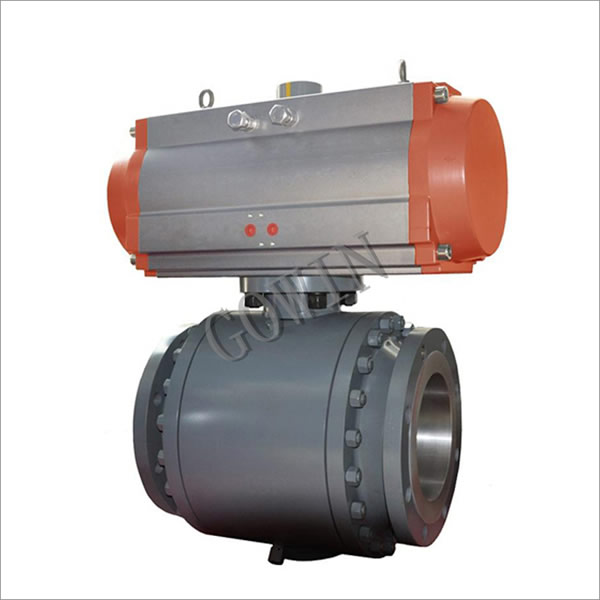
- Nominal diameter: 1/2″-56″ DN15-DN1400
- Pressure: 150LB-2500LB 2.5Mpa-42.0Mpa
- End Connection: RF, RTJ, BW, THR, SW
- Temperature: -196℃-650℃
The engineering logic hinges on the transition from soft-sealing to metal-sealing. When fire causes soft materials to degrade, line pressure or internal springs force the ball into a secondary metal seat. This capability allows emergency teams to contain the incident before it propagates, buying valuable time for response.
API 607 Fire Test Standard Explained
The API 607 standard is the global benchmark for soft-seated quarter-turn valves, providing a repeatable framework for comparing isolation performance under fire. It verifies that a design remains structurally sound and maintains pressure retention before, during, and after a high-intensity burn. Specifying an API fire safe valve ensures the hardware has survived a brutal testing protocol validated by the American Petroleum Institute (API).
To pass, the valve is engulfed in direct flame for 30 minutes at approximately 1400°F (760°C). Once the burn is complete, the valve is cooled and re-pressurized to confirm it meets strict internal and external leakage limits. This rigorous process validates that the valve maintains its structural integrity and can still isolate the line during a facility emergency.
Fire Safe Design Mechanism

To handle extreme thermal stress, the specialized fire safe ball valve utilizes fire-resistant graphite packing and a blow-out proof stem to prevent the stem from becoming a projectile under pressure. Professionals avoid failures by ensuring these parts are never replaced with non-fire-rated components during a maintenance turnaround. A hidden failure point is the installation of standard O-rings during field repairs, which lacks the heat resistance of fire safe valve graphite. Furthermore, a missing anti-static spring breaks the grounding path between the ball and body, creating a spark risk in volatile zones.
Applications in Critical Industries
In the copper and gold mines of Chile and Peru, adhering to global engineering standards is a prerequisite for operational survival. While standard utility valves are acceptable for potable water, a china fire safe valve is essential for any service where a leak would fuel an ongoing fire.
| If your application involves… | Fire Safe Recommended? | Decision Driver |
|---|---|---|
| Hydrocarbons / Crude Oil | Yes | Mandatory per API 607 to prevent propagation. |
| Chemical Solvents | Yes | Prevents toxic release during thermal failure. |
| Abrasive Slurry | Conditional | Metal-seated valves are preferred for erosion. |
| Potable Water / Utility Air | No | Standard soft seats provide better ROI and shut-off. |
Gowin Manufacturing Advantage
Vetting fire safe ball valve manufacturers requires auditing their technical depth and material traceability documentation. Gowin brings over 16 years of expertise to high-risk flow control, maintaining an advanced in-house laboratory accredited under ISO 17025 to verify chemical and physical properties. As a dedicated fire safe design ball valve manufacturer, we provide the technical depth required to satisfy rigorous EPC inspection requirements.

Every production batch undergoes leakage and fire qualification testing before shipment to reduce the likelihood of project-site rejection. We prioritize EN 10204 3.1 material certificates linked to stamped heat numbers on every valve body, ensuring the alloy chemistry matches the project specification exactly.
Contractor Procurement & Installation Workflow
To ensure high-quality commissioning, follow this decision-driven 5-step workflow:
- Specification: Verify ASME B16.5 flange sizes and pressure classes match existing infrastructure.
- Document Review: Match 3.1 MTRs and fire-test reports to the specific heat numbers on the valve bodies.
- Factory Acceptance Test (FAT): Witness shell and seat leakage tests to API 598 as a primary quality gate.
- Field Inspection: Verify anti-static grounding continuity and ensure packing torque meets manufacturer specs.
- Commissioning: Perform multiple functional cycles to confirm the actuator and stem respond to failsafe commands.
Conclusion
Standardizing on the fire safe ball valve is a fundamental insurance policy for your facility’s operational continuity and safety compliance. By focusing on a certified API 607 fire safe ball valve and partnering with an experienced fire safe design ball valve supplier, you protect your personnel and assets from high-consequence events. Standardizing on Gowin Ball Valves ensures your high-risk isolation points are built, tested, and documented to perform exactly when they are needed most.
FAQ
How does a fire-safe valve work?
It is a shut-off valve designed with backup metal seats to maintain sealing performance even after a fire destroys its primary soft internal parts.
What should be inspected before commissioning a fire-safe ball valve?
Technicians must verify anti-static grounding continuity, inspect graphite packing for damage, and ensure that the stem nut is not over-torqued, which could cause emergency seizure.
How do I verify API 607 certification before purchasing?
Check the nameplate for API 607 and request the specific fire-test report to confirm the tested size and pressure class match your project requirements.




 CHINA
CHINA LIBERIA
 FRANCE
 BARBADOS
 KIRIBATI

