


The difference between a 5-way manifold and a 3-way needle valve comes down to:
- Isolation depth
- Venting safety, and
- Calibration control.
If you work with differential pressure transmitters, this choice directly affects maintenance safety and measurement accuracy.
This guide focuses on real operational scenarios, especially the Double Block and Bleed principle and safe venting paths.
Understanding the 3-Way Configuration
A 3-way needle valve setup is typically used with differential pressure transmitters. It includes two block valves and one equalizing valve.
The two block valves isolate the high-pressure and low-pressure sides. The equalizing valve balances pressure between both sides before startup or shutdown.
This configuration supports basic maintenance and zero adjustment. However, it does not include a dedicated bleed valve for controlled venting.
In many installations, external fittings are added to handle pressure release. This adds complexity and increases potential leak points.
Understanding the 5-Valve Manifold Design
A 5-valve manifold needle valve expands the 3-way concept by adding two bleed valves. These additional valves create a safer and more controlled venting path.
A standard 5-valve layout includes:
- Two block valves
- One equalizing valve
- Two bleed or vent valves

This design allows full isolation, equalization, and controlled venting without removing process connections.
Unlike simplified explanations found on competitor pages, the real advantage is not just the number of valves. It is how these valves interact during calibration and transmitter removal.
The Double Block and Bleed Principle Explained
The Double Block and Bleed principle is critical for safe maintenance.
A double block and bleed needle valve arrangement uses two isolation points with a bleed valve between them. This ensures trapped pressure is safely released before equipment removal.
In a differential pressure manifold, DBB works as follows:
- The first block valve isolates the process pressure.
- The second block valve provides a secondary barrier.
- The bleed valve vents trapped pressure between isolation points.
This layered protection reduces the risk of accidental pressure release.
A basic block and bleed needle valve offers single isolation with one bleed path. DBB provides higher safety for high-pressure or hazardous media.
Safer Venting During Transmitter Calibration
Calibration is where configuration differences matter most.
With a 3-way needle valve, technicians must carefully equalize pressure before loosening connections. Without an integrated bleed valve, venting may require additional fittings.
A 5-valve transmitter valve manifold simplifies this process. After closing both block valves, operators can open the bleed valves to release trapped pressure safely.
This controlled venting path reduces sudden pressure discharge. It also protects the sensing diaphragm from shock.
In high-pressure environments, this difference improves both technician safety and instrument longevity.
Impact on Differential Pressure Measurement Stability
Differential transmitters rely on stable high and low pressure references.
A differential pressure manifold with five valves allows:
- Proper equalization before startup
- Safe zero adjustment
- Controlled depressurization
- Reduced mechanical stress on sensing elements
A 3-way arrangement supports equalization but limits venting flexibility.
Many competitor articles focus on cost comparison. They often skip how vent design affects measurement drift and diaphragm fatigue.
Repeated pressure shock can reduce transmitter accuracy over time. Proper manifold design minimizes that risk.
Sealing Performance and Testing Standards
Valve performance is not just about configuration. Sealing integrity matters equally.
Gowin valve manifolds undergo sealing performance testing in accordance with API standards. This includes pressure holding tests and leakage verification.
Each valve seat must maintain a tight shut-off under rated pressure. Stable sealing ensures that the DBB function works as intended.
If either block valve leaks, the bleed valve cannot fully relieve trapped pressure. That weakens system safety.
Comparison Table: 5-Way vs 3-Way Configuration
| Parameter | 3-Way Configuration | 5-Way Configuration |
| Isolation Capability | Dual block | Dual block |
| Bleed Function | Not integrated | Two dedicated bleed valves |
| Calibration Safety | Moderate | High |
| DBB Capability | Limited | Full Double Block and Bleed |
| System Complexity | Simpler | More comprehensive |
This comparison highlights functional differences rather than just valve count.
When Should You Choose Each Option?
Choose a 3-way needle valve when:
- Operating pressure is moderate
- External venting solutions are acceptable
- Budget constraints limit manifold complexity
Choose a 5-valve manifold when:
- High-pressure systems require enhanced safety
- Differential transmitters need frequent calibration
- Hazardous media demands controlled venting
- Full DBB protection is required
The added bleed valves provide a defined and safer depressurization route.
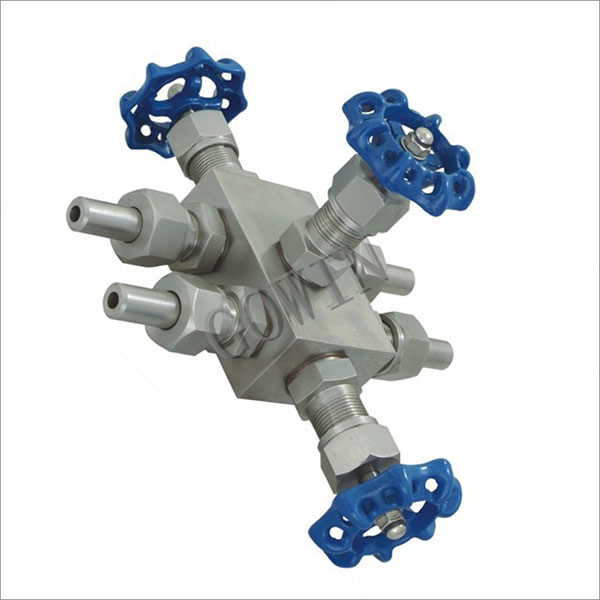
- Nominal diameter: 1/8″-1″ DN6-DN25
- Pressure: 150LB-2500LB 0.6Mpa-42.0Mpa
- End Connection: RF, RTJ, BW, THR, SW
- Temperature: -196℃-650℃
Addressing Common User Pain Points
Many engineers worry about trapped pressure during shutdown. Others are concerned about accidental transmitter damage during maintenance.
A properly designed double block and bleed needle valve arrangement solves both problems. It isolates process pressure while offering controlled pressure release.
Another concern is long-term leakage. Sealing performance testing under API standards ensures stable shut-off under repeated cycles.
These practical concerns are often overlooked in simple specification comparisons.
Final Thoughts
The difference between a 5-way manifold and a 3-way needle valve lies in:
- Safety depth
- Venting control, and
- Maintenance efficiency.
While both isolate and equalize pressure, only a 5-valve transmitter valve manifold delivers full Double Block and Bleed capability with dedicated vent paths.
For high-pressure differential measurement systems, enhanced venting and verified sealing performance provide stronger protection for both personnel and instruments.


 CHINA
CHINA LIBERIA
 FRANCE
 BARBADOS
 KIRIBATI

