


There’s a particular kind of frustration in pulling a backup gate valve off the shelf during an unplanned shutdown. This is when you find that it won’t hold pressure, the stem is seized, or the packing has dried out and crumbled. This will lead to several problems, including a production delay and possibly a safety problem.
Proper storage and maintenance of backup gate valves isn’t complicated, but it does require deliberate attention. This guide covers everything you need to know to keep your spare valves in ready-to-install condition—whether they’ve been on the shelf for six months or three years.
Why Backup Gate Valve Storage Matters More Than Most People Think
Valves are often categorized as “passive” components—after all, they’re not running equipment. It’s easy to assume that a valve sitting in a warehouse is just waiting, unchanged, ready to go whenever you need it.
In reality, several degradation processes begin the moment a valve leaves the controlled environment of the manufacturing facility:
- Corrosion forms on exposed machined surfaces, particularly on the gate, seats, and stem
- Packing materials dry out, compress permanently, or absorb moisture and swell
- Thread lubricants dry or harden, making stem operation stiff or impossible
- Flange face coatings crack or degrade, leading to sealing surface damage
- Internal preservative compounds migrate or break down, leaving vulnerable surfaces exposed
The good news is that with the right storage practices, all of these failure modes are preventable. A well-stored gate valve should be fully functional and pressure-tested to spec on the day you install it, no matter how long it spent on the shelf.
Pre-Storage Preparation: What to Do Before a Valve Goes on the Shelf
Proper storage starts before the valve is ever put away. If you’re receiving new valves into your spare parts inventory or returning a valve to stock after a temporary installation, these steps apply.
Verify the Valve Is Clean and Dry
Any moisture, process fluid residue, or debris left inside the valve body will cause corrosion during storage. Before storing, confirm that:
- The bore and cavity are free of fluid—blow out with clean, dry compressed air if needed
- External surfaces are clean and free of mud, scale, or chemical contamination
- Flange faces are clean and dry—wipe down with a clean cloth
Apply Internal Corrosion Inhibitor
For valves with carbon steel or cast iron bodies, lightly coat all internal surfaces with a suitable corrosion inhibitor. Focus on the gate cavity, seating surfaces, and the exposed stem inside the bonnet. Always follow the manufacturer’s instructions, as using the wrong chemical can damage seals or packing materials.
Put the valve in the half-open position.
This is one of the most crucial storage suggestions. When a gate valve is kept fully closed, the packing is subjected to constant compression stress, leading to the gate binding against the seats. The gate and stem may retract into a position that is difficult on the bonnet when stored in the fully open position.
The ideal position is half-open, reducing strain on the seating and packing surfaces, making it simpler to confirm that the valve is free to move when you check it later.
Protect Flange Faces
Before storing, install flange protectors. These are plastic or plywood blanks fastened with strapping or bolts—on all end connections. Flange faces are sealing surfaces that are precisely machined. When the valve is eventually installed, even small damage from a dropped tool or an unintentional impact during handling could jeopardize the gasket seal.
Use External Rust Prevention
Apply a rust-preventive coating or wrap to external machined surfaces, such as the stem, exposed bolting, and any exposed metal areas. Additional wrapping with moisture-barrier material is advised for valves kept in outdoor or highly humid environments.
Appropriate Storage Conditions for Gate Valves
The long-term durability of a valve is greatly influenced by the storage environment. The particular conditions to aim for are as follows:
Climate-controlled indoor storage is highly favored.
Backup gate valves should ideally be kept indoors in a dry, consistent temperature. Condensation cycles brought on by large temperature fluctuations hasten corrosion and deteriorate elastomeric seals. Carbon steel components corrode much more quickly when the humidity level is higher than 70%.
Use waterproof covers and make sure the storage space has proper drainage for large valves that must be kept outside or in open sheds. Wet ground contact or standing water should never be used to store valves.
Storage Off-Ground
Valves should never be kept directly on concrete or soil; instead, they should always be kept on pallets, dunnage, or specially designed racks. Ground contact makes it challenging to examine the valve’s underside and encourages moisture absorption and corrosion on the valve body and flange faces.
Appropriate Orientation
Horizontal storage with the stem vertical (pointing up) is preferred for the majority of gate valve designs. This keeps the gate from resting on the seating surfaces due to its own weight and maintains the stem and packing assembly in their natural operating orientation. For large or heavy valves, the recommended orientation may differ; consult the manufacturer’s instructions.
Segregate by Pressure Rating, Material, and Service
In a spare parts room, it’s very easy for valves to get mixed up — especially when they look similar externally. Implement a clear tagging and segregation system so that valves can be quickly identified by their pressure class, material grade, end connection type, and intended service. A carbon steel API 600 Class 300 valve and a stainless steel Class 600 valve may look similar at a glance but are absolutely not interchangeable.
Routine Maintenance During Storage: What to Inspect and When
Even in good storage conditions, backup valves require periodic inspection and maintenance to stay in ready-to-use condition.
Every Six Months: Basic Visual Inspection
- Check for external corrosion on body, bonnet, stem, and bolting
- Inspect flange protectors — ensure they’re still in place and undamaged
- Check for signs of moisture ingress on the valve exterior
- Verify that identification tags and markings are still legible
Annually: Functional Check and Re-Lubrication
Once a year, do a more thorough inspection that includes
- Operate the valve through at least one full open/close cycle to confirm stem and gate movement is free
- Inspect packing gland—look for signs of drying or shrinkage; add packing or retighten the gland as needed
- Re-lubricate the stem threads with fresh stem lubricant—don’t just add on top of old lubricant; wipe the old lubricant off first
- Check and re-apply corrosion inhibitor to internal surfaces if needed
- Inspect flange faces for corrosion or mechanical damage—lightly clean and reapply rust preventive if needed
Before Installation: Pre-Commissioning Check
Before any stored gate valve is installed in a system, it should go through a pre-commissioning check that includes:
- Shell hydrostatic pressure test to ASME/API requirements
- Seat leakage test (low-pressure air or high-pressure water per applicable standard)
- Verify stem packing is properly gland-adjusted—not over-tightened
- Confirm valve markings match the service requirements
- Remove all flange protectors and inspect sealing faces
If the valve fails any part of this check, it should go to maintenance or be returned to the supplier before installation—not be “tried” in service and hope for the best.
Special Considerations for Cast Steel and Stainless Steel Gate Valves
Cast Steel Gate Valves
Cast steel (typically A216 WCB or A352 LCB) is the most common body material for industrial gate valves. Carbon steel is vulnerable to surface rust even in relatively mild storage environments, so consistent application of corrosion inhibitor is essential. Pay particular attention to the interior cavity, flange faces, and any areas where protective coatings may be thin or damaged.
For long-term storage (over 12 months), consider having the valve cavity filled with nitrogen or dry air to exclude moisture. This is common practice for high-value valves in critical spare parts programs.
Stainless Steel Gate Valves
Stainless steel valves are far more corrosion-resistant than carbon steel, but they’re not immune to issues in storage. The main risks are:
- Chloride-induced pitting or crevice corrosion if stored in marine or coastal environments—keep stainless valves away from saltwater or chloride-containing atmospheres
- Galling of stainless stem threads—ensure stems are well-lubricated with an anti-galling compound before storage and after each inspection
- Contamination from carbon steel contact—storing stainless valves on carbon steel racks or touching them with bare carbon steel tools can cause iron contamination and surface rust

How Gowin Supports Backup Valve Lifecycle Traceability
At GOWIN Industrial Valve, we believe that the value of a well-made valve doesn’t end when it leaves our facility. That’s why we provide full lifecycle documentation with every valve we manufacture—covering material origin, test results, inspection records, and manufacturing data—so that when a valve is pulled from storage for installation five years after purchase, you have complete confidence in its history.
Our traceability package includes:
- Heat number traceability for all pressure-retaining materials
- Hydrostatic shell and seat test certificates
- Dimensional inspection records
- Weld procedure and welder qualification records (where applicable)
- Heat treatment and PWHT records
- Third-party inspection reports
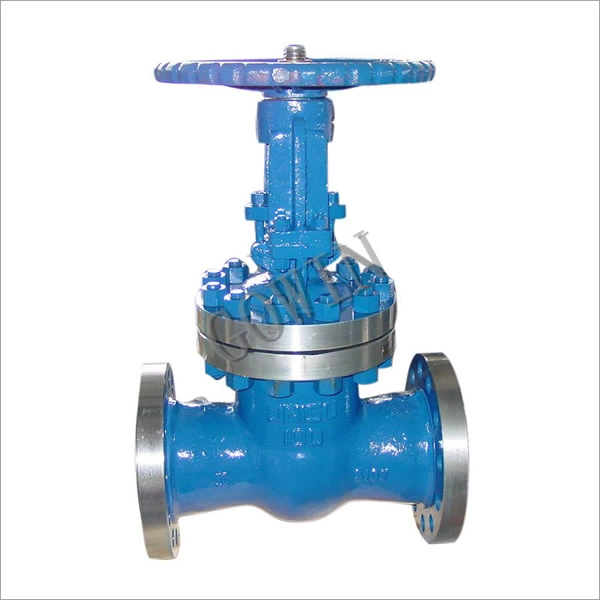
- Nominal diameter: 1/2″-60″ DN15-DN2000
- Pressure: 150LB-2500LB 0.6Mpa-42.0Mpa
- End Connection: RF, RTJ, BW, THR, SW
- Temperature: -196℃-650℃
This documentation approach is particularly valuable for our customers in industrial and energy sectors, where audits, regulatory compliance, and quality management systems require full component traceability throughout the valve’s service life.
We also offer technical support for customers developing their own storage and maintenance procedures—drawing on our experience as a manufacturer to help you get the maximum reliable service life from your valve inventory.
Learn more about our gate valve product range and documentation capabilities at www.china-gowin.com.
Frequently Asked Questions
How should gate valves be kept for an extended period of time?
Gate valves should be kept indoors in a dry environment, half-open, off the ground on pallets or racks, with internal corrosion inhibitor applied and flange protectors installed. Conduct a complete functional check every year and an inspection every six months.
Do gate valves need to be kept closed or open?
The ideal position is half-open, neither completely open nor completely closed. This keeps the stem in a neutral position that is less likely to bind during prolonged storage, reduces compression stress on the packing, and prevents gate-to-seat contact under load.
How long before a gate valve needs to be tested?
Before being installed, even well-maintained valves should have their shell and seat pressure tested if they have been stored for longer than a year. Before putting any stored valve into service, always conduct a pre-commissioning test and functional check, regardless of how long it has been stored.
Why does gate valve packing break down while being stored?
Packing deteriorates during storage as a result of moisture absorption and swelling, moisture loss and compression set (drying and hardening), or chemical attack from incompatible corrosion inhibitors. The majority of packing-related failures are avoided by yearly packing gland inspection and adjustment.
How can I keep cast steel gate valves from rusting while they are being stored?
Before storing, apply a suitable corrosion inhibitor to all internal surfaces; cover flange faces with blanks; apply rust-preventive compound to external machined surfaces; store in a dry indoor environment; and reapply the inhibitor once a year. Consider nitrogen blanketing for valves kept for more than a year.


 CHINA
CHINA LIBERIA
 FRANCE
 BARBADOS
 KIRIBATI

