


Table of Contents
ToggleAn FPSO (Floating Production Storage and Offloading) vessel typically costs between $200 million and $3 billion, with purpose-built deepwater units exceeding $800 million. Conversion of an existing oil tanker generally ranges from $200–600 million depending on processing capacity.
Quick Cost Summary: Converted FPSO: $200M–$600M | New-Build FPSO: $800M–$3B+ | Annual OPEX: $80M–$150M/yr | Valve Package (3–6% of total): $6M–$180M depending on processing complexity.
FPSO Price Quick Reference
| Project Type | Estimated Cost | Key Characteristics |
|---|---|---|
| Converted FPSO | $200M – $600M | Faster deployment, moderate conditions, budget-limited projects |
| New-Build FPSO | $800M – $3B+ | Deepwater, harsh environments, long field life |
| Annual OPEX | $80M – $150M/yr | Operations, maintenance, and logistics |
| Valve Package (3-6% of total) | $6M – $180M | Depending on processing complexity |
For engineering procurement teams, EPC contractors, and offshore operators evaluating FPSO projects, the key cost drivers are: hull type, topside processing complexity, water depth, and build strategy (new-build vs. conversion).
This guide covers each cost driver with a component-level breakdown and a build-type comparison table.
What is an FPSO?
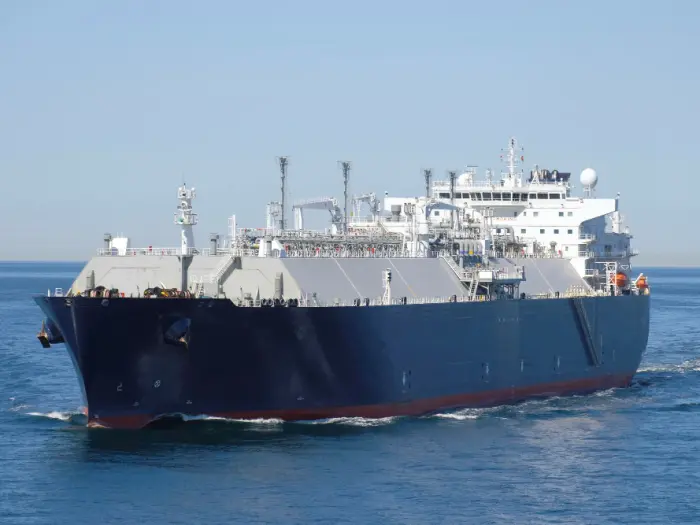
FPSO, or Floating Production Storage and Offloading, are vessels used for the oil and gas industries.
It collects and processes raw oil from the sea areas where it is stationed.
What is the Purpose of the FPSO?
FPSO’s main purpose was to collect and clean natural gas and oil before temporarily storing them in the vessel.
Their unique structure makes them suitable to work in deep-water locations where raw oil and gas come from.
Thus, FPSOs process and temporarily store crude oil and gas before offloading to shuttle tankers, eliminating the need for fixed platforms or long-distance subsea pipelines.
Note: For EPC contractors and procurement teams, understanding FPSO cost structure is critical for budgeting valve packages, instrumentation, and process equipment — which together account for 58–71% of total FPSO capital expenditure.
What are the Advantages of an FPSO?
As mentioned earlier, FPSOs are a crucial part of the oil and gas industry because of their unique and useful design.
But what makes them unique and widely used, which leads to their cost? The technical and operational advantages that justify FPSO capital expenditure include:
Flexibility
FPSOs are boats that can be used in deep-ocean areas. They’re not fixed platforms, which allows them to move to new areas when the current area’s raw oil and gas runs out. So, it provides an easy and lifelong service to the oil and gas industries.
Large Storage
FPSO’s huge storage containers can hold a lot of raw oil until it can be shipped on land. This makes them suitable for deepwater areas that can extract a lot of oil and gas in our extraction well. Thus, these vessels are notable for their huge tanks.
Increased Safety
FPSO has a rotating turret that connects to the current ocean floor where the vessel is stationed. This unique system makes the vessel rotate according to the wind and waves’ directions to stabilise. Lastly, this vessel ensures it cleans the collected water before throwing it back into the ocean.
More Budget-Friendly
FPSO is less expensive compared to building huge pipelines that connect to water areas. Also, building pipelines directly connected to land facilities is more expensive and often challenging in deepwater areas. Building fixed platforms is more expensive too, since you’d build another one for a new area once the last oil well runs out.
The FPSO Cost
After learning about the uniqueness of FPSO, it is no wonder that its estimated cost often ranges from $200 million to $3 billion. But, in some cases, it can be higher than that.
The FPSO’s full cost may depend on many factors, such as:
Operating Environment
They are designed to be used in deep water and dangerous areas that need high quality and a strong structure. That’s why the cost might rise because of the following:
- Ocean depth
- Weather circumstance
- And so on
So, the cost of FPSO will depend on the overall design and different equipment because it depends on the environment’s conditions.
Conversion vs. New-Build
Building a new vessel is more expensive than upgrading an existing oil tanker into an FPSO. Oil tankers are existing structures that can be converted, which is much less costly than building from scratch.
Manufacturing Capability and Design
The vessel’s overall size and processing equipment play a big part in its cost. Of course, FPSOs with larger storage as well as natural oil and gas production equipment are more expensive.
So, the cost depends on various equipment and systems you want on your vessel, like storage tanks.
FPSO Cost Breakdown by Component
| Component | Cost Share | Notes |
|---|---|---|
| Hull & Marine Systems | 25–30% | Higher for new-build; lower for conversions |
| Topside Process Equipment | 55–65% | Separators, compressors, flare systems |
| Mooring & Riser Systems | 8–12% | Turret mooring adds $150–250M for harsh environments |
| Instrumentation & Valves | 3–6% | Must meet API 6D for process control |
| Installation & Commissioning | 5–10% | Highly variable by water depth |
Valve Package Cost Detail: The instrumentation & valves category (3–6% of total) typically includes: ball valves for isolation ($500–$15,000/unit), globe valves for throttling ($800–$20,000), gate valves for pipeline isolation ($600–$12,000), and DBB valves for maintenance isolation ($1,000–$25,000). For a detailed DBB valve selection guide, see our complete guide. For a medium-sized FPSO, total valve package cost ranges from $6M to $180M.
FPSO Cost by Region
Costs vary significantly by region due to local labor rates, supply chain maturity, and environmental conditions.
| Region | Typical Cost Range | Key Drivers |
|---|---|---|
| Brazil | $1B – $2.5B | Deep pre-salt reserves, local content requirements |
| West Africa | $800M – $1.8B | Harsh offshore conditions, security logistics |
| North Sea | $1.2B – $2.8B | Stringent environmental regulations, high labor costs |
| Southeast Asia | $500M – $1.5B | Lower labor costs, shallower water depths |
FPSO Valve Sourcing Guide: When sourcing valves for FPSO projects, specify: API 6D certification, API 607 fire-safe rating, NACE MR0175 for sour service, and material test reports (MTR) for traceability. Lead times for API-certified valves from Chinese manufacturers typically range 8–16 weeks. Request a detailed valve package quote.
Sourcing Valves for Your FPSO Project?
You might now be looking for FPSO manufacturers that can provide you with some important devices, like valves. So, who are you going to call? It’s Gowin!
Their 16 years of expertise can help you find valves for your needs, which include:
Ball Valve
Ideal for quick open/close and isolation. Features a rotational ball for rapid response in FPSO piping.
View Ball Valves →Gate Valve
Perfect for full flow blocking when closed. Sliding gate design creates an effective seal for collected liquids.
View Gate Valves →Globe Valve
Known for excellent throttling ability and precise flow control in FPSO process piping.
View Globe Valves →Ball Valve
FPSO ball valves are also ideal for the vessel’s pipes because they can quickly open and block the liquid’s path. The reason behind this is because of the rotational ball that is attached to the faucet’s stem, which leads to its quicker response.
Want to discover more about their simple but useful design? Don’t worry, we provide you with a video here.
Gate Valve
Gate valves are perfect when you want to fully block the flow of materials into a pipe when closed. This is because they have a sliding gate or wedge design that creates an effective seal for the different liquids that FPSO collects.
To learn more about these valves, we also have a video to help you!
Globe Valve
As stated by a 2017 study, globe valves have good throttling ability.
Globe valves are known for their amazing ability to control how fast the material goes through your FPSO pipes.
To learn more about how it works and how it can help you, you can watch this video.
FPSO Cost: Key Takeaways
The FPSO cost can range from $200 million to $3 billion, but it still depends on many factors, including:
- Operating Environment
- Manufacturing capability and design
- Whether it is conversion or new-build
While these can be expensive, they’re your lifelong and reliable vessels for collecting and processing oils in the ocean.
Have more questions that we haven’t covered yet? Don’t hesitate to share it with us!
FAQ
What is the Difference Between FPSO and FLNG?
The difference between FPSO and FLNG is that the former is a vessel that collects raw oil from underwater extraction wells before processing and temporarily keeping it. FLNG is a similar vessel and does the same, but it collects and processes raw gas instead.
Where Should a Ball Valve be Installed in an FPSO?
A ball valve can be installed in many areas of an FPSO, including:
- Offloading: The pipes that transfer the cleaned oil to shuttle tankers.
- Process piping: This is where the different liquids are transported for processing.
- Underwater construction: the pipes that connect the vessel to oil wells.
- And much more
What are the Disadvantages of an FPSO?
Primary disadvantages include high CAPEX/OPEX, complex maintenance of processing equipment and safety systems, and vulnerability to harsh weather. FPSOs also require dedicated shuttle tankers for offloading, adding ongoing logistics costs.
What is the Lifespan of an FPSO?
Most FPSOs are designed for 20+ years of continuous operation. With proper inspection and class certification renewal, some units have remained in service for 25–30 years. Hull integrity and mooring systems are the primary life-limiting factors.
Which Countries Have the Most FPSOs?
Brazil leads globally with 46+ FPSOs, driven by pre-salt deepwater development. Other major markets include Angola, Nigeria, the North Sea (UK/Norway), Malaysia, and Australia.
Article Source: Gowin uses only high-quality sources, including peer-reviewed studies, to support the facts within our articles. Our commitment to accuracy and reliability ensures that readers receive well-researched information they can trust. — 2017 Study for Globe Valve


 CHINA
CHINA LIBERIA
 FRANCE
 BARBADOS
 KIRIBATI

