


Table of Contents
ToggleQuick Answer
Lug-style butterfly valves use threaded lugs for bolting, support end-of-line service, and handle higher pressures and temperatures. Wafer-style valves are compact, cost-effective, and suited for low-pressure systems, but require full system shutdown for maintenance. Gowin, a leader in industrial valve solutions, offers both types.
Butterfly valves are essential components in industrial fluid control, but choosing the right type can be challenging. In this blog, we will discuss the two main types which are lug-style and wafer-style butterfly valves. You’ll learn about how their designs, functionalities, and applications differ.
Quick Comparison Summary: Need end-of-line isolation or higher pressure? Choose Lug. Need cost savings and space efficiency? Choose Wafer. The 7 key differences below cover mounting, pressure, temperature, fluid compatibility, installation, cost, and standards compliance. For a detailed breakdown of each 5 types of control valves including butterfly valve Cv ranges, see our complete control valve types guide.
Explore key factors like pressure ratings, fluid compatibility, and installation flexibility to make informed decisions for your systems. This guide is packed with insights to help you select the perfect valve.
Overview of Lug and Wafer Butterfly Valves
Butterfly valves operate by rotating a disc to control fluid flow. While all butterfly valves share this principle, their design and mounting styles distinguish their performance and applications. The two main variants are the butterfly valve lug type and the butterfly valve wafer type.
Lug-Style Butterfly Valve
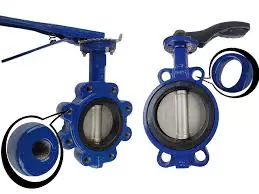
The lug butterfly valve features threaded inserts, or “lugs,” around the valve body. These allow it to be bolted between two flanges. Such a design provides robust attachment.
Lug-style butterfly valves act as an end-of-line device or facilitate maintenance without disrupting the upstream pipeline.
Key characteristics:
- Strong and rigid construction.
- Designed to handle higher pressures.
- Compatible with dead-end service.
Typical uses: Lug butterfly valves are common in industries requiring reliable isolation. Examples of these are oil and gas, chemical processing, and water treatment environments.
Wafer-Style Butterfly Valve
The wafer butterfly valve type is compact and lightweight. Its main purpose is to be sandwiched between two pipe flanges using bolts. This style relies on flange pressure to hold the valve in place. This type of butterfly valve is ideal for non-critical flow control.
Key Characteristics:
- Simple, cost-effective design.
- Space-saving and lightweight.
- Requires flange support for stability.
Typical Uses: Wafer butterfly valves are suitable for low-pressure systems, such as HVAC, food and beverage, and general water distribution.
What is the Difference Between Wafer and Lug Type Butterfly Valves?
In this section, we’ll discuss how wafer and lug-type butterfly valves differ from each other. This information is crucial for selecting the right valve. Here’s how they compare in key aspects:
| Aspect | Wafer-Style Butterfly Valve | Lug-Style Butterfly Valve |
|---|---|---|
| Mounting Design | Positioned between flanges with bolts passing through. | Features threaded lugs for direct bolting to flanges. |
| End-of-Line Service | Not suitable for end-of-line applications. | Can act as an end-of-line valve. |
| Applications & Compatibility | Best for low-pressure systems and cost-effective applications. | Ideal for high-pressure environments and frequent isolation. |
| Fluid Compatibility | Suitable for clean or light fluids like water or air. | Can handle a wider range of fluids, including those with particulates. |
| Installation Flexibility | Requires full system shutdown for maintenance. | Allows for partial system isolation, enabling maintenance without shutdown. |
| Pressure Drop | Typically experiences a lower pressure drop. | May cause a slightly higher pressure drop but supports higher pressure capabilities. |
| Material Options | Commonly made of lightweight materials (PVC, stainless steel, cast iron). | Built for durability with metals like ductile iron and stainless steel. |
| Temperature Range | Operates within -10°C to 120°C, depending on the material. | Tolerates higher temperatures, often exceeding 250°C, based on materials and seat design. |
| Cost | Typically 20-40% cheaper. For a 6-inch cast iron valve: ~$80-150. | More expensive due to threaded lug inserts and heavier body. For a 6-inch cast iron valve: ~$120-250. |
Cost Comparison: Wafer butterfly valves are typically 20-40% cheaper than lug-style valves of the same diameter and material. For a 6-inch cast iron butterfly valve: wafer style ~$80-150, lug style ~$120-250. The price difference reflects the threaded lug inserts and heavier body construction. For large-diameter applications (12″+), the cost gap narrows as material costs dominate.
Mounting Design
- Lug-Style: Features threaded lugs for direct bolting to flanges. Allows for precise alignment and maintenance flexibility.
- Wafer-Style: Positioned between flanges with bolts passing through. Relies on flange compression for stability.
End-of-Line Service Capability
- Lug-Style: This can act as an end-of-line valve, supporting the pipeline downstream while maintenance is performed upstream.
- Wafer-Style: Not suitable for end-of-line applications; the pipeline must be depressurized for removal.
Applications & Compatibility
- Lug-Style: Ideal for high-pressure environments and systems requiring frequent isolation.
- Wafer-Style: Best for low-pressure systems and applications where cost-effectiveness is prioritized.
Fluid Compatibility
- Wafer Butterfly Valve: Suitable for clean or light fluids, such as water or air. Not ideal for thicker or abrasive materials, as these may cause clogging.
- Lug-Style Butterfly Valve: Handles a wider range of fluids, including those with particulates, making it suitable for more demanding applications.
Pressure Drop
- Wafer Butterfly Valve: Typically experiences a lower pressure drop due to its streamlined design. This is ideal for systems prioritizing minimal energy loss.
- Lug-Style Butterfly Valve: May cause a slightly higher pressure drop but compensates with higher pressure-handling capabilities.
Material Options
- Wafer Butterfly Valve: Commonly constructed from lightweight materials like PVC, stainless steel, or cast iron. Seats are often rubber or EPDM for effective sealing.
- Lug-Style Butterfly Valve: Built for durability with metals like ductile iron and stainless steel. Seats can range from rubber and EPDM to metal, depending on application needs.
Temperature Range
- Wafer Butterfly Valve: Operates effectively within a moderate range of -10°C to 120°C, depending on the material.
- Lug-Style Butterfly Valve: Can tolerate higher temperatures, sometimes exceeding 250°C, based on material and seat design.
Advantages and Disadvantages of Lug and Wafer Butterfly Valves
Both valve types have distinct advantages and drawbacks depending on the application.
What Are the Advantages of a Lug Butterfly Valve?
- End-of-Line Service: Can isolate sections of the pipeline for maintenance.
- Higher Durability: Rugged construction suited for heavy-duty applications.
- Broader Compatibility: Handles a wider range of fluids and temperatures.
Disadvantages:
- Higher initial cost and weight.
- Slightly increased pressure drop compared to wafer valves.
What Are the Advantages of a Wafer Butterfly Valve?
- Cost-Efficiency: Economical for non-critical, low-pressure systems.
- Compact Design: Lightweight and space-saving.
- Energy Efficiency: Minimal pressure drop across the valve.
Disadvantages:
- Limited to clean fluids and moderate temperature ranges.
- Requires a full system shutdown for maintenance.
Choosing the Right Valve for Your Application
Selecting the right butterfly valve for your industrial application involves careful consideration of various factors to ensure optimal performance and longevity. With numerous butterfly valve types available, understanding the key criteria for selection is essential.
Below are five critical factors to guide your decision-making process.
- Material
The material composition of a butterfly valve determines its compatibility with specific fluids, pressure conditions, and operating environments.
- Metal Valves: Stainless steel and aluminum are ideal for high-pressure and high-temperature applications. They offer excellent durability and resistance to corrosion, making them suitable for industries like oil and gas or chemical processing.
- Plastic Valves: PVC (polyvinyl chloride) and PP (polypropylene) valves are lightweight, cost-effective options for low-pressure systems handling non-aggressive fluids. They are commonly used in water treatment, irrigation, and food processing industries.
- Temperature Range
Temperature compatibility is a crucial factor in choosing a butterfly valve, as certain materials and designs have limitations on the temperatures they can withstand.
- Low-Temperature Applications: Valves made of PVC or rubber-lined models typically handle temperatures up to 60°C. These are suitable for non-critical systems such as HVAC or water distribution.
- High-Temperature Applications: Metal butterfly valves, especially those with metal seats, can handle temperatures as high as 250°C or more, making them suitable for steam lines and industrial heating systems.
- Pressure Ratings
Pressure plays a significant role in valve selection, as the valve must withstand the system’s operating pressure without deformation or leakage.
- Low-Pressure Systems: Wafer-style butterfly valves are a lightweight, economical choice for systems with minimal pressure requirements.
- High-Pressure Systems: Lug-style butterfly valves are designed to manage higher pressures and provide better sealing under demanding conditions.
- Connection Types
The type of connection a butterfly valve has determines how it integrates into your pipeline.
- Threaded Connections: Common in smaller systems, these valves are easy to install and remove. They are often used in plumbing and irrigation applications.
- Flanged Connections: Flanged butterfly valves offer robust and secure attachment for industrial pipelines, especially in larger systems where durability is paramount.
- Actuation Methods
How a valve is actuated—manually, pneumatically, or electrically—affects its functionality, efficiency, and ease of operation.
- Manual Actuation: Simple and cost-effective, manual butterfly valves are suitable for systems requiring infrequent adjustments.
- Pneumatic Actuation: These valves are powered by compressed air, providing fast and precise operation in automated systems.
- Electric Actuation: Ideal for remote operation, electrically actuated valves offer superior control and monitoring capabilities, often integrated with industrial automation systems.
API 609 Standard Reference: Butterfly valves are classified under API 609: Category A covers soft-seated valves for general service (wafer-style common), Category B covers high-performance metal-seated valves for critical applications (lug-style common). For oil and gas applications, API 609 Category B compliance is typically specified in EPC requirements. Ensure your selected valve meets the appropriate category for your service conditions.
Industrial Applications of Lug and Wafer Butterfly Valves
Both lug and wafer butterfly valves serve critical roles across various industries:
- Oil & Gas: Lug valves for high-pressure pipelines and abrasive materials.
- Chemical Processing: Valves with corrosion-resistant materials for aggressive chemicals.
- Water Treatment: Wafer valves for water distribution systems.
- HVAC: Wafer valves for efficient temperature control in heating and cooling systems.
- Power Generation: High-performance lug valves for steam and cooling applications.
Quick Selection Decision Matrix
Frequently Asked Questions (FAQ)
What is the difference between lug and wafer butterfly valves?
The main difference is mounting design: lug valves have threaded inserts for direct bolting to flanges and can be used in end-of-line service, while wafer valves are sandwiched between flanges with through-bolts and cannot be used at pipeline ends. Lug valves handle higher pressures and temperatures but cost 20-40% more.
Can a wafer butterfly valve be used at the end of a pipeline?
No. Wafer butterfly valves are not suitable for end-of-line applications because they rely on flange compression for stability and cannot support downstream pressure independently. For end-of-line service, use a lug-style butterfly valve which has threaded lugs for direct flange bolting.
Which is cheaper: lug or wafer butterfly valve?
Wafer butterfly valves are typically 20-40% cheaper than lug-style valves of the same size and material. For a 6-inch cast iron valve, wafer style costs approximately $80-150, while lug style costs $120-250. The price gap reflects the additional threaded lug inserts and heavier body construction.
What is API 609 classification for butterfly valves?
API 609 classifies butterfly valves into two categories: Category A covers soft-seated valves for general service (commonly wafer-style), and Category B covers high-performance metal-seated valves for critical applications (commonly lug-style). Oil and gas EPC specifications typically require API 609 Category B compliance.
Partner with Gowin Valves for Your Needs Today
For industries seeking high-quality butterfly valve types, Gowin is a trusted name in valve manufacturing. Since 2007, Gowin has been delivering top-tier valve solutions to sectors like oil and gas, chemical processing, metallurgy, and water supply. With ISO certifications and compliance with global standards such as API6D and OHSAS45001, Gowin guarantees performance and reliability.
Choose Gowin as your trusted partner for durable, efficient, and expertly crafted valves. Contact us today to find the perfect solution for your industrial flow control needs!
References
Lugged Vs. Wafer Butterfly by Valve by Dombor; 2022 (https://www.dombor.com/lugged-vs-wafer-butterfly-valve/)
Transmission Pipeline Calculations and Simulations Manual; E. Shashi Menon; 2015 (https://www.sciencedirect.com/book/9781856178303/)


 CHINA
CHINA LIBERIA
 FRANCE
 BARBADOS
 KIRIBATI

