


Quick Answer
A CF8 vs CF8M decision is about the full wetted path, not a simple upgrade. CF8 is the cast stainless family comparable to 304; CF8M is comparable to 316 and normally contains molybdenum for better resistance to pitting and crevice corrosion in chloride-bearing service. Choose against the medium, concentration, temperature, cleaning and stress-corrosion risk, then confirm trim, seals and certification.
What Are CF8 and CF8M?

CF8 and CF8M are cast stainless steel grades used for valve bodies and other cast parts. Buyers often meet them in specifications that also mention 304 and 316. The comparison is useful, but it is not a one-for-one substitution rule.
CF8 is commonly treated as the cast equivalent family of wrought 304 stainless steel. CF8M is commonly treated as the cast equivalent family of 316 and normally contains molybdenum in the 2-3% range. The “M” tells you that molybdenum is part of the intended grade, not that the valve is suitable for every corrosive fluid.
The product standard matters. CF8 and CF8M are often specified under ASTM A351, and the purchase order should state the grade and the required material certificate. A body marked with a grade name is not enough if the certificate, heat number and actual part do not agree.
For a piping project, read the material requirement with the valve design. GOWIN’s API 600 gate valve page shows a product family with material options; use it to shortlist, then confirm the exact ASTM grade and wetted parts for the offered model.
A certain angle is formed between the two sealing faces of the single-disc or double-discs wedge gate valve and perpendicular to the pipeline axis.
View Product Details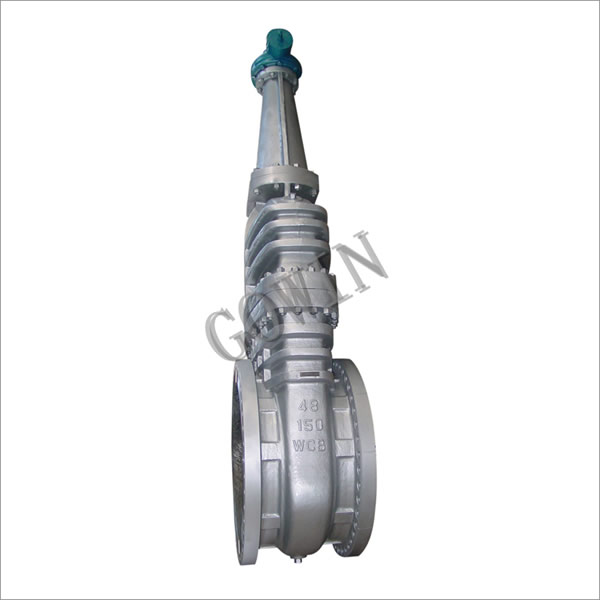
Why Does Molybdenum Matter?
Molybdenum is an alloying element that can improve a stainless steel’s resistance to localized corrosion, particularly pitting and crevice attack in chloride-bearing service. Chlorides are salts such as sodium chloride that can break down the protective oxide layer on stainless steel at vulnerable points.
That benefit does not make CF8M chloride-proof. Concentration, temperature, flow, deposits, stagnant zones and cleaning chemicals all affect the real risk. High chloride levels at elevated temperature can also raise the risk of stress-corrosion cracking, a cracking mechanism that ordinary pitting-resistance comparisons do not fully describe.
The practical question is not “Is 316 better than 304?” It is “Does this grade give enough margin for this fluid, at this temperature, with this flow and cleaning regime?” A valve with a CF8M body can still fail if the trim, seats, gaskets or fasteners are incompatible.
The GOWIN valve material guide gives a useful overview of common material families. Treat it as a conversation starter, not a substitute for the project’s corrosion review or a material certificate.
When Is CF8M the More Sensible Choice?

CF8M is often the more sensible starting point when the service contains chlorides and the project needs more pitting and crevice-corrosion resistance than a 304-type grade provides. It is also common where experience with similar lines shows that CF8 has insufficient margin.
The word “starting point” matters. CF8M should still be checked against temperature, concentration, flow and cleaning. If the fluid is known to cause stress-corrosion cracking, a higher molybdenum grade may not solve the problem. The project may need a different alloy, a lining, a coating or a change in operating conditions.
For a ball valve, the seat and seal materials can set the service limit. The floating ball valve page and ball valve category show how body, seat and connection choices vary. A CF8M body with an incompatible elastomer still leaves the buyer with an incompatible valve.
Principle of the cast steel floating ball valve: This kind of ball valve has a floating ball supported by two valve seats.
View Product Details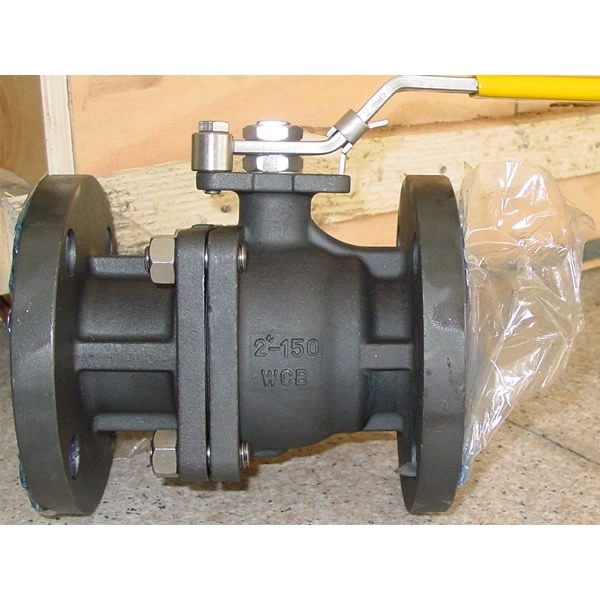
Ask the supplier to state the full materials of construction, not only the body grade. That list should cover the body, bonnet, disc or ball, stem, seat, gasket, packing and bolting where they contact the medium.
When Can CF8 Still Be Appropriate?
CF8 can be appropriate when the medium and operating conditions are compatible with a 304-type stainless steel and the project has confirmed that the full wetted path is suitable. It can also be a practical choice when a proven specification already uses CF8 for the same duty.
Do not choose CF8 only because it is familiar or appears lower in a catalogue. Do not reject it only because CF8M sounds more advanced. The decision should come from the service conditions and the required material standard.
If the fluid data is incomplete, pause the material selection. Concentration, maximum temperature and cleaning method are not optional details. A small change in chloride level or temperature can move the risk from acceptable to unacceptable.
For gate and globe duties, the same principle applies. The globe valve page shows a different body family, and the pressure seal gate valve article explains why pressure and temperature affect construction. Material grade and design family should be confirmed together.
Which Other Wetted Parts Must Match?

The body is the most visible part, but it is not the whole valve. The trim includes the stem, disc, ball or plug and the seating surfaces. Seals and gaskets may be elastomer, graphite or another material. Fasteners can also be exposed to the environment or the process.
A mismatch can shorten service life even when the body grade is correct. For example, a corrosion-resistant body paired with a lower-grade stem or seat can create a weak point. A soft seat may limit temperature before the body does. A gasket may be the first part to fail in a thermal cycle.
Use one materials list for the whole valve and compare it with the line fluid. The cast steel check valve and check valve category show another product family where body and internal materials need to be reviewed together.
The manual butterfly valve and butterfly valve category also illustrate the point. A valve is a system of parts, not a single block of stainless steel.
How Should You Compare CF8 vs CF8M Offers?
Compare the complete offer, not only the headline grade. Ask for the body grade, the standard, the certificate, the trim and seat materials, the gasket and packing, the bolting and the end connection. Then compare those details with the service conditions and the drawing.
| Service or document check | CF8 | CF8M | Buyer action |
|---|---|---|---|
| Chloride-bearing service | Lower alloy margin than CF8M | Added molybdenum usually improves pitting and crevice resistance | Confirm concentration, temperature and SCC risk |
| Mild, compatible service | May be suitable if approved | May also be suitable | Do not upgrade without a reason |
| Soft seats or seals | Check temperature and fluid compatibility | Check the same items | Body grade alone is not enough |
| Material certificate | Confirm ASTM A351 grade and heat details | Confirm ASTM A351 grade and heat details | Match certificate to the offered parts |
| Mixed wetted materials | Verify trim, stem, gasket and fasteners | Verify trim, stem, gasket and fasteners | Require one complete materials list |
The CF8 vs CF8M choice should not be settled by a generic corrosion chart. Use the project’s fluid data, operating temperature and experience with similar lines. If the risk is unclear, ask for a materials recommendation and record the assumptions in the quotation.
The API 600 gate valve versus API 6D comparison and the end connection guide help separate material selection from design-standard and joint decisions.
GOWIN supplies stainless and other material options across its industrial valve families. The catalogue can help identify a starting family, but the certificate and the approved drawing should show the grade that will actually be supplied.
Conclusion
For a CF8 vs CF8M order, choose the lower-alloy grade only when the complete wetted system is compatible with the service. Choose CF8M when its added molybdenum gives useful margin for the chloride and corrosion risk, but verify temperature, concentration, cleaning and stress-corrosion exposure.
Do not approve the valve from the body grade alone. Put the service conditions, ASTM grade, trim and seal materials, and certificate requirement in the RFQ. Then compare the supplier’s complete materials list with the line duty.
Send the medium, size, operating pressure and temperature, and the relevant drawing for a duty-specific quotation.


 CHINA
 LIBERIA
 FRANCE
 BARBADOS
 KIRIBATI


