


Quick Answer
An API 607 vs API 6FA comparison starts with scope, not a winner. API 607 is commonly used for soft-seated quarter-turn valves and checks internal leakage after fire exposure. API 6FA covers a broader valve range and commonly checks internal and external leakage. Confirm the edition, product scope, size, pressure class and tested configuration before accepting a certificate.
What Does API 607 Test?
API 607 is a fire-test standard commonly associated with soft-seated quarter-turn valves. A quarter-turn valve opens or closes with a 90-degree movement, such as a ball valve or butterfly valve. The test is intended to show how a representative valve performs after exposure to fire conditions, including whether it retains a useful seal.
For a buyer, the important word is representative. A certificate should connect the test to a product family and a defined range of sizes, pressure classes and materials. It should not be read as proof for every valve in a catalogue. A soft-seated ball valve may use a different seat material or body configuration from the model in the report.
Start with the offered model, then ask whether the report covers that model and configuration. GOWIN’s floating ball valve page shows a product family where body, seat and connection options matter. The ball valve category helps compare families, but neither page replaces the test document.
What Does API 6FA Cover?
API 6FA is commonly described as having a broader valve scope than API 607. It can apply to valve types beyond soft-seated quarter-turn designs, subject to the edition and the project specification. The test usually considers both internal leakage through the closed valve and external leakage to the surroundings.
That broader description does not make API 6FA the automatic choice. A project may require API 607 because the valve is a soft-seated quarter-turn type. Another project may require API 6FA because its valve family and acceptance criteria fall within that standard. The specification, not a supplier’s preference, should set the requirement.
Ask for the standard number and edition, not only the phrase “fire safe”. A test report written to an older edition may not meet a current project requirement. The same applies when a purchaser compares offers from different suppliers.
How Do API 607 vs API 6FA Exposure Checks Differ?

Published summaries often cite a 30-minute exposure for API 607 and 60 minutes for API 6FA. Those figures are useful for orientation, but they should not be treated as universal. Duration, acceptance criteria and test details are edition-specific and should be read in the actual standard and report.
| Buyer check | API 607 | API 6FA |
|---|---|---|
| Common product focus | Soft-seated quarter-turn valves | Broader valve scope, subject to edition |
| Internal leakage | Usually checked after exposure | Usually checked after exposure |
| External leakage | Not the main comparison point in many summaries | Commonly included |
| Exposure duration | Often summarized as 30 minutes | Often summarized as 60 minutes |
| Decision basis | Project specification and tested model | Project specification and tested model |
The table is a screening aid. It does not tell you which certificate is acceptable. Read the project data sheet, the valve type and the required acceptance criteria together. If two documents use different editions, do not assume that one automatically replaces the other.
For adjacent product families, the same discipline applies. The manual butterfly valve and butterfly valve category may be reviewed under a different scope from a ball valve. The cast steel check valve is another example: its fire-test requirement should come from the project, not from a generic label.
Design standard as per: API 609, ASME B16.34, GB/T12238, JB/T 8527.
View Product Details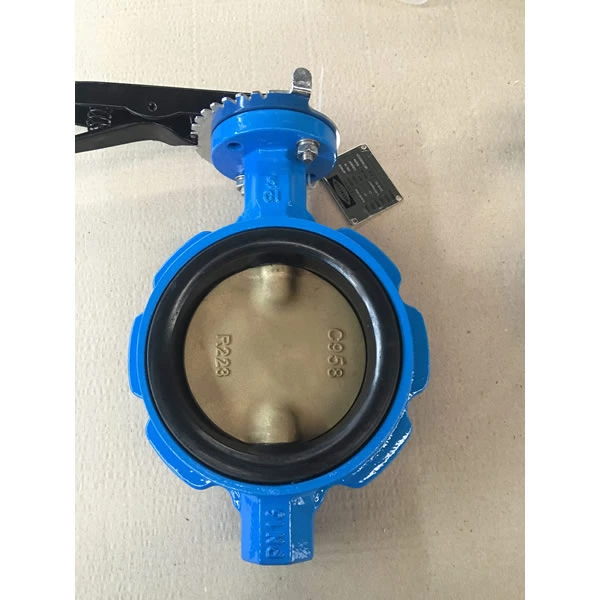
Does One Standard Automatically Satisfy the Other?

No. API 607 and API 6FA are separate standards with their own scope and acceptance details. A report for one should not be presented as a report for the other unless the project specification explicitly allows substitution and the evidence supports it.
This is a common procurement problem. A supplier may say that a valve is “fire safe” without naming the standard. Another may offer a certificate for a different size or pressure class. Both statements can be true at a high level and still be inadequate for the order.
Use a document trail. Match the purchase specification to the standard, then match the standard to the report, then match the report to the offered valve. If any link is missing, ask for clarification before approval. The API 600 gate valve versus API 6D comparison illustrates why design standard, product type and project requirement need to be read together.
GOWIN supplies ball, butterfly, gate, globe, check and strainer products for industrial lines. Where fire-test evidence is required, the relevant current report should be requested for the exact offered product. A catalogue statement is a starting point, not a substitute for that document.
What Should a Fire-Test Certificate Show?
A useful certificate or report should identify the standard and edition, the testing laboratory, the product type, the model or family, the size and pressure class range, the materials and the seat configuration. It should also show the test date and the result.
Check the boundary of the approval. A report for one seat material may not cover another. A report for a soft-seated ball valve may not cover a metal-seated design. A report for a small size may not cover a large size unless the standard’s qualified range allows it.
Do not rely on a logo alone. Ask for the page that states the tested configuration and the acceptance result. If the supplier cannot connect the document to the quotation, the evidence is not yet decision-grade. The valve material guide can help you frame questions about body and trim, while the pressure seal gate valve article shows why construction details change across product families.
Which Questions Should Go into the RFQ?
Put the fire-test requirement in the RFQ as a clear line item. State the standard and edition, the required scope, the acceptance document and whether a witnessed test is required. Then link that requirement to the valve model, size, pressure class and seat material.
| RFQ item | What to state |
|---|---|
| Standard | API 607 or API 6FA, with edition |
| Product | Valve type, model or family |
| Scope | Size, pressure class, material and seat configuration |
| Evidence | Certificate or full test report |
| Project rule | Whether substitution is allowed |
| Delivery document | Drawing and material certificate package |
Add the medium, design pressure and design temperature. A fire-test report does not replace the normal pressure-temperature rating or the product data sheet. It answers a specific question about performance after fire exposure.
For the wider isolation decision, compare the gate valve category and the gate valve versus ball valve article before fixing the valve type. If backflow protection is part of the duty, review the check valve category as well. The end connection guide helps keep the joint requirement separate from the fire-test requirement.
Principle of the cast steel floating ball valve: This kind of ball valve has a floating ball supported by two valve seats.
View Product Details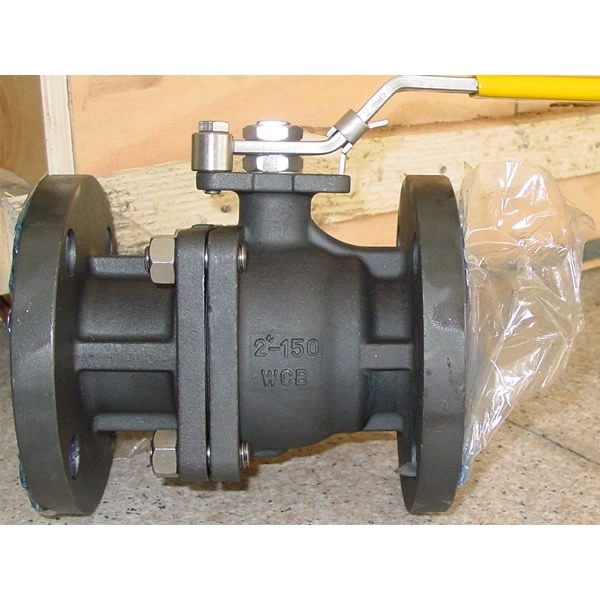
Conclusion
For API 607 vs API 6FA, choose the standard that the project specifies and prove that the offered valve falls inside its tested scope. API 607 is commonly the quarter-turn soft-seat route; API 6FA is commonly broader and includes external leakage checks. Neither label is enough without the edition, product scope and test report.
Make the certificate part of the quotation review. Confirm the model, size, class, materials, seat arrangement and acceptance result. That turns a fire-safety claim into evidence a buyer can defend.
Send the medium, size, operating pressure and temperature, and the relevant drawing for a duty-specific quotation.


 CHINA
 LIBERIA
 FRANCE
 BARBADOS
 KIRIBATI


