


The top brass ball valve manufacturer China for Southeast Asian buyers is one that demonstrates proven material quality, rigorous pressure testing, and superior corrosion resistance for tropical environments. Identifying the right partner requires evaluating metallurgy against high-humidity conditions to prevent rapid de-zincification in the field. During factory acceptance testing, procurement teams often discover dimensional or documentation issues that are far less expensive to correct before shipment than after installation.
Experienced contractors and EPC teams evaluate manufacturers based on their ability to provide verified API 598 pressure test reports and complete material traceability. Integrating these components into existing piping networks requires a partner with a deep understanding of ASME B16.5 flange compatibility. Matching the specific metallurgy to the corrosive realities of the Southeast Asian field is the only way to ensure long-term system reliability.
Why Southeast Asia Prefers Brass & Bronze Valves

The Southeast Asian industrial landscape is dominated by coastal and marine infrastructures, specifically in countries like Malaysia, Indonesia, and Singapore. These environments are notoriously aggressive toward standard steel, making non-ferrous alloys like the bronze ball valve the baseline for operational longevity in utility networks. Contractors in this region often face the challenge of atmospheric salt spray, which can degrade valve stems long before the internal fluid does.
For oil & gas operators in Malaysia, brass and bronze valves are the standard choice not for the hydrocarbon process lines themselves, but for critical utility systems—seawater cooling, firewater, and potable water networks—where saltwater corrosion resistance is non-negotiable. Choosing the wrong alloy in these utility lines often leads to “frozen” valves that fail to actuate during emergency fire-response scenarios.
Brass vs Bronze Ball Valve Differences

Choosing between alloys requires a field-informed understanding of the media chemistry and the budget constraints of the project. A specialized bronze valve manufacturer will always recommend copper-tin or aluminum-bronze for any application involving direct seawater contact or brackish media. Brass remains the preferred choice for freshwater systems where de-zincification is not a primary threat.
| Selection Metric | Brass Ball Valve | Bronze Ball Valve | Decision Driver |
|---|---|---|---|
| Primary Medium | Potable/Freshwater | Seawater/Brackish | Corrosion Risk |
| Machinability | Excellent | Good | Lead Time |
| Longevity | Typical Service Life (Maintained) | Longer Service Life (Offshore) | Lifecycle Cost |
For coastal infrastructure, prioritizing a high-grade bronze ball valve ensures that utility networks do not suffer from the premature failures that plague inferior alloys. While the initial investment for bronze is higher, the extension of service life is a standard operational win for regional maintenance teams.
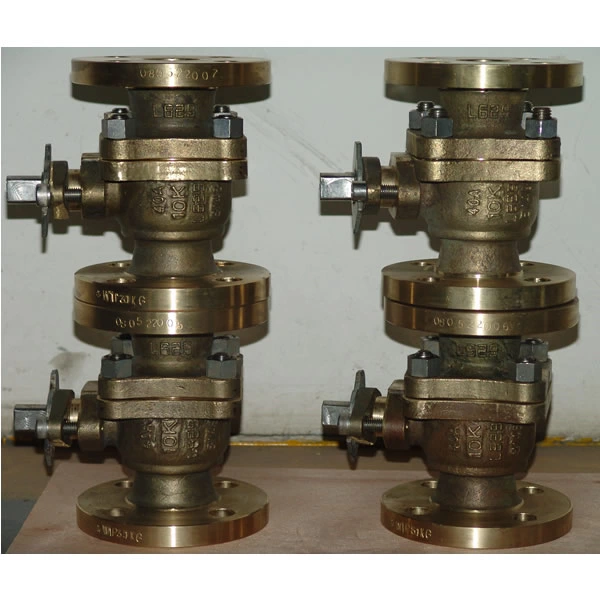
- Nominal diameter: 1/4″-4″ DN8-DN100
- Pressure: PN10-PN40 1.0Mpa-4.0Mpa
- End Connection: NPT, BSPT, BSPP
- Temperature: -20℃-150℃
Common Applications in Southeast Asia
In urban centers like Bangkok or Jakarta, building water systems rely on these valves for reliable flow regulation in high-rise networks. A standard copper ball valve is often the primary choice for secondary distribution lines due to its antibacterial properties and ease of installation. A common mistake in these onshore plants is using residential-grade castings in high-pressure HVAC systems, which leads to premature cracking under surge loads.
Maritime hubs in Singapore and Batam prioritize bronze for ballast and firewater systems to prevent electrolytic corrosion. For these seawater applications, the chemical resistance of the alloy is the primary metric for component selection. In power stations across the region, these valves provide essential flow control in cooling circuits where reliability is the baseline for safety.
Material Upgrade Trend
As Southeast Asian operators push for 30-year service lives, we see a shift toward “Severe Service” alloys like Nickel Aluminum Bronze (NAB). This material is the preferred choice for offshore platforms because its protective oxide layer offers the strongest resistance to seawater corrosion currently available. Finding a reliable brass ball valve supplier who offers these upgrades is essential for minimizing maintenance downtime in mining and offshore utility lines.
For precision control in saltwater circuits, we often specify Nickel Aluminum Bronze Globe Valves to handle throttling duties without the erosion damage typical of softer alloys. Modern anti-corrosion coatings are also being applied to standard alloys as a cost-effective middle ground for moderately aggressive environments.
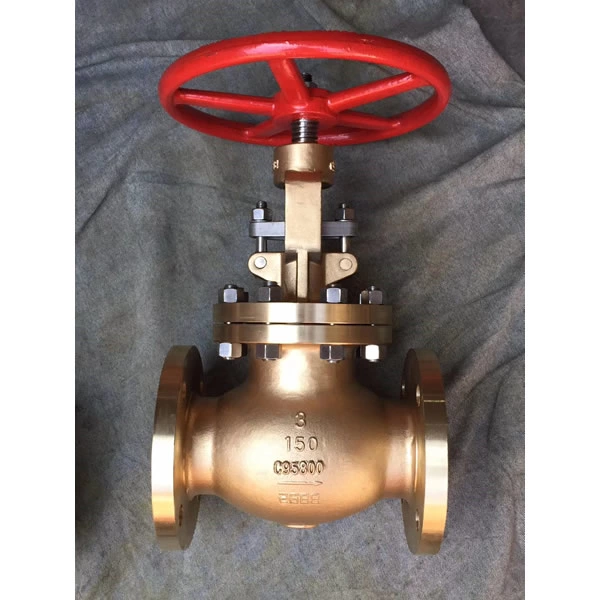
- Nominal diameter: 1/2″-24″ DN15-DN600
- Pressure: 150LB-1500LB 2.0Mpa-25.0Mpa
- End Connection: RF, RTJ, BW
- Temperature: -29℃-260℃
Gowin Manufacturing Capability
Gowin is a brass ball valve manufacturer in China with 16 years of expertise and an 11,000-square-meter facility. Our manufacturing process is supported by an ISO 17025 accredited laboratory, conducting comprehensive chemical, physical, and metallographic analyses to ensure structural integrity. Every unit undergoes strict quality control including pressure testing and leakage testing to ensure it meets API 6D, API 600, and ASME B16.34 international standards.
We offer OEM/ODM customization available for different industrial applications and project requirements, ensuring that every valve is tailored to specific site conditions. We provide detailed inspection reports and documentation for total transparency, allowing project managers to approve procurement with confidence. This documentation allows EPC contractors and procurement teams to complete technical reviews before shipment, reducing approval delays and minimizing commissioning risks.
Buyer Checklist
Evaluating a potential brass ball valve manufacturer China requires a structured assessment of their technical documentation. Use the following decision table to verify supplier readiness:
| Evaluation Step | Required Documentation | Contractor Reasoning |
|---|---|---|
| Material Check | EN 10204 3.1 MTRs | Prevents sub-standard alloy failure |
| Compatibility | ASME B16.5 Dimensions | Ensures perfect bolt-up fit on site |
| Sealing Integrity | API 598 Test Reports | Guarantees bubble-tight shutoff |
| Compliance | ISO 9001 & CE/PED | Baseline for multinational trust. |
FAQ
How do I evaluate a brass ball valve manufacturer before placing an order?
Check for valid API 6D and ISO 9001 certifications, and request samples of their EN 10204 3.1 MTRs to ensure full material traceability and chemical compliance.
What is the advantage of using bronze in maritime settings?
Bronze forms a protective oxide layer that resists seawater corrosion and biofouling significantly better than brass, which can suffer from de-zincification in saline environments.
How do I troubleshoot a leaking valve during commissioning?
Verify flange bolt-up torque against ASME standards and cycle the valve several times; often, “leaks” are simply construction debris trapped in the seat during installation.
Conclusion
Selecting the right brass ball valve manufacturer China is about metallurgical precision and documented performance. Choosing the right manufacturing partner today reduces maintenance costs, simplifies future inspections, and improves long-term system reliability throughout the service life of your facility. For high-abrasion environments or specialized mining applications, explore Gowin Valve solutions designed for extreme wear resistance.


 CHINA
CHINA LIBERIA
 FRANCE
 BARBADOS
 KIRIBATI

