


European distributors evaluate a valve manufacturer China by auditing technical transparency, material traceability, and alignment with regional safety directives. This assessment ensures suppliers translate complex blueprints into robust hardware without compromising site safety. Failing to vet testing rigor often leads to site delays and expensive valve failures during commissioning.
Professional buyers prioritize factories with over 16 years of expertise and established export experience to Europe to mitigate these operational risks. Proper auditing prevents the “installation nightmare” of a valve that fits the flange but fails to seal under design pressure.
Why European Distributors Source from China
Sourcing from a reliable valve manufacturer China allows distributors to consolidate procurement through “one-stop” solutions for chemical and energy infrastructure. Utilizing a manufacturer with an 11,000-square-meter facility ensures bulk orders maintain consistent dimensional accuracy using modern CNC machining centers. This operational depth reduces the total cost of ownership and simplifies long-term inventory management. Distributors favor partners with extensive export experience to ensure international logistics and documentation standards are met without friction.
Compliance Requirements for European Markets
Legal compliance in Europe is a mandatory baseline for safety and sustainability. Distributors prioritize environmental responsibility, requiring manufacturers to hold ISO 14001 and ISO 45001 certifications alongside ISO 9001. These standards, plus carbon reporting transparency, form the core of a factory’s ESG assessment.

CE
A legitimate CE valve is non-negotiable for market entry, verifying that the product meets European health and safety directives.
PED
For high-pressure service, an essential PED valve ensures components withstand thermal and pressure loads without failure. Compliance with ISO (International Organization for Standardization) and PED standards requires absolute material traceability.
EN Standards
Adherence to EN standards ensures valve dimensions and testing methods align with European engineering blueprints, preventing installation delays.
Factory Audit Checklist
A field-informed audit ignores the sales pitch and focuses on the shop floor’s technical capability. The audit begins with documentation verification before moving to machining and final assembly. I always check if the industrial valve manufacturer manages an in-house, ISO 17025-accredited laboratory and a dedicated NDT team to perform critical tests like FET (Fugitive Emission Testing).

Industrial Valve Specification & Selection Matrix
| Valve Category | Core Application | Material Traceability | Operational Temperature |
|---|---|---|---|
| Ball Valves | Isolation/On-Off | Heat Number Stamping | -196°C to 650°C |
| Gate Valves | High-Pressure Isolation | MTR Verification | Severe Service Ready |
| Globe Valves | Precise Throttling | Casting Integrity | High-Temp Capability |
| Check Valves | Backflow Prevention | API 6D Standards | Automatic One-Way |
| Butterfly Valves | Flow Regulation | Triple-Eccentricity | HVAC/Water Systems |
| Copper Valves | Marine/Corrosive | Ni-Al Bronze Alloy | Corrosion Resistant |
| Needle Valves | Precision Sampling | Precision Machined | High-Pressure Control |
Quality Traceability Systems
Traceability is critical in high-stakes environments. A top-tier manufacturer shows heat numbers on raw castings, ensuring components are traceable back to the original foundry pour. Adherence to API 6D and fire-safe certifications like API 607 is mandatory for hazardous service. Verifying these documents against hardware ensures the metallurgy matches project specifications exactly.
Documentation Requirements
The “paper trail” must be as robust as the steel itself to pass third-party inspections. Buyers require Material Test Reports (MTRs), NDE reports, and pressure test certificates for every unit. Missing records can cause customs delays or project rejection, leading to liquidated damages. Transparency in these records is the primary indicator of a manufacturer’s integrity and quality management.
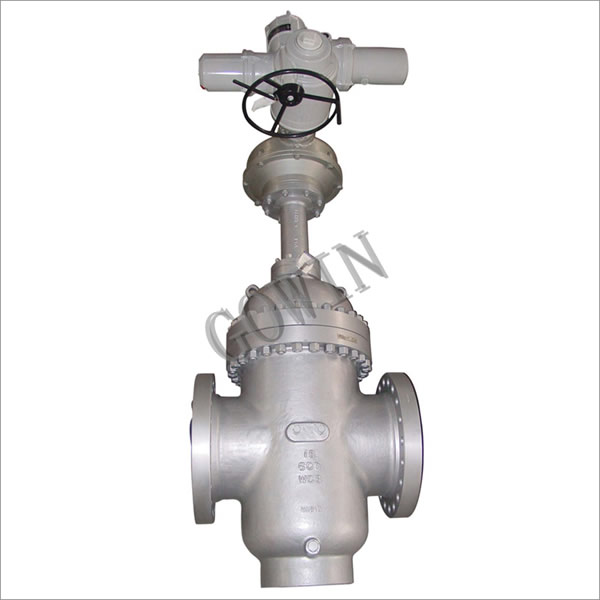
- Nominal diameter: 1″~40″(DN25~1000)
- Pressure: 150LB-2500LB 0.6Mpa-42.0Mpa
- End Connection: RF, RTJ, BW, THR, SW
- Temperature: -196℃-650℃
How European Buyers Compare Chinese Manufacturers
Comparison often comes down to specialized capability and R&D support for severe service conditions. European buyers prioritize partners who offer OEM/ODM capabilities and project-based solutions like cryogenic valves operating at -196°C.
Supplier Evaluation Criteria
| Evaluation Criteria | Qualified Manufacturer | High-Risk Supplier |
|---|---|---|
| In-house Testing | Comprehensive NDT & ISO 17025 Lab | Outsourced/Limited |
| Certifications | API 6D, API 607, ISO 14001, PED | Basic/Missing ESG |
| Customization | OEM/ODM & Collaborative R&D | Standard Catalog Only |
| Support | On-site Technical Support | None/Distributor Only |
Red Flags to Watch For
Outsourced testing is a red flag; factories lacking in-house labs lose control over quality timelines. Factories unable to provide environmental audits or ISO 14001 documentation are liabilities under ESG regulations. Finally, inability to identify foundries suggests a high risk of metallurgical failure and poor supply chain management.
Conclusion
Ultimately, choosing the right valve manufacturer China involves finding a technical partner who treats quality and sustainability as non-negotiable. By prioritizing PED compliance and in-house laboratory rigor, European distributors secure long-term success. For projects requiring verified traceability and severe-service performance, explore our engineered Ball Valves for isolation, severe service, and project-specific requirements.
FAQ
What is a PED valve and why is it required in Europe?
A PED valve complies with the Pressure Equipment Directive (2014/68/EU), a mandatory safety standard for pressure equipment sold in the EU to ensure it meets strict design and testing requirements for high-pressure service.
How do you troubleshoot a valve that fails seat leakage tests?
Troubleshooting involves verifying the actuator torque calibration, cleaning the valve cavity for debris, and checking if the seal material is compatible with the medium’s current temperature and pressure.
What are the key steps in a professional valve installation workflow?
A professional workflow includes verifying flow direction arrows, cleaning all flange faces, ensuring pipe alignment to prevent body stress, and following a star-pattern torque sequence on all bolts for a uniform seal.


 CHINA
CHINA LIBERIA
 FRANCE
 BARBADOS
 KIRIBATI

