


To choose a reliable ball valve supplier china, you must verify their technical certifications and material traceability before finalizing any purchase order. This technical due diligence prevents project delays and ensures that components meet rigorous international safety standards. In the field, a single valve failure due to poor manufacturing can compromise an entire pipeline system and inflate maintenance costs significantly.
Establishing baseline requirements upfront is the most effective way to ensure long-term operational integrity and safety for high-pressure installations. Professional importers know that asking the right questions about testing and metallurgy avoids the high costs of mid-project replacements. Doing this initial work protects your installation schedule and identifies partners with true engineering depth.
Why More Importers Are Buying Ball Valves from China
Industrial procurement teams now prioritize manufacturers that balance cost with rigorous production standards. Modern facilities have closed the technical gap with global competitors, producing high-performance ball valves with the metallurgical precision required for severe-service environments. Leading factories provide the technical authority needed for complex energy infrastructure while maintaining competitive pricing for bulk project needs.
Question 1: Does the Supplier Hold API Certifications?
Verifying certifications is your first filter for quality. You must ensure the facility is licensed for API 6D, which specifies the design, manufacturing, testing, and documentation requirements for pipeline valves, while API 607 verifies fire-safe performance for quarter-turn valves. Ordering a certified API ball valve ensures the design has passed standardized tests for shell and seat pressure integrity.
Question 2: Can They Provide Full Material Traceability?

A professional factory provides a Mill Test Certificate (MTC) according to EN 10204 3.1 requirements, documenting the chemical composition and mechanical properties of the material. I always cross-reference these records with a forged steel ball valve body’s heat number to verify material traceability. Proper documentation prevents “material substitution,” a hidden failure point that leads to stress corrosion in high-pressure lines.
Question 3: What Industries Do They Serve?
A versatile supplier must demonstrate a track record in Oil & Gas, Mining, and Power. For example, cryogenic ball valve manufacturing requires specific expertise in air separation and LNG processing where temperatures drop to -196°C. If a vendor only handles standard ball valves, they may lack the engineering depth for severe-service applications.
Question 4: Can They Support OEM Branding?
Top-tier factories support OEM branding, allowing you to cast your company logo onto the valve body during the forging or casting process. This ensures brand consistency across high-volume project orders without sacrificing the underlying engineering quality or performance specifications required by international codes.
Question 5: How Is Quality Control Managed?
Inquire about on-site NDT (Non-Destructive Testing) and pressure testing benches. A reputable manufacturer operates dedicated facilities where every finished valve undergoes strict QA, including hydrostatic, seat leakage, and fire-safe testing to API 607 and API 6FA standards. These protocols verify that the valve maintains its seal even after exposure to extreme fire conditions.
Question 6: What Is the Typical Lead Time?
Operational efficiency depends on predictable delivery schedules. Ask the ball valve factory for a clear timeline—from raw material forging to final packing—to ensure your installation workflow remains on track. Delays in lead times often signal bottlenecks in production or lack of control over the supply chain.
Question 7: Can They Handle Project Orders?
Large-scale infrastructure requires a ball valve manufacturer capable of producing a complex side entry trunnion ball valve alongside standard floating types. A partner with the right engineering bandwidth can manage the technical complexity of a bulk trunnion ball valve order, including specialized actuators and accessories.
Large EPC projects often require much more than standard catalog products. Ask whether the supplier can handle multiple valve types, customized materials, special testing requirements, actuator packages, and project documentation within the same order. You should also confirm production capacity, delivery schedules, and whether the manufacturer has experience coordinating large-volume shipments for international projects.
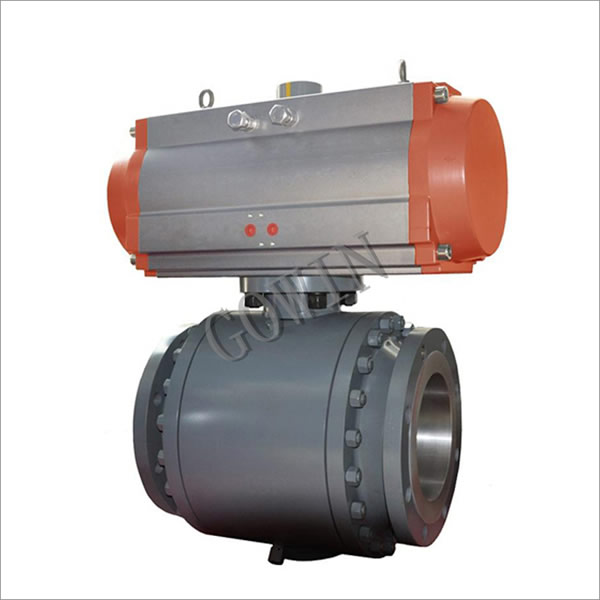
- Nominal diameter: 1/2″-56″ DN15-DN1400
- Pressure: 150LB-2500LB 2.5Mpa-42.0Mpa
- End Connection: RF, RTJ, BW, THR, SW
- Temperature: -196℃-650℃
Question 8: Which Export Markets Do They Serve?
Reviewing a ball valve supplier’s track record in Europe, the Middle East, and the Americas confirms they understand regional compliance. A seasoned exporter will be familiar with the logistics and documentation requirements for global industrial systems, reducing the risk of customs delays.
Question 9: What Documents Can They Provide?
Reliable factories provide General Arrangement (GA) drawings, hydro-test reports, and O&M manuals for every delivery. These are vital for the commissioning team to verify that an API 6D ball valve installation meets the specific safety codes and operational parameters of the project.
Question 10: How Do You Verify a Chinese Ball Valve Factory?
Look for a ball valve supplier china with dedicated CNC machining, pressure testing, and quality-control facilities. Manufacturers with substantial production footprints and documented quality systems generally provide greater transparency during supplier audits. Always request a third-party audit or a live video inspection of the production line to verify the facility firsthand.
Why Gowin Is Trusted by Global Valve Importers
After evaluating certifications, manufacturing capability, and quality systems, the final step is selecting a supplier with proven project experience.
Gowin has more than 16 years of experience manufacturing industrial ball valves for customers in oil & gas, petrochemical, power generation, and water treatment industries. The company provides API-certified products, complete material traceability, pressure testing reports, and engineering support throughout the project lifecycle.
In addition to standard floating and trunnion-mounted ball valves, Gowin also supports customized materials, pressure classes, and OEM branding for international distributors and EPC contractors. This combination of manufacturing capability and technical support helps buyers reduce sourcing risks while maintaining long-term supply stability.
| Feature | Forged Steel Floating Ball Valve | Side Entry Trunnion Ball Valve |
|---|---|---|
| Bore Size Range | 1/2″ to 10″ | 1/2″ to 56″ |
| Pressure Class | Up to 2500LB | Up to 4500LB |
| Sealing Method | Ball “floats” against seat | Ball is fixed; seats move |
| Temperature Range | -196℃ to 650℃ | -196℃ to 650℃ |
The cross-sectional illustration below highlights the internal construction of a forged steel floating ball valve, showing the key components responsible for sealing performance, pressure containment, and long-term reliability.

Conclusion
Selecting a high-performance ball valve supplier china is a strategic decision that impacts the safety of your entire piping network. By focusing on technical certifications and manufacturing transparency, you ensure your project uses components engineered for longevity. For reliable flow control, explore our ball valves solutions to find the right engineering fit. Partnering with a proven manufacturer is one of the best investments you can make for your facility’s long-term safety.
FAQ
What is an API 6D ball valve?
It is a component manufactured to the American Petroleum Institute’s specifications for pipeline service, covering design, manufacturing, and testing for midstream and downstream oil and gas infrastructure.
How do you fix a valve leak at the stem?
Stem leaks are often resolved by tightening the gland packing or replacing the low-emission packing rings. For high-pressure trunnion valves, emergency sealant injection can provide a temporary seal until full repairs are possible.
What is the standard workflow for verifying a new factory?
The workflow involves reviewing their API certifications, requesting a sample Mill Test Certificate (MTC), and conducting a virtual or on-site inspection of their NDT testing and CNC machining departments.


 CHINA
CHINA LIBERIA
 FRANCE
 BARBADOS
 KIRIBATI

