


Many industrial systems struggle not because of valve size or type, but because of wrong assessments when identifying flow characteristics.
Each flow characteristic responds differently, whether you’re using equal percentage or linear control valves.
That’s why choosing valves still depends on how pressure and flow change in the system.
Understanding how these valves behave helps avoid poor performance and unstable operation.
So, read on to learn more.

Understanding Control Valve Flow Characteristics
Control valve flow characteristics describe how flow changes as the valve opens. This relationship is not always simple or linear.
There are two key concepts to understand:
The first is inherent characteristics, which describe valve behavior under constant pressure drop.
The second is installed characteristics, which reflect real operating conditions. In most systems, pressure changes as flow changes, which alters valve performance.
Linear Control Valve Behavior Explained
A linear control valve increases flow in direct proportion to valve opening. If the valve opens by 10%, flow increases by roughly the same amount.
This creates a straight-line relationship between valve position and flow rate. It is simple and predictable under constant pressure conditions.
Linear valves work best in systems where the pressure drop remains stable. This allows the valve to maintain accurate control across its range.
However, in systems with changing pressure, the linear response becomes distorted. This reduces control accuracy and can cause instability.
Equal Percentage Control Valve Behavior Explained
An equal percentage valve increases flow gradually at first, then more rapidly as it opens. Each increment of opening produces a percentage change in flow.
At low openings, the valve provides fine control. At higher openings, it allows larger flow increases.
This curve is not straight. It is more gradual at the beginning and steeper toward full open.
The design helps maintain consistent control even when system pressure changes. This is one reason why equal percentage control valve designs are widely used.
Comparing Equal Percentage vs Linear Control Valve Performance
The differences between these two characteristics become clearer when viewed side by side.
| Feature | Linear Control Valve | Equal Percentage Control Valve |
| Flow Response | Proportional to opening | Percentage-based increase |
| Curve Shape | Straight line | Curved, gradual to steep |
| Low Flow Control | Moderate | High precision |
| High Flow Control | Stable | Efficient and flexible |
| Pressure Variation Handling | Limited | Strong |
Why Equal Percentage Control Valve Is Often Preferred
The reason why equal percentage control valve designs are commonly selected lies in their adaptability.
In most industrial systems, pressure drop does not remain constant. As flow increases, pressure conditions shift.
Equal percentage valves adjust better to these changes. They maintain smoother control across a wide range of flow conditions.
They are especially useful in systems with large load variations, including refining processes, power generation, and chemical production.
Their ability to handle both low and high flow makes them a flexible solution.
When a Linear Control Valve Is the Better Choice
Despite the advantages of equal percentage designs, linear valves still have important uses.
They perform well in systems with a stable pressure drop. In these conditions, their predictable response provides accurate control.
They are also suitable for applications with small load variations. When flow demand remains relatively constant, a linear valve works effectively.
In simple systems, linear valves can be easier to select and operate. Their straightforward behavior reduces complexity.
Installed Performance and Real-World Conditions
One of the most overlooked factors is how valves behave after installation.
In real systems, the pressure drop across the valve changes as flow changes. This alters the effective flow characteristic.
A linear valve may behave unpredictably under variable pressure. Its installed curve may no longer be linear.
An equal percentage valve, however, tends to produce a more linear installed response. This improves control accuracy in real conditions.
How Globe Valves Achieve Different Characteristics
Globe valves are commonly used for control because of their flexible trim design.
The internal trim, including the plug and seat, determines the flow characteristic. By changing the shape of these components, different responses can be achieved.
Linear trims create proportional flow changes. Equal percentage trims create a gradual then a rapid flow increase.
This flexibility allows engineers to match valve behavior to process requirements.
Globe valves also provide good sealing and stable control, making them suitable for demanding applications.
Application Examples in Industrial Systems
Different industries require different flow characteristics.
In refining processes, flow demand can vary widely. Equal percentage valves help maintain stable control under changing conditions.
Meanwhile, in cooling water systems with steady flow, linear valves provide consistent performance.
Furthermore, steam systems often benefit from equal percentage valves. Pressure and temperature changes require flexible control.
These examples show how selecting the right characteristic improves efficiency and functionality.
Common Selection Mistakes
One common mistake is choosing a valve based only on size or pressure rating.
Ignoring control valve flow characteristics can lead to poor performance. The valve may not respond correctly to system changes.
Another issue is assuming laboratory performance reflects real conditions. Installed behavior can differ significantly.
Proper evaluation of system pressure, flow variation, and control needs helps avoid these problems.
GOWIN’s Approach to Optimized Valve Solutions
GOWIN offers a wide range of globe valves designed for precise control applications.
The product line includes forged steel, cast steel, and pressure-sealed designs. These options support different pressure and temperature requirements.
The technical team focuses on trim optimization based on process conditions. This ensures the most suitable flow characteristic for each application.
In systems with wide flow variation, equal percentage trims are often recommended. For stable systems, linear trims may be selected.
This tailored approach improves performance and extends valve life in complex industrial environments.
For more information, contact us today to get started.

Final Thoughts on Choosing the Right Flow Characteristic
Selecting between equal percentage vs linear control valve designs depends on system behavior, not just valve design.
Equal percentage valves offer better adaptability in systems with changing pressure and flow. Linear valves provide simplicity in stable conditions.
Understanding both inherent and installed characteristics leads to better decisions. It also improves control accuracy and system efficiency.
With the right selection, control valves deliver stable performance across a wide range of industrial applications.
High-performance control valves engineered to international standards (ASME, API, JIS, BS, DIN). Available in sizes from 3/4″ to 72″ with pressure ratings up to 42.0 MPa. Suitable for water, oil, and gas applications with temperature range from -196℃ to 650℃.
Explore Product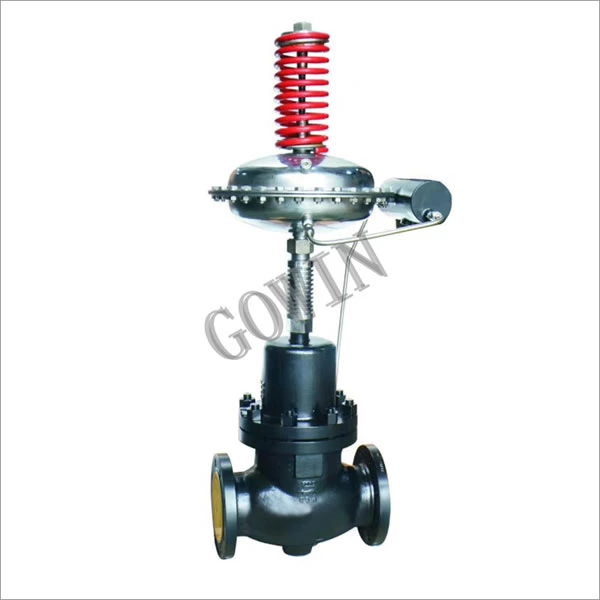


 CHINA
CHINA LIBERIA
 FRANCE
 BARBADOS
 KIRIBATI

