


簡単な回答
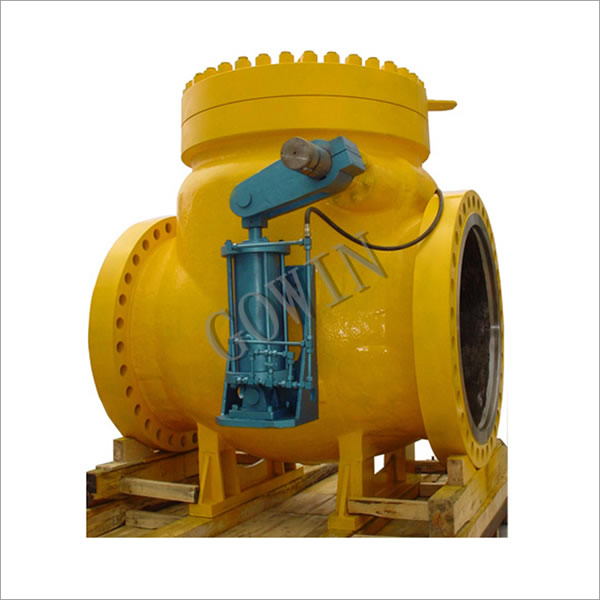
Check valves are automatic one-way valves. The main types are swing, tilting disc, dual plate, lift, axial, diaphragm, stop check and foot valves. Choose by media cleanliness, flow stability, pipe orientation and closing speed. GOWIN lists cast steel swing check valves from 1/2 to 60 inches, Class 150 to 2500, with an optional damping cylinder.
What Is a Check Valve, and What Does It Actually Do?

A check valve is a one-way valve that opens when flow moves in the intended direction and closes when flow stops or reverses. It has no handle and no actuator. The fluid pushes the closure member open, and a spring or weight may help it return.
That automatic behaviour is the point, and also the limit. A check valve protects a pump, a compressor, a meter or a header from backflow. It does not regulate flow, hold a set pressure or act as a control valve. If the process needs a setpoint, the correct device is a control valve. The throttling guide explains where that duty belongs.
The basic parts are the body, the seat, the closure member and a cover. The closure member may be a disc, a pair of half discs, a ball, a piston or a diaphragm. That shape decides how the valve behaves, which is why buyers compare types of check valves by closure design rather than by body material alone.
You can see the full family on the check valve category ページ。
What Are the Main Types of Check Valves?
Eight designs cover most industrial schedules. They differ in the path the closure member takes.
Swing check. A disc hangs on a hinge pin above the seat. Forward flow lifts it clear, and it drops back when flow slows. The open disc sits outside the bore, so pressure drop is low. The design is simple and inexpensive, which is why it is the default on water, steam and general service. It is a poor choice where flow reverses often, pulsates or changes velocity widely, because the disc can slam.
Tilting disc check. The disc is dome-shaped and mounted off-centre, so it tilts rather than swings. Travel is shorter, closure is faster, and sealing is better at low or pulsating flow. It still needs a horizontal line or vertical flow upward.
Dual plate wafer check. Two spring-loaded half discs sit on a common hinge inside a short wafer body. The short travel gives fast closure and a compact installed length. It is normally offered above 2 inches, and it has service limits that must be checked for hydrogen, hot liquids, steam and reciprocating duty.
Lift check. A disc, ball or piston lifts off the seat and returns with spring or weight assistance. The flow changes direction around the seat, so pressure drop is higher than in a swing check. These designs suit clean liquids and non-condensing gas, and they are common at reciprocating pump outlets.
Axial check. A spring-loaded disc travels straight along the pipe axis inside a streamlined body. Closure is very fast and surge is low. It suits compressor discharge, but not reciprocating compressors.
Diaphragm check. An elastomer diaphragm replaces the metal-to-metal seat. It handles slurries, viscous and corrosive media, and sanitary service, and it can be installed in any position.
Stop check. A lift-check closure is combined with a manual stop function in a globe-style body. The valve can be closed by hand and then works as a check when reopened. It appears in boiler, high-temperature and hydrocarbon service.
Foot valve. A check valve at the inlet of a suction pipe. It keeps the pump primed and stops the column from draining back when the pump stops.
The table summarises the main types of check valves before the detailed exceptions.
| タイプ | Typical media | Closing behaviour | Installation note |
|---|---|---|---|
| Swing | Clean water, steam and general service | Gravity and reverse flow; can slam | Horizontal line or vertical upward flow |
| Tilting disc | Water and steam at fluctuating flow | Shorter travel and faster than swing | Horizontal or vertical upward flow |
| Dual plate wafer | Clean liquids and gases | Spring-assisted, fast closure | Compact body; check the size floor and service limits |
| Lift | Clean liquid and non-condensing gas | Spring or weight assisted | Common at reciprocating pump outlets |
| Axial | Clean gas and compressor discharge | Very fast with low surge | Not for reciprocating compressors |
| Diaphragm | Slurries, viscous and corrosive media | Flexible diaphragm closes softly | Can be installed in any position |
| Stop check | Boiler, high-temperature and hydrocarbon duty | Check action plus a manual stop | Globe-style body; allow operator access |
| Foot | Water intake | Keeps the suction line primed | Mounted at the suction pipe inlet |
その lift check versus swing check article compares the two most common families. For linear-stroke isolation rather than non-return duty, a globe valve is the usual starting point.
Which Check Valve Handles Dirty or Viscous Media?

Clean media give you the widest choice among types of check valves. Dirty media narrow it quickly.
A swing check tolerates some suspended solids because the disc lifts clear of the flow path and the seat is a simple face. It is not a solution for heavy slurry, where solids can collect on the hinge and hold the disc open.
A ball check is often the better answer for viscous media and small solids. The ball rolls away from the seat rather than sliding on a guide, so fibres and particles are less likely to jam it. The trade-off is a higher pressure drop and a seat that hard particles can damage.
A diaphragm check isolates the mechanism from the media with an elastomer diaphragm. That suits slurries, viscous products and corrosive fluids, and sanitary lines that need cleaning. The diaphragm is a wear part, so the maintenance plan must include it.
A piston check is the opposite case. It guides the closure closely, which gives stable behaviour at high pressure but makes it intolerant of solids that can score the guide.
GOWIN lists an optional damping cylinder on its cast steel swing check range. The cylinder slows the disc travel and reduces the impact at closure. It is a mechanical aid, not a guarantee against surge, and the need for it should be confirmed against the actual flow and pipe layout.
Which Design Closes Fast Enough to Protect a Pump?
Closing speed decides whether the valve protects the system or damages it.
A swing check relies on gravity and reverse flow to close. On a long line with a fast-stopping pump, reverse flow can build speed before the disc lands, and the resulting pressure spike travels back along the pipe. A counterweight or damping cylinder can slow the last part of the travel and reduce the impact. It cannot remove the surge.
A dual plate check closes faster because each half disc travels a short arc and the springs start closure as soon as forward flow drops. That makes it a common choice at pump discharge on compact skids. The same short travel makes it less tolerant of pulsating flow if the springs are not matched to the duty.
An axial check gives the fastest closure of the common designs. The disc travels a short straight distance and the spring is preloaded against the flow. It is used where surge protection matters, such as compressor discharge.
A lift check with a spring closes quickly and is often used at reciprocating pump outlets, where a swing disc would chatter.
None of these designs should be selected from a catalogue alone. Closing behaviour depends on flow velocity, pipe length, the pump curve and the fluid. A valve that is oversized for the flow runs partly open, chatters and wears. Sizing data matters as much as the design name.
Does Installation Position Change the Choice?
Yes, and it is the detail most often missed on a schedule.
A swing check normally needs a horizontal line or a vertical line with flow upward. In vertical-down flow, gravity holds the disc open and the valve may not close. The same applies to a tilting disc check.
A dual plate wafer check works well in vertical-up flow and in horizontal lines. Its short body makes it easy to fit between flanges, which is why it appears on skid packages. Check the allowed positions before you fix the orientation on the drawing.
A lift check without a spring should not be installed in vertical-down flow. With a spring, the position range widens, but the spring has to be matched to the cracking pressure.
An axial check can work in vertical-down flow because the spring, not gravity, returns the disc. A diaphragm check can be mounted in any position because the diaphragm is the only moving part.
Piping layout matters too. A check valve placed close to an elbow or a reducer sees disturbed flow, which can make the disc oscillate. The usual guidance is to allow a run of straight pipe upstream and downstream. The exact distance depends on the design and line size, so it belongs in the installation instruction rather than in a generic rule.
Where the line also needs isolation, the butterfly valve category and the wafer butterfly valve are common neighbours on the same skid.
How Do You Specify a Check Valve Without Overbuying?
Start with the duty, then let the design follow.
The first four data points are line size, pressure class, temperature and media. Those fix the body and seat material. The next points are flow rate, allowable pressure drop and required closing behaviour. Only then should you choose the design family.
Overbuying usually shows up in two ways. The first is a pressure class higher than the line needs, which adds wall thickness, weight and cost without improving the duty. The second is a valve that is too large for the actual flow. An oversized check runs partly open, chatters and wears its guide. Matching the valve to real flow is worth more than adding a premium feature.
The specification should also fix the end connection, face-to-face dimension, installation orientation and test requirement. A check valve with a raised-face flange will not mate with a flat-face counter-flange without an adapter, and a wafer body needs the correct flange bolt length. The end connection guide covers the common options.
For a project that follows a piping standard, name the standard and the revision. GOWIN lists its cast steel swing check range against BS 1868, ASME B16.34 and GB/T 12236. The API 6D swing check standards article explains how the API and ASME documents divide the work, and the API 6D overview covers the wider valve standard.
Material selection deserves its own line on the RFQ. Carbon steel is the default for water, oil and gas within its temperature range. Stainless steel or an alloy is needed for corrosive media or low temperature. The valve material guide explains the main families and where each one stops.
Finally, ask for the test basis and the certificate package. A check valve is tested for shell tightness and seat tightness, and the acceptable leakage depends on the seat design. State the standard, the test medium and the acceptance limit so two suppliers answer the same question.
結論
The eight types of check valves above cover most schedules, so the decision usually comes down to the line rather than the catalogue.
For a horizontal water, steam or utility line with steady flow, a swing check is usually the lowest-cost answer. The cast steel check valve range covers 1/2 to 60 inches, Class 150 to 2500 and -196 to +560 C, with RF, RTJ or BW ends.
For a compact skid or a pump discharge where space is tight and fast closure matters, a dual plate wafer check is the first candidate. Confirm the size floor and service limits with the supplier.
For dirty, viscous or corrosive media, look at a ball check or a diaphragm check rather than forcing a swing design. For high-pressure clean service, a piston check is the more stable choice.
For a line that needs both non-return protection and manual isolation, a stop check avoids adding a second valve. It costs more than a plain lift check, so the saving has to come from the removed valve and the shorter assembly.
If the line is better served by a different family, the ball valve category or the floating ball valve covers isolation duty. The gate valve category, API 600 gate valve and globe valve category cover the main isolation and throttling alternatives.
A check valve is a small line item that can stop a pump, a compressor or a whole header. Spend the time on the duty data, not on the brochure.
Send service media, size, pressure, temperature and the relevant drawing for a quotation.


 中国
 リベリア
 フランス
 バルバドス
 キリバス


