


簡単な回答
A valve leakage class is a bench-test limit on leakage through a closed valve, not a promise of zero leakage. ANSI/FCI 70-2 and IEC 60534-4 set Classes I to VI for control valves. Class IV is the usual metal-seat level; Class VI is the soft-seat, bubble-tight level. API 598 is a separate isolation-valve test standard, so name one or the other. GOWIN supplies both families.
What Is a Valve Leakage Class?

A valve leakage class is a standardised rating of the maximum internal leakage allowed through a valve that is fully closed, measured under stated test conditions. It is a bench test on a new valve, not a guarantee of how the valve will perform after a year in service.
Two details matter more than the number. First, the class limits leakage through the seat. It says nothing about leakage to atmosphere through the stem, bonnet joint or body casting. Those are separate tests, and a valve can pass a seat test while weeping at the packing. Second, the valve leakage class is tied to a test medium, a pressure and a temperature range. A result obtained with clean water at ambient temperature does not automatically transfer to hot gas, slurry or steam.
That is why the control valve range is quoted by size, pressure class and actuator as well as by leakage class. GOWIN lists control valves from 1/2 to 24 inches in Class 150 to 2500, with electric or pneumatic actuation, on a BS 1873 globe body with a back seat. The class is one line in a specification that has several.
What Do Classes I to VI Actually Mean?
The six classes run from least to most stringent. The table gives the practical meaning; the exact limits sit in the standard and should be read there before acceptance testing.
| Class | Maximum leakage | Typical seat | Where it fits |
|---|---|---|---|
| I | No shop test; set by agreement | Metal | Utility and non-critical duty |
| II | 0.5% of rated capacity | Metal | General process, visible leakage accepted |
| III | 0.1% of rated capacity | Metal | Non-critical control |
| IV | 0.01% of rated capacity | Metal | Standard industrial shutoff |
| V | Seat-diameter limit, water test | Tight metal | Clean service at higher pressure |
| VI | Bubble-tight allowance, air or nitrogen | Soft, such as PTFE | Gas, pharma and food duty |
Rated capacity means the flow the valve passes when fully open under the test conditions. So 0.01% is a very small share of a large number, which is why Class IV sounds tighter than it looks on a big valve.
Class I is the odd one. It assumes the seat is as tight as its construction allows, but no shop test is made. It is applied by agreement between buyer and supplier and is common on utility-grade valves where a small weep does not matter.
Classes II, III and IV are metal-seated levels. Class IV is the one most industrial buyers recognise: it is widely treated as the normal shutoff expectation for a metal-seated control valve.
Class V tightens the limit and changes the test to clean water. It suits clean service at higher pressure, where a small leak is still unacceptable but a soft seat is not practical.
Class VI is the soft-seat class. Leakage is measured with air or nitrogen, and the allowance rises with seat diameter, so a large valve is permitted more flow than a small one at the same class. In practice it is the closest thing to bubble-tight, and it is the normal choice for gas, pharmaceutical and food service.
The two valve families that carry these seats in the GOWIN range are the globe valve category and the globe valve product, both available from 1/2 to 24 inches in Class 150 to 2500.
Is API 598 the Same as FCI 70-2?
No. They answer different questions, and confusing them is the most common specification error in this area.
ANSI/FCI 70-2, with IEC 60534-4 as the European equivalent, is the control-valve seat leakage standard. It defines Classes I to VI and the test conditions for each. It assumes the valve is a throttling device that also has to close.
API 598 is a test standard for isolation valves. It covers gate, globe, plug, ball, check and butterfly valves and sets shell, backseat and closure tests. Its closure requirements change with valve type, size and pressure class, and it does not use the Class I to VI ladder.
So a line that says “control valve, API 598” mixes two frameworks. The supplier either ignores one or prices a valve that cannot meet the other. The correct wording is a control-valve class to FCI 70-2 or IEC 60534-4, and a separate API 598 requirement for the isolation valves on the same line.
That separation is easy to see in a real valve list. The throttling valve at the control loop carries a class; the block valves on either side carry API 598. The API 600 gate valve and the wider gate valve category cover the isolation side, and the cast steel check valve covers non-return duty on the same header.
Why Can’t a Control Valve Hold a Dead-Tight Close?
Because it is built to modulate, and modulation needs clearance.
A control valve moves its plug continuously to hold flow, pressure or level. The plug runs in a guide, and that guide needs a small gap to move freely. The seat has to let the plug land without binding. Those gaps are the path that Class IV and Class V limits exist to control.
Five things decide how well the valve closes:
- Seat type. Metal-to-metal seats tolerate temperature and wear but cannot deform to fill every scratch. Soft seats deform and seal better, but they limit temperature and some media.
- Guiding. A well-guided plug lands squarely. A loose guide lets the plug cock slightly and leak on one side.
- Actuator thrust. The plug needs enough force to seat firmly. An undersized actuator leaves the valve partly open even when the signal says closed.
- Differential pressure. A higher pressure difference pushes harder against the seat and can lift a lightly loaded plug.
- Fluid. Clean gas is easy to seal. Slurry, crystals and coke damage the seating surface.
Double-seated control valves are a special case. Two seats in one body balance the forces, but they also give two leakage paths, and shutoff is poor. A buyer who needs tight shutoff should not accept a double-seated design on the strength of its class label.
その control valve trim guide explains how plug and seat materials change both control behaviour and shutoff, and the pneumatic valve types guide covers the actuator choices that supply the seating thrust.
Which Class Belongs on a Control Valve?
Class IV is the default for most metal-seated industrial control valves. It is the level the industry treats as normal shutoff, and it is achievable without a soft seat.
Move to Class V when the service is clean, the pressure is higher and a Class IV weep is still too much. Class V is a water-tested, tight metal-seat requirement, so it suits clean liquid service where a soft seat would fail on temperature or erosion.
Move to Class VI when the fluid is gas, the service is pharmaceutical or food-grade, or the process cannot tolerate any visible loss. Class VI needs a soft seat, which in turn limits temperature and rules out some aggressive media.
Do not move up the ladder “to be safe”. Each step adds cost: tighter seat machining, more lapping, more test time and, at Class VI, a seat material with a lower temperature ceiling. A Class VI demand on a 400 C metal-seated valve is not a stricter purchase, it is an impossible one, and the supplier will either decline or ship something else.
There is also a size effect. Class IV is a percentage of capacity, so the absolute leak on a large valve is bigger than on a small one. Class VI is an absolute allowance that rises with seat diameter. Neither scales the way a buyer might assume, which is why the size belongs next to the class on the datasheet.
For isolation duty the question changes entirely. A floating ball valve in the ball valve category is tested to an isolation standard, not to a control-valve class, and its job is to shut, not to modulate.
How Do You Write a Leakage Requirement That Holds?

Write six things, in this order.
- The standard: ANSI/FCI 70-2, IEC 60534-4 or API 598. Name one. Do not write “tight shutoff” and leave the supplier to interpret it.
- The class: I to VI for a control valve. For API 598, name the test instead of a class.
- The test medium: air, nitrogen or water, as the class requires.
- The differential pressure and temperature at which the test is run.
- The valve size and seat diameter, because both limits depend on them.
- The acceptance evidence: a test report with the serial number, measured leak rate, medium and conditions.
Add the seat material and trim type, because they decide whether the class is reachable. A metal seat at high temperature will not hold Class VI, and a soft seat will not survive 400 C. If the datasheet asks for both, the valve leakage class requirement is internally inconsistent and the quote will hide it.
End connections belong in the same conversation. A leakage class says nothing about whether the valve will bolt to the pipe, and a mismatch there stops installation regardless of test results. The end connection guide covers flanged, welded and threaded choices, and the valve material guide covers the body and trim families behind them.
What Evidence Should You Ask For?
Ask for the test report, not the catalogue page.
A usable report identifies the valve by model and serial number, states the standard and class, names the test medium, records the differential pressure and temperature, gives the measured leak rate, and shows pass or fail against the limit. Without the serial number, the report proves that some valve passed, not that your valve did.
Ask three follow-up questions:
- Was the test run on a new valve, on the bench, with stable flow? That is the scope the standards describe. It is not an in-service guarantee.
- Which seat material was fitted? The class and the seat are a package.
- Was the actuator the production unit, stroked with the specified thrust? Seating force comes from the actuator, so a test with a different actuator proves less than it appears to.
For isolation valves on the same order, the evidence is different. API 598 reports show shell, backseat and closure tests rather than a class. The API 6D overview explains where that specification applies, and the API 6D swing check valve guide shows how the test set changes for a check valve.
国際規格(ASME、API、JIS、BS、DIN)に準拠した高性能コントロールバルブです。3/4インチから72インチまでのサイズをご用意し、最大圧力定格は42.0MPaです。-196℃から650℃の温度範囲で、水、油、ガスなどの用途に適しています。
製品を見る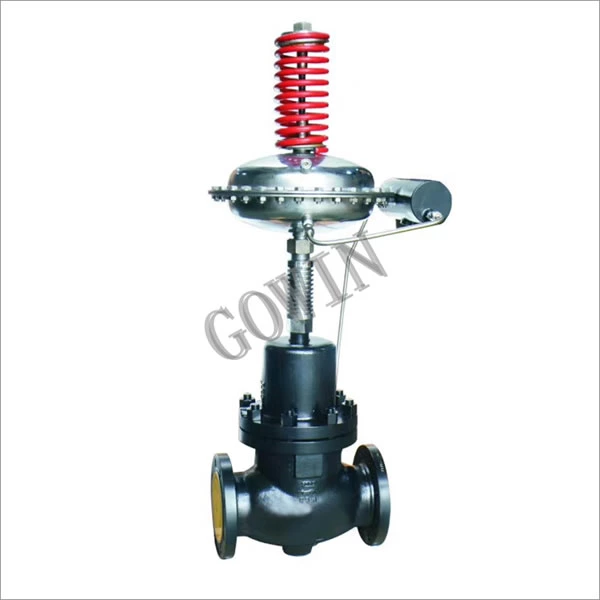
結論
Specify the loosest class the process can tolerate, then verify it is achievable with the seat and temperature you need.
For a metal-seated control valve in general process service, that is usually Class IV. For clean, higher-pressure liquid where Class IV still weeps too much, Class V. For gas, pharma, food or any duty where visible leakage is unacceptable, Class VI with a soft seat. For utility duty where a small weep is harmless, Class I or II by agreement, written down rather than assumed.
Then put the same discipline on the rest of the line. The block valves are isolation valves and belong to API 598, not to the control-valve ladder. The check valve protects the pump and is tested to its own standard. Mixing the three into one clause is how a valve list becomes unbuildable.
If the duty is throttling rather than shutoff, the throttling guide compares the valve types that actually control flow, and the gate valve vs ball valve isolation comparison covers the shutoff side. For small-bore adjustment, the ニードルバルブ is the usual choice, and for large low-pressure lines the wafer butterfly valve is often the economical isolator.
The practical rule is simple. A valve leakage class is a test limit, not a quality badge. Write the standard, the class, the medium, the conditions and the evidence, and the quote will mean what you intended.
Send service media, size, pressure, temperature and the relevant drawing for a quotation.


 中国
 リベリア
 フランス
 バルバドス
 キリバス


