


Быстрый ответ
Butterfly valves are classified by disc-and-seat design and by body connection. Concentric valves use a resilient seat for general service; double offset designs lift the disc before it turns; triple offset designs use a conical metal seat for tighter, hotter duty. Wafer, lug and double-flanged bodies set the mounting method. Specify both axes before comparing offers.
What Are the Main Types of Butterfly Valves?
There are two axes, and they are independent. The first is the disc offset: concentric, double offset or triple offset. The second is the body connection: wafer, lug or double flanged. A valve can be concentric and wafer, triple offset and lug, or any other combination the maker offers.
That independence is the source of most confusion. A buyer reads that triple offset is for high pressure and assumes every triple offset valve is a high-pressure valve. The offset describes the seat geometry. The body, material and pressure class decide the pressure rating. A triple offset disc in a light body is still a light valve.
The butterfly valve category shows the families normally offered. Use it to see the range, then use the drawing to confirm which combination applies to your line.

| Тип | How it seals | Typical fit | Основное ограничение | Buyer check |
|---|---|---|---|---|
| Concentric, resilient seat | Disc compresses an elastomer liner through the stroke | Water, HVAC and general low-pressure isolation | Liner temperature and chemical limits; the seat rubs on every stroke | Seat material, pressure class and cycle rate |
| Double offset | Disc lifts away from the seat before rotating | Hotter service and lines that cycle more often | Not automatically a high-pressure design | Body rating, seat material and shutoff class |
| Triple offset | Conical metal seat contacts near final closure | Higher temperature, higher pressure and tight metal-seated duty | Higher cost and less tolerance for debris | Required leakage class and test evidence |
| Wafer body | Clamped between both pipeline flanges | Tight spaces and large low-pressure lines | Valve depends on both flanges for support | Flange standard, gasket and bolt length |
| Lug body | Bolted independently to each flange | Maintenance where one side of the line must open | More fixing work than a wafer body | Lug drilling pattern and isolation plan |
| Double-flanged body | Has its own flanges and face-to-face length | Lines that need a supported, removable valve | Greater weight and length | Mating dimensions and support requirements |
How Does a Concentric Butterfly Valve Seal?
A concentric valve puts the stem through the centre of the disc and the disc in the centre of the seat. The disc rotates through the seat with continuous interference, so the elastomer liner is squeezed against the disc edge through the whole stroke. That is what gives the design its simple, repeatable seal.
The advantage is a short, light body and a low-cost seat. The disadvantage is friction. Every stroke rubs the liner against the disc, so the seat wears faster on a valve that cycles often. The design also has a lower temperature ceiling because the liner is an elastomer, not metal.
Concentric valves are the right default for water, HVAC, low-pressure process lines and general isolation where the valve is not expected to stroke every few minutes. They are a poor choice for high temperature, aggressive chemicals that attack the liner, or services where the seat has to hold a tight class after many cycles.
ГОВИН wafer butterfly valve covers 2 to 120 inches, Class 150 to 600, and -46 to 200 C, with carbon, stainless and alloy bodies. The soft-seat page states ANSI B16.104 Class VI. That is a page statement for the soft-seat build, so confirm the class on the offered drawing rather than assuming it applies to every variant.
What Changes When You Move to a Double Offset Design?
A double offset valve moves the stem off the disc centre and off the seat centre. The first offset puts the stem behind the seat line; the second tilts the seat cone. The result is a cam action: as the disc starts to open, it lifts away from the seat before it swings through the flow. Most of the stroke happens with no seat contact.
That change reduces seat wear. It also allows a metal seat to be used at higher temperatures, because the seat does not have to deform through the whole stroke. The valve can hold a tighter shutoff than a concentric design in moderate pressure and temperature service, and it can be built with a fire-safe seat.
Double offset is the middle option. It costs more than a concentric valve and less than a triple offset valve. It suits steam, hot water, some hydrocarbon service and plant lines where the valve cycles more often than a concentric seat would tolerate. It is not a universal high-pressure answer; the body class, material and seat still set the limit.
When Is a Triple Offset Butterfly Valve Worth the Extra Cost?
A triple offset valve adds a third offset and a conical seat geometry. The disc and seat only touch at the final few degrees of closing. For most of the stroke the disc is clear, so there is almost no rubbing. The final contact is a metal-to-metal wedge that can hold a tight shutoff in high temperature and high pressure service.
That is why triple offset valves appear in steam, refinery, power and high-temperature gas duties where a resilient seat would fail. They can also be actuated with a quarter-turn, which makes them attractive where a gate valve would need a long-stem actuator. The trade-off is a more complex seat geometry, a higher purchase price and less tolerance for debris between the sealing surfaces.
ГОВИН triple eccentric explainer describes the geometry and the intended service. Treat the article as an explanation of the design, not as a promise that every triple offset valve in the market is zero leak. Shutoff class still has to be tested and stated.
Which Connection Should You Specify: Wafer, Lug or Double Flanged?

A wafer body sits between two flanges and is clamped by the flange bolts. It takes almost no pipe length, which is why it is the default for large water and HVAC lines. The weakness is that the valve depends on both flanges being in place. If you unbolt one side, the valve can lose support.
A lug body has threaded or drilled lugs on both sides. It still fits between flanges, but each side can be bolted independently. That allows one side of the line to be opened while the valve stays in place, which is useful for maintenance. The lug versus wafer comparison sets out the practical difference.
A double-flanged body has its own flanges and a face-to-face length like a gate valve. It is heavier and longer, but it can be removed without spreading the pipeline and it is easier to support. It is the choice when the line has to be opened for maintenance or when the piping design does not allow a wafer valve to be clamped.
Connection choice also affects the gasket. A wafer or lug valve seals against the flange faces, so the gasket and bolt load have to suit both the valve body and the mating flange. The end connection guide covers the common flange standards.
How Do Seat Material and Temperature Narrow the Choice?
Seat choice cuts across the types of butterfly valves. A concentric valve normally uses a resilient seat, while double and triple offset designs can use a metal seat, but the offered construction still governs.
The seat is the part that decides the temperature ceiling and the chemical resistance. A resilient seat, usually EPDM, nitrile or PTFE, gives a tight shutoff at moderate temperature. It also absorbs small amounts of grit and misalignment. The limit is the elastomer: above its rated temperature it hardens, creeps or degrades.
A metal seat gives a higher temperature ceiling and better resistance to abrasive solids. It needs more closing force and a more precise seat geometry, which is why metal-seated butterfly valves cost more. It also gives less tolerance for debris, because a hard seat cannot deform around a particle.
The body material is a separate decision. Carbon steel is the default for water and non-corrosive service. Stainless steel is used for corrosive fluids and clean service. Alloy bodies appear in high-temperature or aggressive duty. The valve materials guide explains how the choice changes both the price and the spare parts route.
A buyer should state the design temperature, the fluid and the required shutoff class, then ask the supplier to confirm the seat material in writing. A valve that meets the pressure class but has the wrong seat will fail early, and the failure will look like a maintenance problem rather than a specification error.
Стандарт проектирования согласно: API 609, ASME B16.34, GB/T12238, JB/T 8527.
Просмотреть подробную информацию о товаре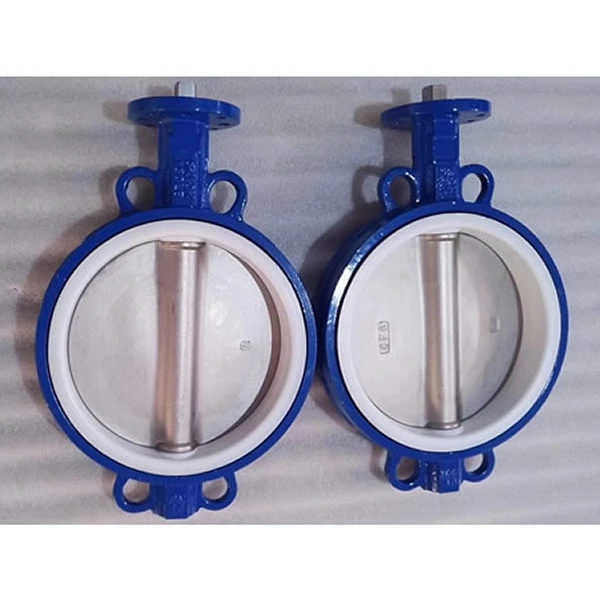
Заключение
Match the design to the duty first, then compare the types of butterfly valves on equal terms. For general water and HVAC isolation at moderate temperature, choose a concentric resilient-seat valve in a wafer or lug body. For hotter service or a line that cycles more often, move to double offset. For high-temperature, high-pressure or tight metal-seated shutoff, look at triple offset and confirm the test class.
Then match the connection to the piping. Use wafer where space is tight and the flanges can stay in place. Use lug where one side of the line may need to be opened. Use double flanged where the valve must be removable or the line needs a supported body.
The types of butterfly valves on a shortlist should always be described by both axes: design and connection. “Triple offset, lug, Class 300, metal seat, 12 inch” is a specification. “High-performance butterfly valve” is not.
If the line is better served by a linear-stroke valve, the gate valve category and the API 600 gate valve show the isolation alternative. For non-return duty, the check valve category and the cast steel check valve cover the next decision. For quarter-turn isolation at high pressure, the ball valve category is the other branch.
If the valve will be automated, the pneumatic butterfly valve guide explains the actuator options, and the API 6D overview helps when the line is specified to a pipeline standard rather than a general industrial one.
Send service media, size, pressure, temperature and the relevant drawing for a quotation.


 КИТАЙ
 ЛИБЕРИЯ
 ФРАНЦИЯ
 БАРБАДОС
 КИРИБАТИ


