


Steam systems typically use globe valves for steam for throttling/control, steam ball valves or gate valves for on/off isolation, and steam check valves to prevent backflow. For automated regulation, plants add steam control valves, and for severe conditions, they specify high-pressure steam valves matched to the required class and temperature.
Steam service is unforgiving. High temperature, rapid pressure changes, and condensate “flash” can wear seats, packing, trims, and even valve bodies over time, especially in systems that cycle frequently.
That’s why buyers don’t choose a single “steam valve.” Instead, they specify the right mix of steam valve types across the steam loop from the boiler outlet to headers, end-use equipment, and condensate return lines.
Why steam applications need purpose-built valves
Steam is not just hot water. It expands, accelerates, and can carry droplets that gradually erode valve internals.
In real plants, the “steam line” also includes start-up and warm-up periods, condensate return, and equipment like heat exchangers and turbines.
Typical challenges include:
- High temperature and thermal cycling that stress bodies and bonnet joints
- Erosion from wet steam/condensate at high velocity
- Leakage risk from packing/seat wear under frequent cycling
- Water hammer occurs when condensate isn’t managed
For these reasons, types of steam valves are usually selected by duty (on/off vs control), pressure class, material, and trim, not by name alone.
Steam valve types used across a steam system
Below are the most common types of valves for steam you’ll see in industrial steam distribution, process heating, and power applications.
Globe valves for steam (best for throttling and control)
When the job is precise regulation (pressure/temperature/flow), globe valves for steam are a go-to choice because they’re built for stable throttling and predictable control.
If you’re specifying a robust baseline valve for steam control duties, see GOWIN’s Globe Valve product options.
Gate valves (best for isolation with low pressure drop)
Gate valves are typically used fully open or fully closed. In steam mains, this makes them good isolation valves during maintenance or shutdowns.
They’re generally not recommended for throttling because partial opening can damage seating surfaces and create vibration. Explore typical configurations in GOWIN’s Gate Valves range.
Steam ball valves (best for tight shutoff, quarter-turn operation)
Steam ball valves are commonly selected for fast on/off control and compact installation. In steam service, buyers usually look for a high-temperature seat design and appropriate packing.
Ball valves can deliver straight-through flow and tight shutoff, but they’re not ideal when you need fine throttling. See available options under GOWIN’s Ball Valves catalog.
Steam check valves (protect equipment from reverse flow)
Steam check valves prevent backflow, which is critical for protecting boilers, heat exchangers, and condensate return equipment.
Selection often depends on orientation, cracking pressure, and whether you need a swing, lift, or dual-plate design for your layout. Browse GOWIN’s Check Valves for common industrial formats.
Steam control valves (automatic regulation for process stability)
In plants that must hold outlet temperature or downstream pressure, steam control valves (pneumatic or electric) provide modulating control.
Control valve sizing (Cv), actuator selection, and trim choice become the main drivers, especially in high turndown or fluctuating loads.
For a quick primer on control valve categories, see GOWIN’s article on common control valve types.
Steam radiator valves (low-pressure heating distribution)
In building heating systems, steam radiator valves (and related vents/controls) manage steam admission into radiators or coils.
These differ from severe-service industrial valves, but they matter if you supply HVAC or district heating projects.
High-pressure steam valves (when pressure and temperature climb)
For power generation and severe conditions, high-pressure steam valves typically require higher pressure classes, stricter materials/standards, and bonnet/seal designs intended for high temperature and cycling.
This is often where leakage risk is costly, and performance margins matter most.
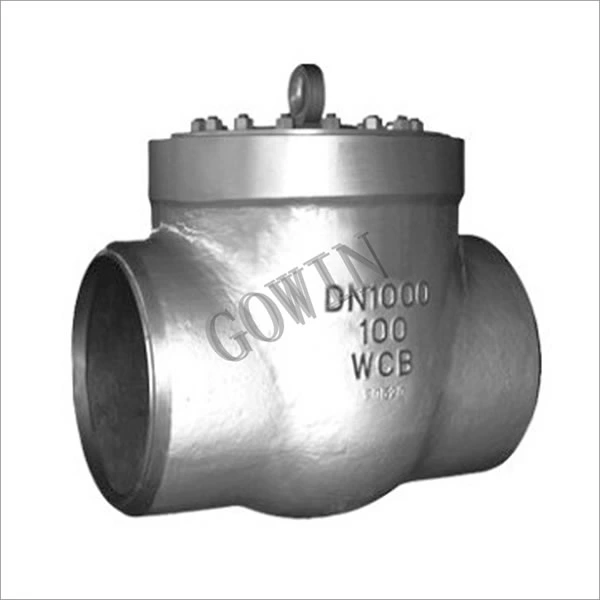
Only one sealing face is designed on the valve body and valve disc,
Full stellite overlay seat sealing surface
Good for manufacturing process and easy to maintain.
Absolute bonnet joint leak proof.
Optional by-pass design.
Optional designed with a Damping Cylinder.
How to choose the right valve for your steam line
To make the steam valve types selection practical, use a duty-based checklist. Start with what the valve must do in the line, then confirm your real operating envelope.
This approach helps you narrow down valve style, materials, trim, and actuation requirements based on performance and risk, not just what’s commonly used.
1) Start with the job: isolation, throttling, or non-return
Isolation (maintenance shutoff): gate or ball.
Throttling/control: globe or a dedicated control valve.
Non-return protection: check valve.
2) Confirm steam condition and operating envelope
Define whether you have saturated or superheated steam, the normal/maximum pressure, and the maximum temperature at the valve.
This drives:
- Pressure class (ASME/EN/GB)
- Body/trim materials
- Packing type and fugitive emissions requirements
3) Match construction details to steam realities
Look for features that reduce leakage and maintenance in steam service:
- Robust packing arrangements and stem sealing
- Appropriate seat/trim materials for temperature and cycling
- End connections suited to your piping and maintenance strategy
GOWIN’s guide on choosing valve end connections is a helpful starting point when comparing threaded vs flanged vs welded ends.
4) Consider controllability and turndown for control applications
If your process load swings widely, you may need better turndown than a single valve can deliver.
That’s where what is a 1/3 2/3 steam valve? comes up. It usually refers to a split-range setup using two parallel control (or pressure-reducing) valves sized roughly 1/3 and 2/3 of the design flow, staged to improve low-load control and overall turndown.
Common mistakes in steam valve selection
Using a throttling valve as an on/off valve (or vice versa).
Underestimating condensate and water hammer risk.
Choosing the right valve type, but the wrong trim/packing for temperature cycling.
Ignoring access for maintenance (especially on large steam mains).
If you need help comparing duty, sizing, materials, and documentation, browse GOWIN’s full industrial valve portfolio or talk to an engineer.
Conclusion
There isn’t one valve that fits every steam system. The best answer is a coordinated lineup of steam valve types: globe for regulation, gate or ball for isolation, check valves for backflow prevention, and control valves for automated stability.
From there, match pressure class, materials, and construction details to your real operating conditions, especially cycling frequency and condensate risk.
Ready to specify or source steam valve types for your project? Contact GOWIN to get a quote with your pressure, temperature, medium, and end connection requirements.
3 Key Takeaways
- Choose valves by duty: isolate, throttle, or prevent reverse flow.
- Match pressure/temperature and cycling to materials, trim, and packing.
- For variable loads, staged control (including 1/3–2/3 setups) can improve turndown.
FAQs
Q1: What type of valve is best for steam?
A1: For precise regulation, globe-style throttling or control valves are common. For shut-off, ball or gate valves are often used, while check valves protect against backflow.
Q2: Can ball valves be used for steam?
A2: Yes, steam ball valves are often used for on/off duties in steam lines, but they’re usually not the best choice for fine throttling.
Q3: Why are globe valves commonly used in steam lines?
A3: They provide stable throttling and predictable control, which helps manage pressure and temperature changes more smoothly.
Q4: What does a steam check valve do?
A4: Steam check valves allow flow in one direction and help prevent reverse flow that can damage boilers, exchangers, and steam equipment.
Q5: What is a 1/3 2/3 steam valve?
A5: It typically means two parallel modulating valves sized about 1/3 and 2/3 of the required flow and controlled in stages (split range) to improve low-load control and turndown.


 CHINA
CHINA LIBERIA
 FRANCE
 BARBADOS
 KIRIBATI

