


त्वरित जवाब
A ball valve vs butterfly valve choice comes down to line size, pressure and shutoff duty. Butterfly valves are lighter and cheaper in large pipes, but the disc stays in the flow and adds pressure drop. Ball valves suit smaller, higher-pressure lines that need tight isolation. GOWIN lists wafer butterfly valves from 2 to 120 inches and floating ball valves from DN15 to 250.
Are Ball and Butterfly Valves Both Quarter-Turn Valves?
Yes. Both are quarter-turn valves: a 90-degree rotation takes them from fully open to fully closed. That shared feature makes both fast to operate and easy to automate.
The mechanism behind the turn is different. A ball valve rotates a sphere with a bore through it. When the bore lines up with the pipe, flow passes through. When the sphere turns 90 degrees, the solid side faces the flow and the seat seals against the sphere.
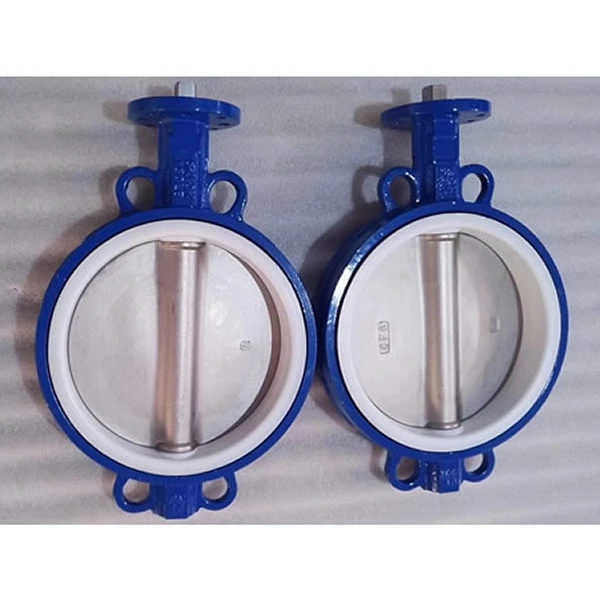
A butterfly valve rotates a disc on a stem. When the disc is parallel to the flow, the valve is open. When it turns across the bore, it closes against a seat in the body.
Quarter-turn operation does not mean equal performance. A ball valve and a butterfly valve of the same size can have different pressure ratings, different shutoff behaviour and very different operating torque. Treat “quarter-turn” as a description of the operator, not as a selection rule.
Use the table as a first screen, then confirm the quoted datasheet.
| Decision | Ball valve | Butterfly valve |
|---|---|---|
| प्रवाह पथ | Straight bore; a full-bore version adds little restriction | Disc and stem remain in the bore and create pressure drop |
| Size and weight | Heavier; strongest range at smaller sizes | Lighter and more compact, especially at large sizes |
| Shutoff | Tight seal at higher pressure; floating ball is pressure-assisted | Good soft-seat shutoff at moderate pressure; metal seats may leak |
| दबाव और तापमान | Higher classes; GOWIN floating range to Class 300 | GOWIN wafer range to Class 600 and 200 C |
| संचालन | Quarter turn; torque rises with size and pressure | Quarter turn; flow can push the disc at partial opening |
| रखरखाव | Seats and stem seals; a split body can be opened | Seat or liner and stem seals; often removed from the line |
| Best fit | Smaller isolation duty, gas, high pressure and pigging | Large water, HVAC and utility isolation at moderate pressure |
The ball valve category और butterfly valve category show the families normally offered. Use them to identify the product type, then compare the actual datasheet.
How Does the Flow Path Differ?
A full-bore ball valve leaves an open circular passage when it is open. The bore matches the pipe inside diameter, so the valve adds little restriction in the open position. A reduced-bore ball valve has a smaller passage and will add some pressure loss.
A butterfly valve always has the disc and stem in the flow path. Even when the disc is parallel to the flow, it occupies space in the bore. The result is a measurable pressure drop, and the drop rises quickly as the disc moves toward the closed position.
That makes the butterfly valve a good open/closed valve and a poor choice for long periods of fine throttling. The disc can also be pushed by the flow, which affects torque and stability at partial openings.
GOWIN lists wafer butterfly valves from 2 to 120 inches, in Class 150 to 600 and a temperature range of -46 to +200 C. The same range is offered with carbon steel, stainless steel or alloy body material. The wafer butterfly valve page is the starting point for that family.
GOWIN lists floating ball valves from DN15 to 250, in Class 150 to 300 and -50 to +400 C. Full-bore and reduced-bore designs are both shown. The floating ball valve page gives the detailed range.
If the line needs a straight-through bore for pigging, sampling or a low-pressure-loss route, the ball design has the advantage. If the line can tolerate the disc and needs a short, light valve, the butterfly design is usually the better fit.
Which Valve Seals Better?
A ball valve usually gives the tighter seal at higher pressure. The upstream pressure pushes a floating ball into the downstream seat, which increases the sealing force as pressure rises. That is why ball valves are common on isolation duty in gas, water and process lines.
A butterfly valve seals when the disc presses against a seat, often a resilient liner. A soft-seat butterfly valve can give very good shutoff at moderate pressure and temperature. A metal-seat butterfly valve can handle higher temperature, but it may allow a controlled amount of leakage.
The seal is not the only issue. The shaft entry is a second leakage path. Stem packing or O-rings must suit the media, temperature and cycling rate. A valve that seals well at the seat but leaks at the stem is still a failed isolation point.
GOWIN states ANSI B16.104 Class VI on its soft-seat wafer butterfly page. That is a useful starting point, but the class must be tied to the offered model, size and test conditions. Ask for the test record rather than treating a catalogue statement as a guarantee for every variant.
For sanitary service, the seat and crevice design matter as much as the leakage class. The sanitary ball valve vs butterfly valve article covers that separate decision.

Which Is Better for Large Pipe Sizes?
The butterfly valve is usually the better economic choice as diameter rises. It has fewer parts, weighs much less and takes a short face-to-face length. The pipe needs less structural support, and the valve is easier to handle during installation.
A ball valve becomes heavy and expensive at large sizes. The body, ball and operator all grow, and the torque needed to turn the ball can require a larger actuator. Above a certain size, the installed cost of a ball valve can be hard to justify for simple isolation.
This is where catalogue range matters. GOWIN’s floating ball range stops at DN250, while the wafer butterfly range extends to 120 inches. That does not mean a butterfly valve is always right above DN250. It means the ball option may no longer be a like-for-like comparison at that size.
For large lines, also check the body style. A wafer butterfly valve is clamped between two flanges and depends on both for support. A lug body has threaded inserts and can hold line pressure on one side. The lug vs wafer butterfly valve guide explains the maintenance difference.
If the duty needs a metal seat or a higher-performance design at large size, the triple eccentric butterfly valve is the next family to review. It is not a direct substitute for a soft-seat wafer valve, and the pressure and temperature limits must be confirmed.
How Do Cost, Weight and Maintenance Compare?
At small sizes, a ball valve is often the simpler purchase. The body is compact, the seal is well understood and the valve is available in a wide range of materials and end connections. At large sizes, the butterfly valve usually wins on initial price and installed weight.
Weight affects more than the invoice. A heavy valve needs stronger pipe support, more lifting equipment and more time during installation. A light butterfly valve can reduce both structural cost and downtime. A ball valve may still be the better choice if the line needs its tighter seal or higher pressure rating.
Maintenance scope also differs. A ball valve has seats, stem seals and a ball that may need replacement. A three-piece body can be opened for service, while a welded body is not designed for easy repair. A butterfly valve has a liner or seat, a disc and stem seals; replacing the seat may require removing the valve from the line.
Actuation is part of the cost comparison. A butterfly valve may need a larger actuator at high differential pressure because the disc is pushed by the flow. A ball valve may need a larger actuator as the seat friction and ball size increase. Compare torque at the real operating differential, not at line size alone.
GOWIN lists manual, worm gear and electric operation for its wafer butterfly range. The pneumatic butterfly valve guide explains the common air-actuated arrangements. For the floating ball range, GOWIN lists fire-safe, anti-static and anti-blowout features. These are design features to confirm on the offered drawing, not a substitute for a project-specific test certificate.
When Should You Choose Each?
Choose a butterfly valve for large water, HVAC, cooling-water and utility lines where space and weight matter. It suits open/closed duty, moderate pressure and a line that can tolerate the disc in the flow. A soft-seat wafer valve is often the economical default; a lug body is better when one flange must be opened for maintenance.
Choose a ball valve for smaller lines that need tight isolation, higher pressure or a straight-through bore. It suits gas, water, chemical and general process isolation where the valve is opened and closed rather than used as a control device. A full-bore ball valve is the better choice when pressure loss must stay low.
Neither valve is the automatic answer for throttling. A butterfly disc can be unstable at partial opening, and a standard ball valve is not a control valve. The throttling guide explains when a globe or control valve is the better route.
The material choice can overturn the size logic. A large butterfly valve in carbon steel may be economical, but a corrosive line may need stainless or an alloy, which changes both price and delivery. The valve material guide covers the main families.
निष्कर्ष
Start with the line size and the required shutoff. If the line is large, the pressure is moderate and the valve will be used for isolation, a butterfly valve is the first candidate. If the line is smaller, the pressure is higher and tight isolation is critical, start with a ball valve.
Then check the details that change the quote: pressure class, temperature, media, end connection, body material, trim material, seat compound, operation and required test. A ball valve vs butterfly valve comparison is only fair when both offers use the same line size, rating and test basis.
For a line that needs linear-stroke isolation instead, the gate valve category और यह API 600 gate valve are the usual alternatives. The globe valve covers throttling duty. For non-return protection, use the check valve category or the cast steel check valve.
The end connection guide settles flange, threaded or welded ends before the quotation stage. Fixing that detail early prevents a low quote from being based on the wrong interface.
Send service media, size, pressure, temperature and the relevant drawing for a quotation.


 चीन
 लाइबेरिया
 फ्रांस
 बारबाडोस
 किरिबाती


