


Réponse rapide
A gate valve isolates; a globe valve regulates. A gate lifts clear of a straight bore, so a fully open valve adds little resistance but performs poorly as a throttle. A globe valve creates a controlled pressure drop for stable manual adjustment, at the cost of higher energy loss. Choose by duty first, then confirm direction, trim and test scope. GOWIN supplies both families.
What Is the Real Difference Between a Gate Valve and a Globe Valve?
The difference is the path the fluid takes and what the closure member is asked to do. A gate valve has a flat or wedge-shaped gate that rises into the bonnet. At full open, the gate sits outside the bore, leaving a passage close to the pipe diameter. A globe valve has a plug or disc that moves toward a seat inside a body with a diverted passage. The fluid changes direction more than once, even when the valve is fully open.
That geometry sets the roles in any gate valve vs globe valve comparison. Gate valves are block valves: they isolate a line, a pump or a vessel for maintenance. Globe valves are regulating valves: they create a controllable pressure drop and hold a setting through many turns of the stem. A globe valve can isolate, but it pays for the ability to regulate. A gate valve can be partly opened, but it was not designed to live there.

The distinction matters commercially because the two products are rarely compared on the same duty. If the line list says “isolation”, a globe valve is usually the wrong default. If it says “manual flow adjustment”, a gate valve is the wrong default. The gate valve category and globe valve category show the available families, but the duty statement should come before the catalogue.
| Buyer criterion | Gate valve | Globe valve | What to put in the RFQ |
|---|---|---|---|
| Primary duty | Isolation at full open or full closed | Manual regulation or frequent adjustment | State isolation, throttling or both |
| Pressure loss when open | Low through a relatively straight bore | Higher because flow turns through the body and seat | Duty flow and acceptable pressure loss |
| Throttling behaviour | Poor; part-open service can damage the seat and gate | Better; designed to hold a manual setting | Minimum and normal flow rates |
| Installed envelope | Tall bonnet and longer stroke | Shorter stroke, but the body can be heavier for some duties | Available height and operating access |
| Operating effort | Many handwheel turns; actuation is slower | Finer stem movement for adjustment | Manual, gear or actuated operation |
| Typical buying mistake | Using a gate as a control valve | Using a globe as a low-loss block valve | Confirm the duty before comparing price |
Why Does a Globe Valve Cost More to Operate?
A globe valve changes the direction of the flow and forces it through a relatively narrow seat area. That produces a higher permanent pressure loss than a fully open gate valve. The pump must make up that loss whenever the valve is open. On a line that runs continuously, the energy cost can exceed the difference in purchase price by a wide margin.
The exact loss depends on the body, seat, disc and size, so do not accept a generic percentage from a supplier. Ask for the pressure loss at the duty flow, or for the resistance coefficient that lets your engineer calculate it. A globe valve selected for regulation may be a sensible trade: you accept the loss because you need the control. The same valve installed as a fully open isolator is a permanent tax on the pump.
Gate valves are not loss-free either. The body, seat and any reduced port add some resistance. But a conventional gate valve at full open has a much clearer path than a globe valve. That is why large transmission lines and pump suction or discharge isolation often use gate valves. The trade is height and weight: the bonnet must store the gate, so the installed envelope grows with size.
A buyer comparing gate valve vs globe valve offers should separate first cost from operating cost. Put the duty flow and annual running hours in the enquiry, then ask each supplier to state the pressure loss basis. If one offer cannot provide it, the comparison is incomplete.
Can You Use a Gate Valve for Throttling?

You can move a gate to a part-open position, but it is a bad operating plan. A standard gate valve is designed to be fully open or fully closed. At part open, the gate edge sits in a high-velocity stream. Vibration, erosion and cavitation can damage the seat and the gate, and the relationship between handwheel turns and flow is poor.
The damage is not always immediate. A valve may throttle acceptably for a short commissioning period and then leak or chatter after months of service. The cost appears later as seat replacement, downtime or a valve that no longer isolates. The wedge gate throttling analysis explains why the geometry is the problem, not the operator.
There are gate designs intended for throttling or for dirty service, but they are not the default cast or forged gate valve. If the process needs continuous adjustment, choose a valve designed for it. The guide to industrial throttling valves compares the common alternatives.
A simple rule works for most buyer reviews: if the valve will spend more than a brief commissioning period between open and closed, it is not an isolation gate. Either move the regulation duty to a globe or control valve, or accept that the gate is a consumable.
When Should You Choose a Manual Globe Valve Instead of a Control Valve?
A manual globe valve is right when an operator needs to set a flow and leave it, with no automatic loop. Typical duties include balancing a branch, adjusting cooling water, setting a sampling flow or trimming a small process stream. The multi-turn stem gives fine movement, and the plug or disc gives a more predictable response than a gate.
It is not a control valve. A standard globe valve has a manual actuator and a simple trim. A control valve adds a characterised trim, an actuator, a positioner and a defined fail action. It can follow a signal and hold a flow as conditions change. The control valve product is the separate family to compare when that is the requirement.
The confusion usually appears in an RFQ that says “globe valve, automatic” without defining the signal, air supply, fail position or trim characteristic. The supplier may quote a manual globe with a motorised bonnet, or a proper control valve with a different body. Those are not equivalent offers. The control valve trim guide sets out the data needed to compare them.
For a manual duty, a globe valve is often the cheaper and simpler answer. For a modulating duty, the control valve is usually the better one. The mistake is to buy a manual globe and expect it to behave like a control loop.
En général, la levée ne représente que 1/4 de l'orifice du siège de soupape, ce qui garantit un temps d'ouverture/fermeture court.
Voir les détails du produit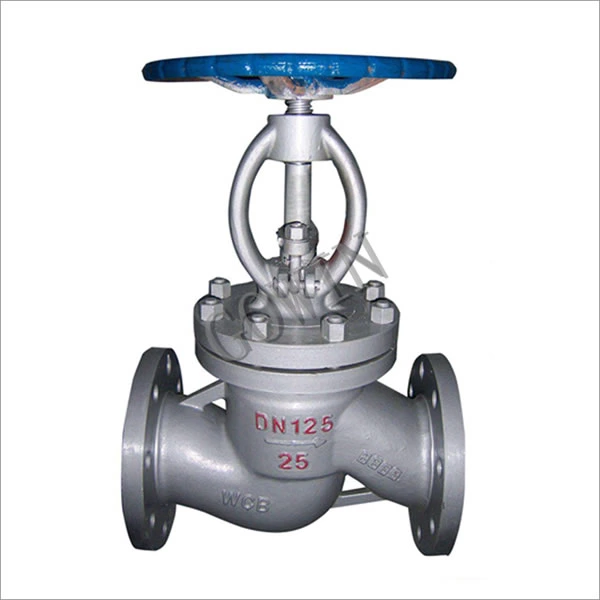
How Do Size and Flow Direction Change the Choice?
Size changes the physical penalty. A gate valve needs a tall bonnet to park the gate, so a large valve can dominate the pipe rack. A globe valve is shorter but heavier for its size and has a more complex body. Above a certain size, the globe may need a main disc and a smaller vice disc to manage the opening force, and the flow path may be arranged differently from a small valve.
Direction is a separate check. A globe valve is generally directional because the seat and disc are arranged to use pressure in a defined way. In the common under-seat arrangement, flow enters below the seat and pressure helps lift the disc. In an over-seat arrangement, flow enters above the disc and pressure helps keep it closed. Large or actuated valves may use the over-seat pattern, so the arrow and drawing govern.
Do not assume that every globe valve in a catalogue follows the same pattern. The bolted bonnet globe valve guide explains how the bonnet construction affects maintenance, but it does not replace the flow arrow. A gate valve is usually bidirectional in a two-way line, yet the installed drawing and any special trim still need checking.
GOWIN lists its API 600 gate valve from 1 to 42 inches, Class 150 to 2500, with a back seat and graphite stem sealing. The globe range is 1/2 to 24 inches, Class 150 to 2500, with a back seat and a lift of about one-quarter of the seat port. These are catalogue ranges, not proof that every size and option applies to a particular model. Check the offered datasheet.
What Should You Compare in Two Quotations?
Start with the same duty statement. Two suppliers can quote a gate valve vs globe valve at the same size and pressure class and still offer different products. The quotation should state the valve type, body material, trim material, seat design, end connection, face-to-face dimension, pressure-temperature rating and actuation.
For a gate valve, ask for the gate type, stem material, back-seat arrangement and whether the valve is rising or non-rising stem. For a globe valve, ask for the disc and seat arrangement, flow direction, plug or disc material and whether the trim is intended for throttling or isolation. A back seat is a secondary sealing feature at the stem; it does not make packing adjustment a routine live-maintenance task. Follow the manual and the site procedure.
The API 600 gate valve is a useful reference point for the gate side because the product page states the design standard, pressure class, temperature range and end connections. The globe valve product does the same for the BS 1873 family. Compare those statements with the offered drawing, not with a category summary.
Check the end connections against the piping. A valve with RF flanges will not mate with a wafer-style butterfly installation, and a BW valve needs a weld procedure and a matching pipe grade. The end connection guide covers the common choices. The valve materials guide helps when the body or trim is exposed to a corrosive fluid.
If the line is being converted from isolation to automation, price the actuator as part of the valve, not as an accessory. The pneumatic valve types guide explains the common actuation choices. A gate valve that is rarely operated may not need an actuator at all. A globe valve that is adjusted daily may benefit from one, but the stem and packing must suit the duty.
Finally, compare the documentation. Ask for the material certificate, pressure-test record, dimensional drawing and nameplate data. If the line is part of a project package, state the applicable standard and inspection requirement in the RFQ; the API 6D overview shows how a project standard changes the document set. A low unit price with a thin document package is not a like-for-like offer.
A certain angle is formed between the two sealing faces of the single-disc or double-discs wedge gate valve and perpendicular to the pipeline axis.
Voir les détails du produit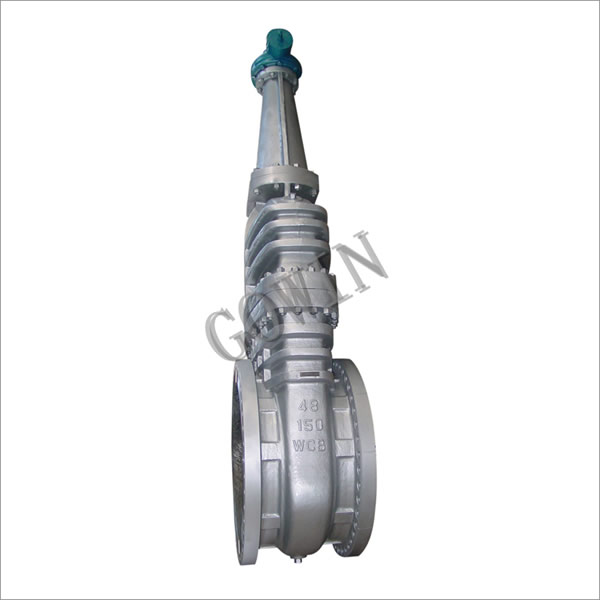
Conclusion
Choose the gate valve when the job is isolation: a fully open or fully closed block valve on a line that needs a clear bore and low resistance. Choose the globe valve when the job is regulation: a manual setting that needs fine movement and can accept a higher pressure loss. Choose a control valve when the setting must follow a signal or change automatically.
Then check the exceptions. If the line must be throttled continuously, do not use a standard gate. If the line must isolate at high pressure with a tight shutoff, do not assume a globe valve is the right block valve. If the valve is large, actuated or part of a critical isolation package, confirm the flow direction, stem arrangement and test scope on the approved drawing.
A gate valve vs globe valve decision is not a brand comparison. It is a duty comparison. The same plant may need both: gates on the main isolation points and globe valves on the small manual branches that need adjustment. That is a normal, efficient arrangement.
For a broader view of the isolation alternatives, the gate valve vs ball valve comparison explains where a quarter-turn valve changes the maintenance case. For large low-pressure lines, the wafer butterfly valve and the butterfly valve category show a compact alternative.
Send service media, size, pressure, temperature and the relevant drawing for a quotation.


 CHINE
 LIBÉRIA
 FRANCE
 BARBADE
 KIRIBATI


