


Réponse rapide
A threaded robinet à boisseau sphérique suits compact, smaller-bore piping where practical removal is required, while flanged ends support easier maintenance and welded ends provide a permanent pipe connection. Selection should consider pipe size, pressure class, leakage requirements, maintenance access, installation method, and the applicable piping standard.
Specify the size, pressure class, bore, material, end connection type, service condition, and testing requirements of the valve based on the piping specification of the project. API 608 specifies the requirements of metal ball valves with flanged, threaded, socket-welding, and butt-welding ends. It is an excellent resource in defining ball valve requirements.
What Are Ball Valve End Connections and Why Do They Matter?
The valve end connection type determines how the valve is connected to the piping system, installed, tested, disassembled, or maintained. There are four primary types of ball valve end connections, namely flanged, threaded, socket-welding, and butt-welding connections. Each connection type results in different requirements for installation and maintenance.
One typical field mistake is the selection of the valve before analyzing the piping interface. It may cause dimension incompatibility, lack of tool accessibility, need for fabrication, and problems in valve removal during maintenance.
Flanged Ball Valves: Best for Larger Lines and Serviceability
The flanged ball valve employs bolted flanges with a gasket between the two mating surfaces to allow disconnection of the valve without the necessity of pipe cutting. This makes flanged construction appropriate when inspection or periodic maintenance is required.
The hidden failure point is the complete flange assembly rather than the valve alone. Flange alignment, facing condition, gasket selection, bolt condition, and controlled tightening all affect joint integrity; ASME B16.5 is the relevant flange standard for covered steel pipe flanges and flanged fittings
Threaded Ball Valves: Compact and Practical for Smaller Lines
A threaded ball valve is commonly selected for smaller-bore piping where a compact connection and relatively simple installation are useful. An NPT ball valve should only be specified when the NPT thread form matches the piping specification and mating components.
Before installation, verify thread type, nominal size, pressure rating, sealant compatibility, orientation, and wrench clearance. Over-tightening or mismatched threads can damage the connection and create leakage that may only become apparent during pressure testing or operation.
Welded Ball Valves: When Leak Integrity Is the Priority
UN welded ball valve creates a permanent pipe connection and can be appropriate when eliminating a detachable joint is important to the piping design. Butt-welding and socket-welding are different connection methods, so the valve end preparation must match the specified pipe and welding procedure.
Installation requires accurate alignment and controlled welding practices so the valve is not subjected to avoidable piping loads or heat damage. For socket-weld construction, a socket weld ball valve must also match the specified pipe size, end dimensions, material, and installation requirements.
Flanged vs Threaded vs Welded Ball Valves: Key Differences
| Connexion | Main advantage | Main limitation | Typical selection focus |
|---|---|---|---|
| à bride | Easy removal and maintenance | Requires space, bolting, and gasket control | Larger lines and serviceability |
| Threaded | Compact and practical for smaller lines | Thread integrity and compatibility must be controlled | Small-bore piping |
| Welded | Permanent pipe connection | Removal normally requires cutting the pipe | Leak integrity and permanent installation |

API 608 covers metal ball valves with flanged, threaded, socket-welding, and butt-welding ends and specifies different size and pressure-class ranges for these configurations. This is why the connection should be treated as part of the complete valve specification rather than as a secondary purchasing detail.
How to Choose the Right Ball Valve End Connection
The connection should be selected from the project piping specification rather than from valve size alone. Confirm the required end connection, pressure class, materials, bore, dimensions, service conditions, and inspection or testing requirements before finalizing the valve.
For smaller installations, compare threaded ball valve dimensions with the available pipe space and wrench clearance. If a threaded ball valve pressure rating chart is used during selection, verify that its values apply to the specific valve model, temperature, connection, and manufacturer’s published rating rather than treating the chart as a universal rating.

What Connection Details Should Be Included in an RFQ?
An RFQ should state nominal valve size, pressure class, end connection, bore, body and trim materials, seat and seal materials, medium, operating temperature, actionneur requirements, applicable standards, inspection, and testing requirements. Where relevant, specify ball valve flange dimensions or the exact thread and welding-end requirements so the supplied valve matches the piping system.
Do not specify only “ball valve, Class 300” and leave the connection undefined. API’s purchasing guidance for API 608 identifies items such as nominal valve size, pressure class, end connection type, bore category, matériels, and operator type as information to be specified by the purchaser.
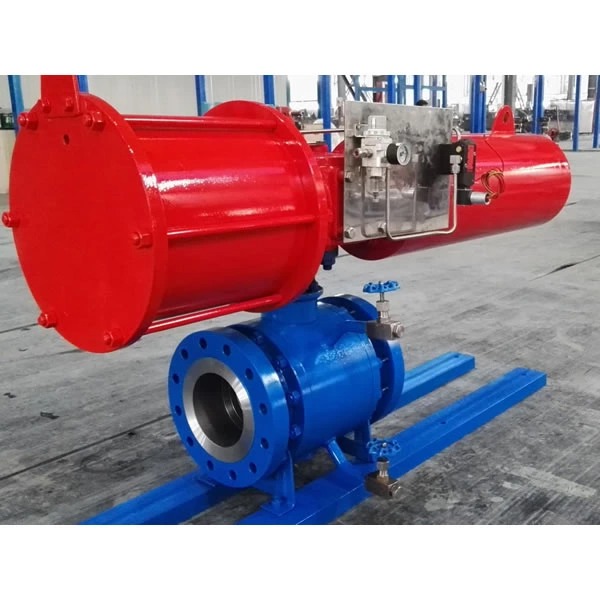
Norme : ASME, API, JIS, BS, DIN, GB, JB, HG
Matériau : WCB, A105, LCB, LC3, CF8, CF8M, CF3, CF3M, CF8C, CF10M, CG8M, WC1, WC6, WC9, F11 et etc.
Conclusion
Choosing the correct end connection is a piping-system decision, not simply a valve-selection decision. Flanged connections favor serviceability, threaded connections can suit smaller-bore installations, and welded connections are appropriate where a permanent pipe joint fits the project requirements.
The best selection is the one that matches the piping specification, service conditions, installation constraints, inspection requirements, and maintenance strategy. Reviewing Gowin’s ball valve range against those requirements can help align valve configuration with installation and commissioning needs; use a threaded ball valve only when its connection, rating, dimensions, and service requirements have been verified.
FAQ
1. Which connection handles higher pressure?
No connection type is universally the highest-pressure option. Pressure capability depends on the valve design, materials, temperature, pressure class, connection configuration, and applicable standard.
2. Which is better for larger pipe sizes?
Flanged or butt-welded connections are commonly considered for larger process lines because they provide suitable mechanical interfaces for larger piping. The final choice depends on the project piping specification and maintenance strategy.
3. Which is easier to install or remove?
Threaded connections can be convenient on smaller lines, while flanged connections generally allow easier valve removal without cutting the pipe. Welded valves normally require cutting and subsequent fabrication when replacement is necessary.
4. Which minimizes leakage?
A properly executed welded connection eliminates a detachable threaded or gasketed pipe joint, but overall leakage performance still depends on valve design, welding quality, inspection, operating conditions, and commissioning. No connection should be considered leak-free solely because it is welded.


 CHINE
CHINE LIBÉRIA
 FRANCE
 BARBADE
 KIRIBATI

